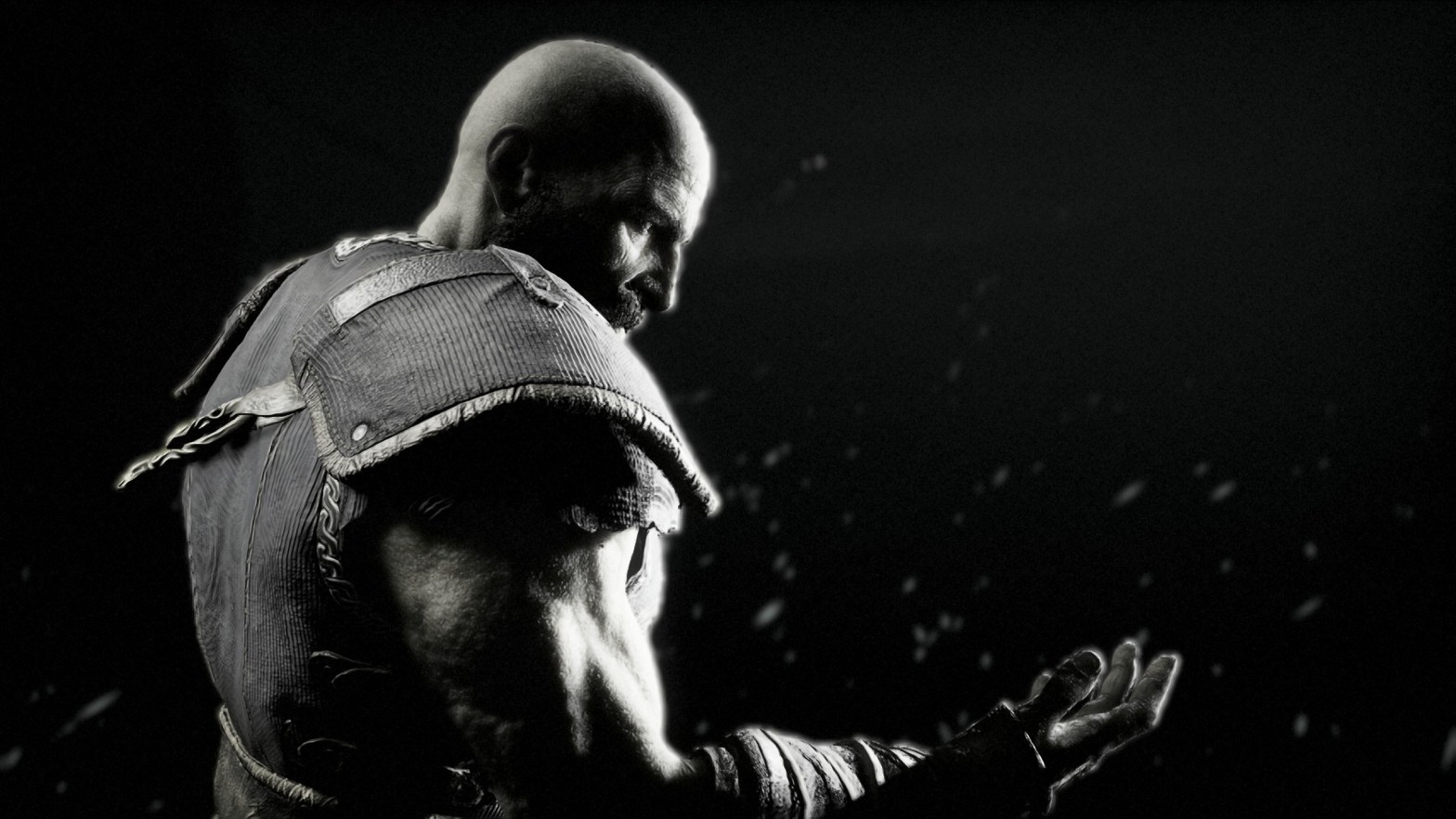
After God of War III, Santa Monica Studios released Ascension, a big-budget prequel story that essentially leads up to the opening moments of God of War. Ascension is yet another tale of Kratos being provoked by scheming deities; battling the primordial Furies, Kratos finds an unnecessary new motive to hate Ares and seek the vengeance he will go on to dole out in the first game. Critical reception of Ascension was mixed. The story retreads well-worn thematic material, and the combat—while featuring interesting new mechanics—isn’t as complex or engaging as God of War III, which arguably became the definitive version of the series’s initial hack-and-slash gameplay.
Due to Ascension‘s lackluster reception, Santa Monica realized that the God of War franchise essentially needed to be reinvented in order to prosper. Enter Cory Barlog, whose expansive direction of God of War II led to mass critical acclaim. Santa Monica drafted Barlog to develop a new vision for Kratos. Narratively, the Greek gods were mostly extinct. While some notable survivors—like Aphrodite and Athena’s ethereal form—technically escaped Kratos’s wrath, there are not enough deities left to form a reigning pantheon. Kratos’s epic Grecian adventure had nowhere to progress, as seen in the decision to make III‘s follow-up a prequel. Kratos’s emotional journey had also reached its crescendo; he had faced his family and mostly found the forgiveness he had so long sought out. Critics and fans alike had little interest in revisiting Kratos’s guilt over his family’s deaths; it was time for the god of war to face new challenges, both physically and mentally.
As the director for the new God of War project, Barlog revisited an old idea from series creator David Jaffe. Jaffe had once suggested that, upon eliminating the Greek pantheon, Kratos should visit a new polytheistic culture, become embroiled in the conflicts of another cast of gods. Barlog initially envisioned Kratos traversing the deserts of Egypt, struggling through the sands and avoiding the divine attention of gods like Set and Osiris. However, when developing Kratos’s prospective emotional journey, Barlog decided that ancient Egyptian civilization was too populous, that Kratos’s travels there would inevitably involve frequent human encounters. Barlong wanted to shift the focus of the series away from large narrative scopes and tell a more intimate tale of fear, regret, and learning to love others. After all, the most interesting natural development of an iconic antihero known for his violent wrath is to show the opposite side, to explore the soul of Kratos long since buried beneath trauma and rage.
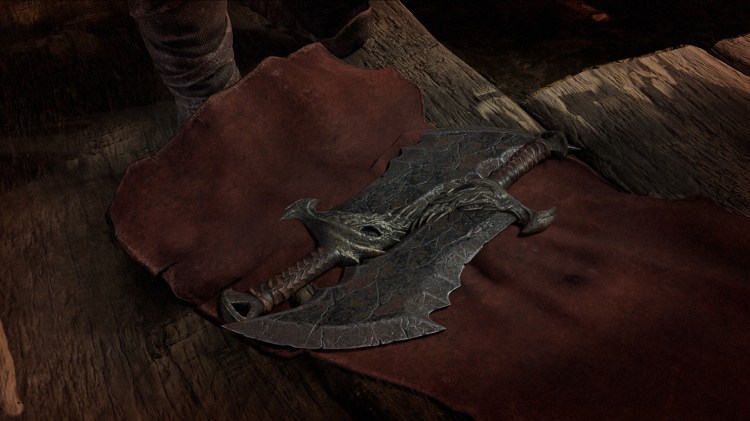
To fit the new narrative mold, Kratos’s upcoming adventure was moved from Egyptian to Norse mythology. Scandinavian society was much more disparate, with communities spread apart in tiny clusters and its people preferring to stick to small groups. The shift in setting allowed Barlog and his team to hone in on Kratos’s inner struggle, and to feature fewer, stronger supporting characters throughout the tight narrative. To further highlight the game’s intimate scope, Barlog adopted a more cinematic approach to the story’s execution. Players would follow Kratos through a carefully crafted single camera shot that would remain unbroken for the entirety of the game’s events. This decision meant there would be no narrative leaps in time; players would remain with Kratos from the beginning to the end of his journey, witnessing even the smallest emotional moments. The camera trick also forced the combat to change dramatically from the previous games. Instead of the distant isometric perspective with Kratos’s chained blades swiping through enemy hordes across entire rooms, the stricter scope results in more personal brawls. Kratos’s new weapon forces players to slow down and trade blows with enemies rather than assault them with rapid attacks. To reflect this speed change, the Leviathan Axe uses frost-based attacks, with many abilities freezing enemies and allowing Kratos time to wail on them uninterrupted. This style of play contrasts heavily from the Blades of Chaos, weapons that were usually associated with fire and offensive flurries. This measured pace feels modern and refined, a perfect evolution of the combat that made the original series stand out.
In many ways, Kratos’s new form reflects Barlog’s own personal and professional life at the time of the god’s reinvention. Barlog had recently become a father, and he was returning to Santa Monica from a brief stint working on Tomb Raider at Crystal Dynamics. Barlog viewed both of these life developments as redemptive opportunities, second chances. He wanted the new Kratos to undertake a similar evolution, to receive a second shot at what the Spartan once valued most in life: family. The new game would focus on renewal, the risks and rewards of opening oneself to human connection, the desire to be better than one was before. The new series direction inspired the team to title the game God of War in the same vein as the very first game; this game was a new beginning for both the studio and its central character. After the burnout of Ascension, the franchise itself would receive a bold second chance at life.
God of War begins in snow-sodden isolation. The player takes immediate control of Kratos, who has seemingly traded his iconic dual blades for a large ax. Kratos is noticeably older, his striking goatee from youth now grown into a heavy shroud of beard. His ghostly pale skin plainly bears the many scars of his Grecian rampage—most notably, a grisly slash across his abdomen from his final suicide attempt. The frozen setting reflects the vacancy in the Spartan’s eyes, the repressed grief that haunts his features. As Kratos hacks down a tree, the circumstances of his new life become clear. At least a decade has passed since Kratos brought ruin to Olympus. He now lives in a new land, one colder and more barren than the city-state from which he hails. Since killing Zeus, Kratos has fallen in love with Faye, a woman who saved his life and to whom he married. Love and time have tempered Kratos. Through his romance with Faye, Kratos has let his edges soften. The Spartan has replaced anger with silence, his lightning-quick temper with thoughtful consideration. Unfortunately, hours before the game begins, Faye has died of some undisclosed circumstance. Despite once again opening his heart to another and imbibing in a happiness he feels is undeserved, everything always ends the same way. In the end, everyone goes away. Kratos’s loved ones depart from him in death, while he, an immortal, toils forward.
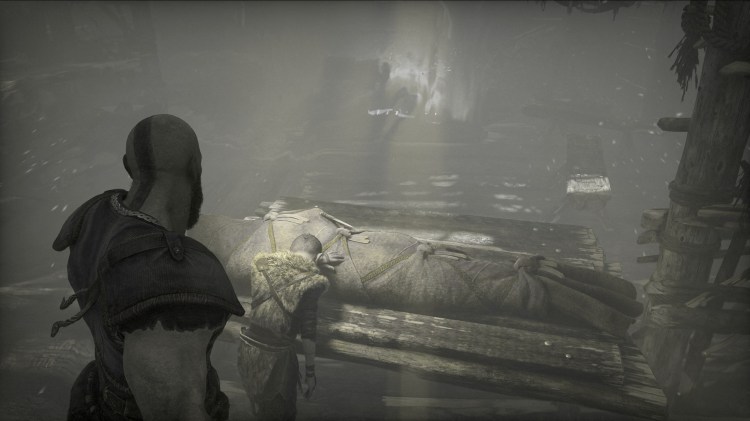
But this time Kratos is not alone. Faye has also left behind Atreus, their young son. Atreus is much like Deimos, as briefly glimpsed in Ghost of Sparta. In contrast to his gruff and emotionally distant father, Atreus loves unapologetically. He misses his mother deeply and expresses empathy for all living things, doting on animals in particular. Despite Kratos’s trademark abrasiveness, Atreus desires little more than paternal connection, a spark of affection from the quiet warrior. He is a sickly child, prone to fits of coughing and bouts of weakness. While Kratos is thick with old muscle, Atreus is slender and slight. Where Kratos wields heavy weapons and hurls fists, Atreus uses a small bow, deftly fires arrows from afar. Though Faye has trained Atreus to hunt and fend for himself upon her potential death, she has passed too soon. Atreus isn’t ready to make it in the harsh world alone, and he must rely on Kratos to protect him.
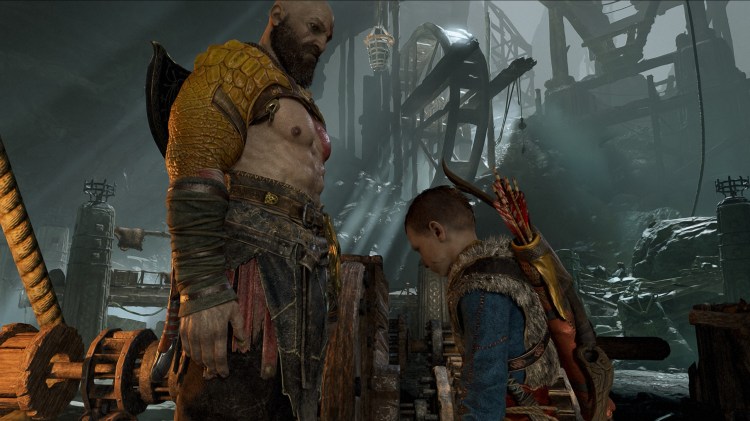
Sadly, the seeds of neglect have already been sown between father and son. As revealed through dialogue, Kratos spent Atreus’s childhood both figuratively and literally distant. While Faye bore the brunt of Atreus’s training, Kratos hunted for his family, built the small cabin they call home, protected them from the prying eyes of those who may wish them harm. A recurring theme in the new God of War and its sequel Ragnarök is distraction, one’s tendency to stay busy and avoid facing their feelings. While Faye was more than capable of hunting and providing, Kratos adopted the role in order to avoid vulnerability. Fearful of Atreus befalling the same fate as Calliope, Kratos remained perpetually at bay. Raised by a single mother and himself the son of a paranoid, tyrannical god, Kratos does not know how to be a father. Though most of Kratos’s absence is depicted through Atreus’s hurt remarks in God of War, players can observe this distance directly in one Ragnarök flashback. When Atreus was a newborn, Faye encouraged Kratos to hold his son, to let Atreus learn his face and voice. Out of self-loathing and fear of repeated history, Kratos refuses. Throughout both games, it is clear Kratos sees himself as a threat to his son, the wounds brought about by Calliope’s death reopened. To symbolize his fear of the past, Kratos—to mask the scorched scars left by the chains of the Blades of Chaos—wears cloth wraps over his large forearms.
Faye’s last wish is that Kratos look after Atreus; as a result, the Spartan must stick close to the son who terrifies him. Before death, Faye asked Kratos to cremate her, a common cultural practice. She also requested that Kratos and Atreus spread her ashes from “the highest point” in all of the realms. Upon being washed away by the sea after God of War III, Kratos mysteriously wound up in Midgard, the central realm in Norse mythology. Midgard was created by Odin, the patriarch of the Norse pantheon, to house the human race. Odin is frequently referred to as “All-Father,” indirectly reinforcing the themes of fatherhood within both Norse games. Alongside Midgard, eight other realms exist inter-dimensionally. These include Alfheim, home of the elves; Helheim, where those who lose their lives dishonorably spend eternity; and Jotunheim, the realm of the “Jotnar,” a race of giants with strenuous ties to the Norse gods. Odin and the other gods watch over Midgard from their own realm, the splendorous Asgard. God of War‘s depiction of the Norse gods is similar to its portrayal of its Greek ones. Odin and his ilk, referred to as “Aesir” gods, are presented as complex and morally flawed, not wholly good or evil. The Aesir often conflict with the Vanir, the other contingent of Norse Gods. The Vanir are known for their connection to nature, their ability to weave magic. Like the franchise’s treatment of Greek mythos, the Norse mythology source material is faithfully honored. Throughout the game, players hear stories of Odin and his family’s misdeeds, their long history of subjugating the Jotnar for personal gain. Due to the Jotnar’s gift of prophecy and Odin’s unquenchable thirst for knowledge, both factions remain forever at war. Though never visibly appearing, Odin seems similar enough to Zeus that these stories reinforce Kratos’s firm belief that all gods are petty and fallible, beings beyond redemption.
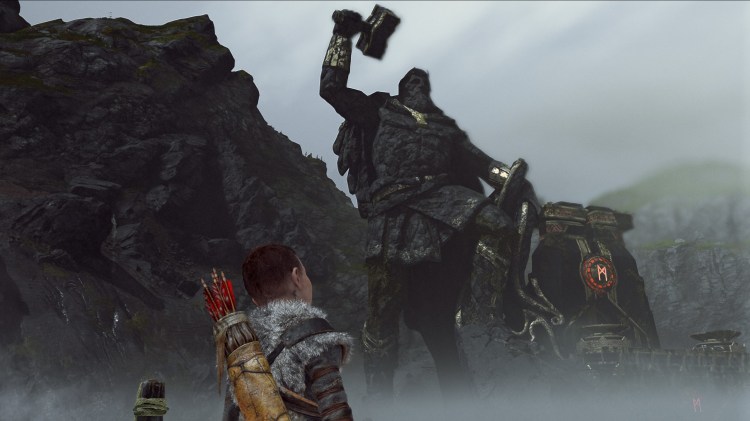
Though Atreus desires to accompany Kratos and spread Faye’s ashes, Kratos worries his son will succumb to sickness, that another of his children will suffer as an indirect result of his decisions. Kratos’s rejection of Atreus is embodied by his refusal to call his son by name; instead, he only refers to Atreus as “boy” throughout most of the game. Kratos grants Atreus the chance to prove himself; the duo hunt a great stag, and, although Atreus performs admirably, his shot fails to kill the creature. As Atreus draws his knife to put the stag out of its misery, he falters. He cares too much for the sanctity of life to truly take one. In this moment of sensitivity, Atreus needs his father’s gentle hand, kind words to help him process his pain, the loss of both this beautiful animal and his beloved mother. But Kratos rejects this weakness in his child, rebuffs Atreus’s compassionate soul. “Close your heart to it,” he says, an order he repeats many times throughout the story. Kratos wants to sharpen his son, show him that the world is hard and cruel. The world Kratos knows does not value kindness, those who wear hearts on sleeves. He assists Atreus in mercifully killing the beast. Atreus apologizes to his father for his perceived weakness, frustrated at his inability to overcome his good heart. Kratos wants to protect his son by shielding him from the horrors of the world rather than training him to properly handle life’s inevitable tragedies. “Do not be sorry,” Kratos says in response. “Be better.” This idea, while misguided in this instance, serves as a recurring motif throughout the expansive journey that lies ahead of them.
Shortly after the hunt, the pair are ambushed by a giant troll, their first true combat challenge as father and son. As Kratos fends off the bulk of the troll’s attacks, Atreus weaves around the battlefield and riddles it with arrows. From a gameplay perspective the blueprint of this cooperative fighting style can be seen in Ghost of Sparta‘s finale, when Kratos and Deimos stand together against Thanatos. As Kratos is pinned down by one of Thanatos’s constricting attacks, the player can tap the circle button to make Deimos hurl a spear into the god of death, freeing Kratos from his clutches. Many similar maneuvers can be executed in God of War. Atreus scrambles over enemies, choking them with his bow or peppering them with knife blows. Atreus’s main function in gameplay is to set Kratos up for devastating melee attacks, restraining the enemy long enough for his father to smite them with the Leviathan Axe. As the two progress through their journey, Atreus learns a variety of skills that make him even more effective, including summoning spectral animals to deal damage to tough enemies.
After the troll falls, Atreus showcases the first of many signs that he is more like this father than Kratos desires he be. In a fit of uncontrolled rage, the boy rushes the dead troll with his knife, slashing at its giant corpse. The stress causes Atreus to show signs of serious illness, something Kratos has long feared would return. Atreus’s recurring illness functions as a metaphor for Kratos’s flawed parenting; the more he enforces his strict self-preservative values, the more Atreus’s body suffers, his compassion clashing with Kratos’s callousness. Kratos deems Atreus “not ready” for the journey ahead, and he takes the boy back home to wait. At the cabin, Kratos has an even greater fear realized: sent by his father Odin, Baldur—a god—arrives at their doorstep, and he recognizes the divinity within Kratos.
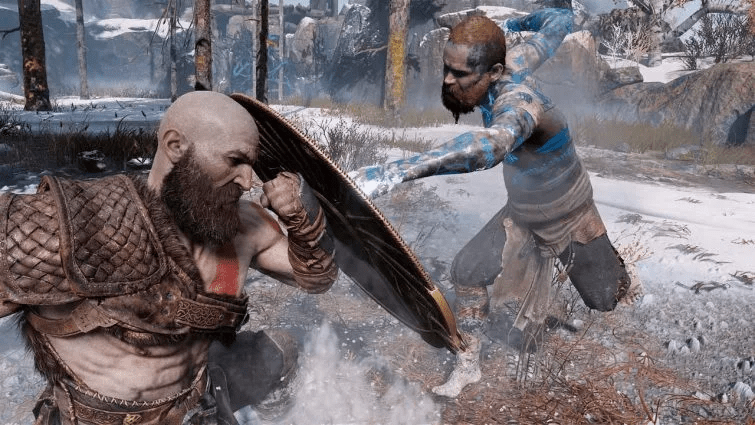
In many ways, Baldur acts as a twisted version of the young Kratos. He dutifully serves as Odin’s lapdog, enforcing the All-Father’s will through chaotic means. As Kratos is forced to brawl with Baldur to hide Atreus’s existence, he discovers that none of his attacks leave lasting damage on the Aesir. Baldur is invulnerable, but this power came at the cost of being able to feel anything at all. Now an unflinching machine of destruction, Baldur parallels Kratos both young and old: though Kratos chooses to lock his heart away, Baldur has no choice. His lack of empathy is a natural result of his inability to feel pain. The only thing Baldur wants is to experience sensation again, to be able to freely feel as Atreus does. When Baldur’s strength puts Kratos on the back foot, the Spartan is forced to recall a bit of the great rage that once leveled Olympus, the destructive force that ruined Greece. Using his old power, Kratos barely manages to defeat Baldur. But he knows it is too late. Where gods are concerned, it never stops with just one. Now that the box holding his secret has been opened, it can’t be closed again.
Baldur’s visit leaves Kratos fearful of further godly trouble. Even with the risk of illness, he decides to take Atreus with him to spread Faye’s ashes. As the duo make their way for the tallest mountain in Midgard, Atreus tries to appeal to his father with jokes. He helps Kratos navigate the foreign land through his extensive knowledge of its nature and Norse lore and languages, lessons imparted on him by Faye before her death. Kratos is frequently surprised by the sharpness of Atreus’s wit, the wealth of information his brain contains. Atreus reads runes for his father, able to understand letters Kratos can not comprehend. The Spartan never bothered to learn the local languages, relying instead on Faye to help him make his way. Now Atreus fills that role, teaching his father bits of Old Norse vocabulary. In return, Kratos physically guides his son through the world. He catches Atreus when the boy must drop from great heights, and Atreus clings to his back when Kratos scales dangerous cliff sides. However, Kratos remains guarded and untrusting toward his son, unsure that Atreus will finish their journey. Atreus frequently asks to cary Faye’s ashes himself, even for only a few minutes. Kratos always refuses.
Each of the central characters in God of War is saddled by the grief of a fractured relationship, some broken bond that mirrors the one between Kratos and Atreus. Along their journey, they meet Brök and Sindri, a pair of dwarven brothers who were once a famous duo of blacksmiths. The siblings have long since separated after a series of petty spats, though neither can really remember what the final tipping point was. As Kratos and Atreus fulfill various tasks for them, Brök and Sindri each betray interest in the other’s well-being by asking how they are doing. Their fraught relationship is an obvious parallel to the strained bond between Atreus and Kratos, the inability for loved ones to truly connect, the thematic tragedy at the heart of God of War. While Kratos finds begrudging kinship with the gruff, irreverent Brök, Atreus connects with the good-spirited Sindri. The dwarven brothers actually created the Leviathan Axe and many other famous Norse weapons, including Thor’s hammer Mjolnir. They crafted Kratos’s signature weapon for Faye, who they both loved dearly for her compassion, the trait Atreus shares. Sindri even gifts Atreus with arrows crafted out of mistletoe, said to be stronger than typical ones.
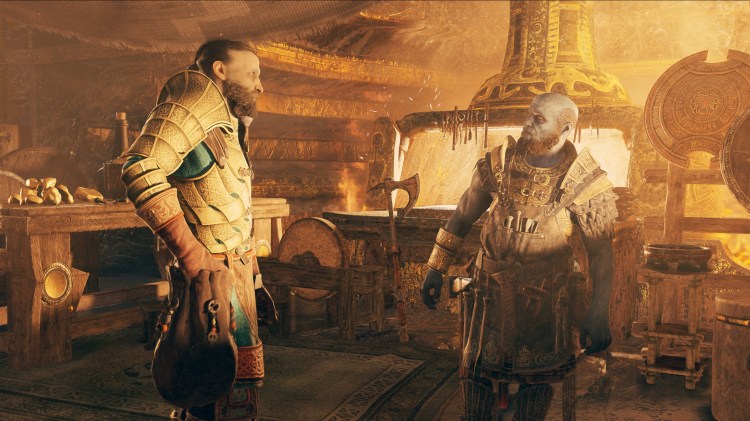
Another notable ally Kratos and Atreus make is Freya, a Vanir goddess once married to the malicious Odin. Due to a tense history between the Aesir and Vanir gods, Freya entered a political marriage with the All-Father in order to establish a fragile peace between their people. While Freya was initially charmed by Odin, time and ambition turned him into someone sour, poisoning their relationship and leading to a bitter divorce. This relationship is somewhat fabricated for God of War, as Odin spends most of actual Norse mythology married to Frigg, another goddess. However, here the mythological characters Frigg and Freya have been merged into one. “Frigg” is instead an alternative name given to Freya by her husband, and the main title she is known by in Asgard. While with Odin, Freya led the legendary valkyries, powerful female winged warriors who serve at the head of Odin’s undead armies. In retaliation for their martial meltdown, Odin has sequestered Freya to Midgard. If she tries to hop between realms, she is violently tugged back to the human world. This inability to escape her controlling husband even in divorce gives Freya a modern nuance, depicting another relationship to compare to Kratos and Atreus. Much like the Greek era, each of the mythical characters in God of War is given a similar modern flare, some human elements that help players emotionally empathize with such larger-than-life gods.
Freya is also a parent: she is Baldur’s mother, though the two have long since severed ties. Their troubled relationship—out of any in God of War—most closely resembles that of Kratos and Atreus. Like Kratos, Freya sought only to protect Baldur from the dangers of the world; instead of preparing him for the inevitable heartbreak and wounds that stem from life, she sought a way to protect Baldur from making mistakes, from befalling any harm. With noble yet misguided intentions, Freya crafted a spell that turned Baldur invulnerable, granting her son what is essentially unbreakable skin. Freya’s obsessive desire to protect Baldur mirrors Kratos’s initial avoidance of Atreus, his wish to not expose his son to his long history of wrath and murder. The one exception to Freya’s spell is mistletoe; deemed too small and insignificant, Freya neglected to include protection from such a weak plant in her complex magical composition. This oversight actually adapts a famous Norse myth. In the original story, Frigg, Baldur’s mother, travels the nine realms and asks each living thing to swear allegiance to her son. She similarly skips over the mistletoe, as it is a relatively new plant and one she heeds little notice of.
Though Freya’s protective spell was successful, Baldur was mortified by its results. He felt betrayed by his mother, stripped of any ability to make his own mistakes, to experience the various pangs and even pleasant sensations life has to offer. Baldur curses his mother and vows to never forgive her. Over time, his invulnerability warps his brain, his view on the world and the many lives within it. Baldur embraces a sort of nihilism in response to his unbreakable body; if there are no physical consequences for any of his actions, then nothing really matters. He becomes his father’s lackey, fulfilling any task Odin assigns him without question. Freya’s overbearing tendencies failed to bring her closer to her son, instead having the opposite effect: due to her desperate actions, Baldur will never truly return to her.

But through her irreparable relationship, Freya has learned difficult lessons about parenting, knowledge which she tries to impart on Kratos. Like Baldur, Freya can immediately sense Kratos’s godliness, see the same divinity within Atreus. However, Atreus does not know his own nature. Though Faye knew of Kratos’s history and divine lineage, Kratos has withheld the information from his son, both out of hatred for himself and mistrust of gods in general. Freya warns Kratos of following in her footsteps, of letting his desire—to protect Atreus from the world’s hard truths—drive a permanent wedge between them. Kratos begins to realize the repercussions of his reservations, that Atreus’s sickliness is a physical manifestation of Kratos’s parental failures. The Spartan is walking the same path as Freya, and, in doing so, is creating another Baldur. However, despite this burgeoning awareness, Kratos is unable to open up to his son, to express what hangs above them.
Atreus’s illness serves as a looming threat throughout the first half of God of War, presenting itself at inopportune moments that disrupt the pair’s journey. The boy’s sickness often accompanies bouts of extreme Kratos-like rage, though his small body can not suitably house such strong negative emotion. Freya grants the two access to other realms via travel runes, though each realm requires its own. Early in the game, the father and son visit Alfheim on an errand to retrieve a bit of bifrost, the element that makes inter-realm travel possible. Towards the end of their time there, Kratos is tempted by the Light of Alfheim, the ethereal gathering place of the souls of non-human living things. From the radiant beam of light, Kratos hears Faye humming an old tune, similar to Calliope’s haunting song in Chains of Olympus. Though it is better explored in Ragnarök, God of War gives subtle glimpses into Kratos’s deep grief, the piece of himself missing in Faye’s absence. Kratos is temporarily lost in a flashback, pursuing Faye’s song despite his late wife never physically appearing before him. While there, Kratos hears many secret confessions that Atreus once made to Faye’s corpse, including admitting his hesitant hatred for his father. Atreus’s disdain for Kratos threatens to force father and son into the very cycle Kratos contributed to when killing Zeus: a cycle of father neglecting son, son killing father. Kratos sees the signs that he is not much better than Zeus, that his treatment of Atreus could create yet another Kratos.
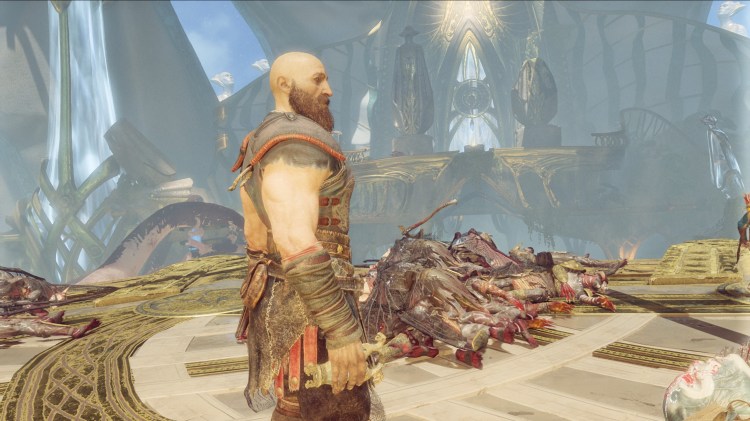
A frantic Atreus manages to pull him back to reality, visibly shaken by his father’s momentary vanishing act. Though Kratos perceives he has only been gone a few minutes, the scene before him reveals the truth: while he was trapped for a much longer period of time, Atreus was forced to defend himself against a horde of Dark Elves. As Kratos absorbs the sheer volume of corpses littered at his feet, he finally sees the harm he is inadvertently causing his son, the great rage that has been passed on to Atreus. Atreus, lonely and frustrated, accuses Kratos of never really loving Faye, of not being capable of loving anyone. “Do not mistake my silence for lack of grief,” Kratos snaps back. “Mourn how you wish. Leave me to my own.”
“I’m sorry,” Atreus says, immediately guilt-stricken. “I didn’t know.”
“How could you?” Kratos says, the emotional gulf between him and his son sinking in. “You don’t know my ways.”
Kratos and Atreus make it back to Midgard, and they finally traverse its tallest mountain. In a skirmish, the chest strap on Atreus’s quiver snaps. Kratos uses one of Sindri’s mistletoe arrows to repair it. At the peak, the pair eavesdrop on Magni and Modi, sons of the mighty Aesir Thor. Seeking Kratos’s whereabouts, the brothers interrogate Mimir—Odin’s former advisor—who has been permanently imprisoned within the furled roots of a tree for over a century. After Magni and Modi depart, Mimir informs Kratos and Atreus that this mountain is not actually the highest peak in all of the realms, the one Faye wished to be spread from. Their actual destination is Jotunheim, though access to the realm of the giants has been destroyed by Odin. Mimir offers to help them on their adventure if Kratos decapitates him and finds some way to resurrect his head. The Spartan obliges. He then totes the disembodied dome back to Freya, who is easily able to use Vanir magic to bring Mimir back to life. Attached to Kratos’s waist, Mimir serves as their closest companion throughout the remainder of God of War. Primarily referring to Kratos as “brother,” he essentially becomes an uncle to Atreus, Kratos’s only true confidante. Throughout their travels, he regales the pair with stories of the Aesir, Vanir, and the nine realms, simultaneously teaching the player many Norse myths and God of War‘s interpretation of them.
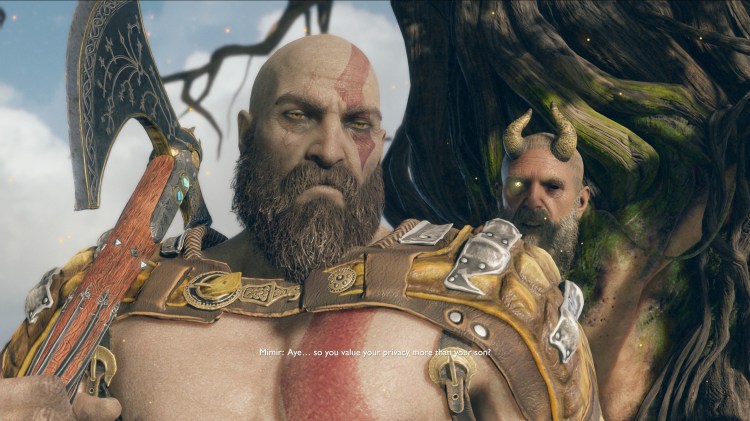
The trio embarks on a quest to gain access to Jotunheim. They stumble across the colossal corpse of Thamur, a giant, the physical embodiment of Aesir cruelty. Thamur serves as yet another parallel to Kratos; after a bitter dispute with his Thamur, Hrimthur—his son—ran away to Midgard. Thamur pursued him, but he was ambushed by a hateful Thor, who murdered the giant in cold blood. Mimir tells Kratos and Atreus many stories of Aesir evils, reinvigorating Kratos’s hatred of all gods. Mimir also knows of Kratos’s Greek killing spree, but he offers the Spartan acceptance; in his years of service to Odin, he too committed many heinous acts. He encourages Kratos to come clean with Atreus, confirms Kratos’s suspicion that his secrecy is only hurting the boy. While exploring the devastation caused by Thamur’s murder, the trio is ambushed by Magni and Modi. Acting under Odin’s orders, the brothers seek to detain Kratos and deliver Atreus to the All-Father, though neither knows the reason for this. Everyone in service to Odin acts in blind faith, never knowing his motivation behind their assignments.
Kratos and Atreus are forced to defend themselves against the godly duo, but both Magni and Modi are powerful and share their father’s penchant for lightning. Thor’s sons demonstrate fear over failing their task, of what their father may do to them should they return home empty-handed. Their terrified admiration of Thor reflects Atreus’s own feelings for Kratos: though he loves and looks up to his father, he is always afraid when Kratos snaps, reveals the rage still seething deep within. Magni and Modi hide their anxieties behind their boisterous attitudes, swaggering in faux arrogance as they battle Kratos and Atreus. Modi makes matters worse by verbally harassing Atreus, insulting Faye and driving Atreus into a fit of anger and a subsequent bout of illness. Though Kratos has slain many gods, he tries to refrain from killing either of Thor’s ebullient sons. Due to this self-restraint, Magni overpowers Kratos, locking him into a defensive stance with powerful blows. But when Atreus snaps and hurls himself at Modi, a worried Kratos breaks through Magni’s assault and executes the Aesir with a fatal blow to the head. In the wake of his brother’s death, Modi reveals his true colors. He scampers away from the scene pitfully.
In combat encounters, the player can click both thumbsticks to activate Kratos’s Spartan Rage, a feature that heals him and allows him to do more damage with his bare fists. This ability effectively harnesses the immeasurable anger Kratos expressed in past games and uses it as a controlled source of power to escape difficult scenarios or turn tables in battle. When Kratos’s party travels to the temple of Tyr, the Norse god of war, Modi waylays them. He continues to taunt Atreus about Faye, causing the boy to have his own burst of Spartan Rage. However, unlike the hulking Kratos, Atreus’s fragile body collapses under the strain. He slumps, comatose. Kratos breaks free of Modi’s hold and wounds him, sending Thor’s son whimpering away with his life.

In desperation, Kratos hurries Atreus to Freya’s home, begs her to help him with magic. Freya agrees, but she tells Kratos what he already knows: Kratos’s lack of self-acceptance is what is wounding his son. In order for Atreus to truly heal and prosper, Kratos must find it within himself to share his true nature with his boy. Needing its heart to cure Atreus, Freya tasks Kratos with slaying the Bridgekeeper of Helheim, a troll who watches over dishonored souls as they enter the realm to begin their posthumous eternity. However, Helheim is a frozen realm, its dangerous denizens impervious to ice. In order to succeed in his quest, Kratos must find fire. In perhaps the best execution of the single-shot camera trick Santa Monica utilizes, players watch an entire gamut of emotion spread across the solemn Kratos’s features. He leaves Freya’s home in silent conviction. Throughout the game, Kratos and Atreus frequently travel via boat, harkening back to viking imagery of longboat combat. Usually these trips are peppered with conversations; sometimes Kratos begrudgingly imparts knowledge on his son, or Atreus may teach Kratos about Norse history. Now as Kratos boards a nearby boat, he is saddled with a silence louder than any of the monstrous roars or metal clanging he has grown accustomed to hearing.
While Kratos struggles with storms in his heart, the gravity of his upcoming decision weighs heavily on him. Though his exact destination is unknown on an initial playthrough, the player senses Kratos is about to slide backward, slip into the old angry Greek God of War. To signify this, the camera pans away from Kratos’s tortured expression to reveal Athena’s grinning ghost, her quiet smile taunting the Spartan as he rows forward. The spirit vanishes and Kratos reaches his trip’s terminus: the cabin he built with Faye, still damaged from his skirmish with Baldur. As Kratos enters the cabin, he pulls aside a rug and pries up loose floorboard. Buried beneath his new life lies the symbol of his Grecian suffering, the ugly reminder of his shameful service to the old pantheon. Kratos unveils the Blades of Chaos, weapons that, no matter how hard he tried, he could not escape from. As is revealed through conversations with Atreus in Ragnarök, Kratos tried many times to throw away the Blades, to rid himself of the stubborn reminders of his past misdeeds. However, the weapons always found their way back to him, refusing to let him forget his mistakes. Kratos taking up the Blades of Chaos once again is also his first step to truly being a father, to accepting what he once was and what he still could be. In order to be better, Kratos understands he must let the old ghosts in. As the god of war turns to leave his home, Athena’s ghost waits in his doorway.
“There’s nowhere you can hide, Spartan.” Athena takes vengeful pleasure in taunting Kratos, her greatest failure. She lambasts him for acting as a mentor to Atreus, for fighting against his violent nature in order to be a decent father. “There is one unavoidable truth you will never escape. You cannot change.” Athena twists the knife, manipulates Kratos’s greatest fears. “You will always be a monster.”
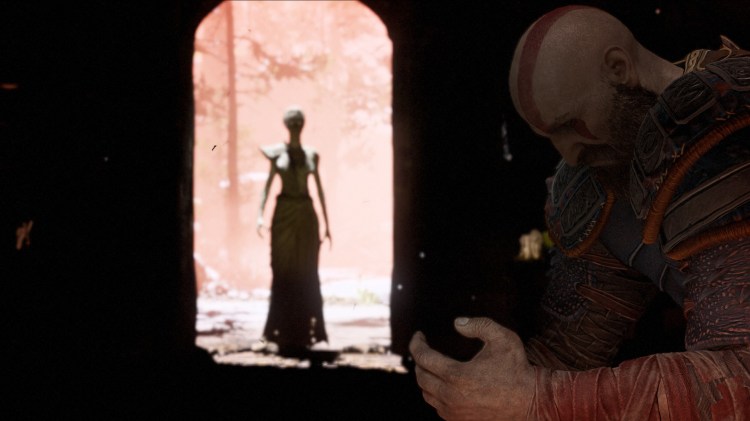
But Kratos has already grown through his travels with Atreus, through heeding the advice of the wise Mimir. He is beginning to see his son for the miracle he is, the redemptive legacy he can still live behind. Even if Kratos is spoiled goods, Atreus is yet unblemished. The boy may still turn out alright.
“I know,” Kratos says, acknowledging the truth in Athena’s jab. “But I am your monster no longer.” He pushes past the ghost, tests the Blades of Chaos against a swarm of enemies, and sets off for Helheim. In the realm of the dead, Kratos slays the Bridgekeeper and retrieves its heart. However, he witnesses another glimpse of his past, the giant face of his father Zeus glaring down at him. Though temporarily shaken, unsure of how a Greek god can appear in Helheim, Kratos returns to Freya, completes his lonesome quest.
Freya is able to heal Atreus. In the process, she pleads with Kratos to open up to the boy, to accept his godhood and help Atreus grow into his own. Kratos claims that all born as gods are cursed, that Atreus is tarnished in the same way he, as the son of Zeus, also is. He feels guilty that he has passed on his divinity to the innocent Atreus; his godliness serves as a metaphor for his self-hatred, for the subtle corruption inherent in most adults. As Atreus wakes, he hears his father call him cursed, misinterprets this comment as being directed toward his weak body and compassionate soul. His heart is wounded by yet another paternal rejection. When the two set off to continue their journey, Atreus admits to his hurt feelings. Kratos, a little stronger now after embracing his past, forces himself to do what he thought impossible: tell his son about their natures.
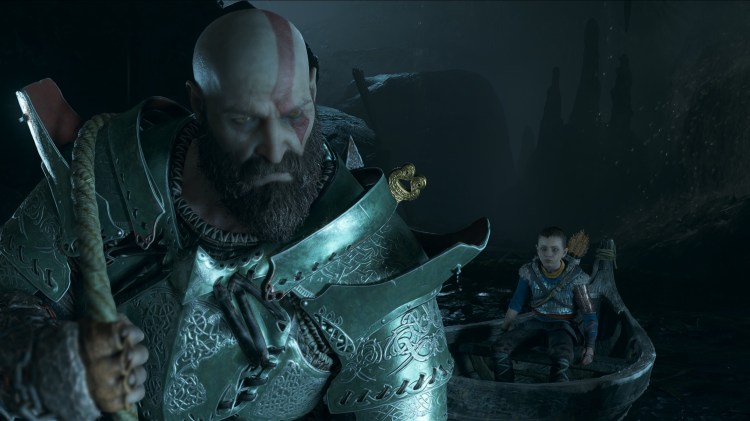
“The truth,” he begins, facing away from Atreus in order to make speech easier. “I’m a god, boy, from another land far from here.” The camera remains on Kratos’s face as he struggles through his admission, demonstrating for the player how difficult it is for him to open up. “When I came to these shores, I chose to live as a man. But the truth is I was born a god.” And then the hardest part: “And so were you.” Though Atreus’s initially remains silent, he finally speaks up.
“Can I…turn into an animal?”
Kratos is dumbfounded by his son’s innocence, his easy acceptance of godhood. What weighs so heavily on Kratos is simply seen as factual information by Atreus, something to stir up his curiosity, to excite him about the future. Kratos is moved by his son’s guiltlessness, by Atreus’s ability to see good.
“Turn into an animal? No…no, I don’t think so.”
The trio returns to Tyr’s temple to find the Jotunhiem travel rune, this time unimpeded by Modi. Though never appearing in God of War, Tyr—like Faye, Odin, and Thor—is just as important as the characters who play direct roles. He is depicted through beautiful murals as a compassionate god, an exception to Kratos’s theory that all gods are evil by nature. Though Tyr is said to have been dispatched by his jealous father Odin, he was unanimously beloved by all beings, humans and Jotnar alike. Odin’s treachery against Tyr fits into the cyclical nature of God of War‘s father-son disputes. Tyr also somehow achieved inter-dimensional travel; as Kratos and Atreus explore his temple, Mimir points out the many artifacts from other cultures, including ancient Egyptian, Japanese, and Celtic. Tyr is depicted as a compassionate god, a deity more like Atreus than Kratos. He serves as an example of the power of an open heart, of freely loving those around oneself. It is no coincidence that Tyr is the Norse god of war, an obvious parallel to Kratos. Where Kratos—like Ares before him—ruled through conquest, Tyr existed almost as a servant to others. Though once serving Odin as Kratos served Ares, Tyr found his own path and ruled with kindness instead of carnage. Tyr serves as a constant reminder to Kratos that it is possible to be a good god, that one can always be better.
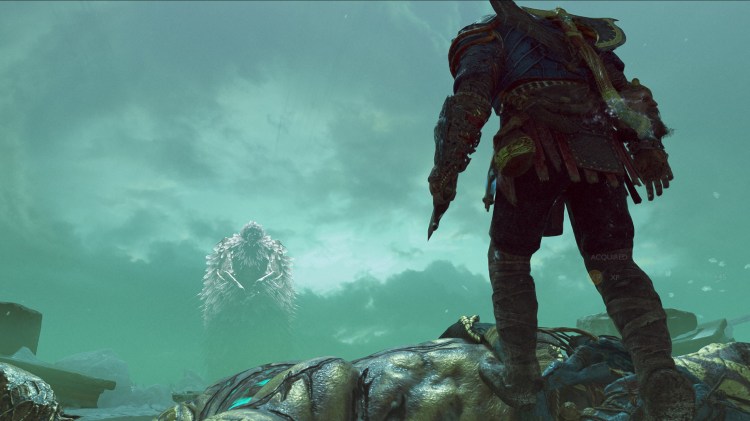
Though initially similar to the kind-hearted Tyr, Atreus begins to contrast with him. Knowledge of his divinity slowly corrupts him, instilling an arrogance that he uses as a perch to look down upon others. To Kratos, he verbally derides what he now views as petty squabbles between the likes of Brök and Sindri, problems he originally responded to with compassion. His hubris begins to boil over when Sindri tries to empathize with him over the loss of Faye, his estrangement from Kratos. Sindri mentions his struggles with Brök, to which Atreus explodes in annoyance. The boy calls the brothers’ issues “little people’s little problems,” wounding one of the few people who has shown him genuine kindness. Sindri continues to craft items for Kratos, though he does so while making downtrodden comments.
The trio are soon once again ambushed by a bloody Modi. After they easily fend him off, Modi reveals that, after returning home with news of his brother’s death, Thor savagely beat him. Though never seen in the game, Thor’s looming presence mirrors the wrathful Kratos, how Kratos fears he will become with Atreus. As Modi cowers away, Atreus’s arrogance escalates; he threatens Modi with his knife, contemplating slaying the god. Though Kratos tries to warn him away from said path, Atreus executes Modi anyway, an act he reacts to with indifference. Kratos keeps his growing frustration with Atreus at bay, though he attempts multiple times to pull his son back from this dark course.
When Kratos finally tries to use the Jotunheim travel rune, Baldur makes his reappearance. Though Kratos is able to defend them both against the Aesir, he warns Atreus to not engage. Atreus, emboldened by godhood, attacks Baldur anyway. When Kratos tries to restrain him, Atreus, swept up in the battle’s chaos, shoots his father with an arrow. A gleeful Baldur abducts Atreus, taking flight on a massive dragon. Kratos manages to latch on to the beast, uses his fists to brawl with Baldur once again as they tumble through the sky. Their battle interrupts the realm travel process, resulting in everyone crashing down to Helheim. Having escaped Baldur, Atreus is once again flippant when mentioning mortals, even dismissing his own mother. Kratos finally confronts his son.
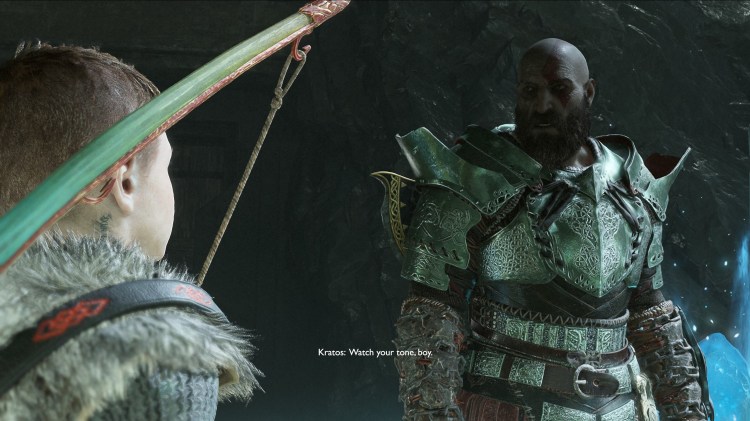
“You, boy, are not yourself.” Atreus reels away from the speech, though Kratos’s words strike home. “You are too quick to temper. You are rash, insubordinate, and out of control.” As Kratos unloads complaints, he is almost talking to his younger self, a shade of his past that Atreus is beginning to become. “You will honor your mother and abandon this path you have chosen.” Kratos throws his son a life line, a chance to escape following in his footsteps. “It is not too late.” As Kratos, Atreus, and Mimir make their way out of Helheim, Mimir warns the duo of Helheim’s tendencies to play tricks on the minds of the living, to make them face memories they regret. Atreus watches himself erupt on Sindri, murder Modi. His adult mask slips and reveals the boy beneath, remorse flooding through his body. He does not recognize himself.
As they near their exit, Kratos is confronted with visions of his own tragic actions, deeds that Atreus also now witnesses. The pair see a younger Kratos skewer Zeus with the Blade of Olympus. Though unaware of Zeus’s relationship to Kratos, Atreus is still shocked by his father’s savagery, that his dad is capable of such a horrific deed. But somehow witnessing each other’s lowest moments allows the father and son to grow a little closer; Atreus sees the violence his father is capable of, but he continues to love him in spite of it. Kratos is disappointed in Atreus’s arrogant trajectory, but he still tries to steer him straight. Atreus discovering Kratos’s past helps them both begin to heal the rift between them. As Atreus returns to himself and abandons his newfound arrogance, the two establish a new normal, a bond of trust and support.
After escaping Helheim, the trio discovers they need a particular key crafted for them in order to access Jotunheim, their final destination. Kratos attempts to enlist Brök’s help, though Brök dismisses his request; alone, he is incapable of creating anything other than a tool for war. But as if to mirror the growing closeness between Kratos and Atreus, Sindri reappears in Brök’s workshop, extends a peace offering. Though cruel, Atreus’s words carried truth; the issues Sindri and Brök faced were trivial at best, and it is simply not worth being apart from your most cherished person over petty conflict. The brothers put their differences aside and reunite, crafting the key needed to access Jotunheim.
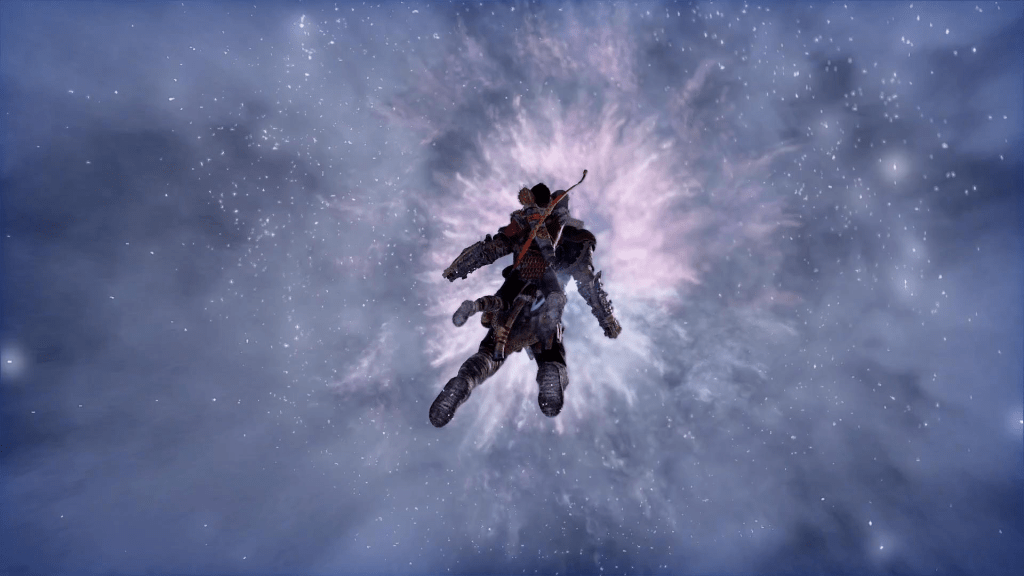
In God of War, inter-realm travel requires traversing a celestial path within a massive void referred to as the Realm Between Realms. While on this path, Kratos is warned to not stray lest he wish to suffer potentially deadly consequences. In learning how to access Jotunheim, the party realizes that Tyr utilized a magical travel rune to depart from the path; this was how he was able to visit other cultures and lands. Filled with trepidation, Kratos and Atreus realize they must depart from the straightforward road and instead explore the dangerous depths of the astronomical vacuum around them. Kratos breaks from the trail, approaches a great ledge that mirrors the very cliff he threw himself from years ago in attempted suicide, his family and any chance for happiness taken by his own bloodied hands. Kratos steps to the ledge and gazes down into the purple abyss, once again inches away from the death he once desired.
But Atreus steps up next to him, Kratos’s living redemption. Though imperfect and far too much like Kratos for the Spartan’s comfort, his son’s life is precious. In Atreus, the tired Kratos finally finds a reason for moving forward, for clinging to life despite all of the dead who haunt him. Kratos has lived through an impossible degree of heartache and hardship, suffered many mortal wounds of the body and soul. But he is still here on the precipice of danger, his boy climbing onto his back, eager for the adventure that still awaits them. Through trials and travel, the boy has grown to trust his father implicitly, the walls between them crumbling slowly down. He has seen some of Kratos’s worst deeds and loves him anyway, finds comfort in his father’s steady strength. With Atreus clinging tight, Kratos falls forward from the path, only now not to die, now no longer on his own.
The trio gain access to Jotunheim, though they need one final key to complete their journey: Mimir’s missing eye. Odin removed the eye over a century before and hid it within a statue of Thor, one that has since been devoured by Jörmungandr, the world serpent. Jörmungandr is an incomprehensibly enormous snake, one said to have been knocked into the past by a mighty blow from Thor at Ragnarök, the cataclysmic event predicted to take place at the end of times. Kratos and Atreus encounter the serpent several times throughout the game, and—though its grisly appearance harkens back to the monstrous enemies Kratos slew in Greece—it is always friendly, treating Atreus in particular with a familiar respect. Due to the snake’s affection for Atreus, it allows the trio to enter its mouth via boat to search for Mimir’s missing eye. Though they achieve their goal, the group is interrupted when the serpent is violently attacked from outside.
Jörmungandr spits up Kratos, Atreus, and Mimir onto a stretch of Midgardian land near Thamur’s corpse, and Freya soon joins them. In Helheim, Kratos and Atreus learned the truth of Freya’s relationship with Baldur, that she granted the god his invulnerability and consequently earned his ire. Baldur appears before the group, revealing himself to have assaulted the world serpent. Though Kratos and Atreus have mostly worked through their differences, Baldur still hates Freya for her overbearing nature, her decision to remove his ability to feel. Similar to Kratos, Freya is rife with guilt over her past actions. She accepts Baldur’s desire to kill her, even expressing willingness to allow him to. But Kratos steps between them. In Baldur’s murderous rage toward his mother, Kratos sees himself and Zeus, the cycle of god killing god, child killing parent. He stops Baldur, tries to teach the angry Aesir that vengeance on one’s misguided parent will accomplish nothing. Killing Zeus did not absolve Kratos of sin, did not drive away his guilt and rage. Baldur rebuffs the Spartan’s wisdom and attacks, though Freya soon separates them with binding tree roots. Baldur breaks free first. He approaches Kratos, but Atreus, having grown to truly love his father, stands in the way. Though small in body, he reveals his mighty spirit, his courage to face any threat to his dad. Baldur rewards the boy’s effort with a powerful punch to the chest, one that sends him crashing into Kratos and coughing up blood.
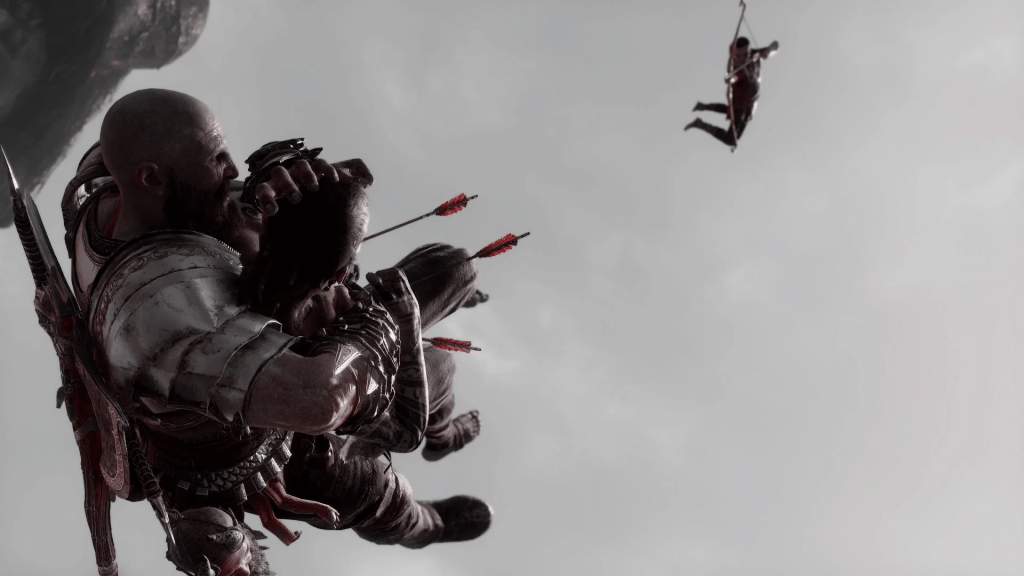
But Atreus is not as fragile as he once was; like his father, self-acceptance grants him strength, empowers him to withstand Baldur’s strength. As Kratos helps Atreus to his feet, they are shocked to see Baldur bleeding. His fist collided with the mistletoe Kratos used to repair Atreus’s quiver, breaking Freya’s spell and Baldur’s skin. Instead of fear, Baldur expresses glee at the sensation of pain, at regaining the ability to feel. Consumed by dismay, Freya reanimates Thamur’s massive corpse, attempts to use it to prevent the upcoming battle between Kratos and Baldur. She is unsuccessful. Kratos and Atreus clash with the Aesir, engaging in a furious final duel to protect both Freya’s life and prevent Baldur from taking Atreus under Odin’s orders. Early in the game, Baldur kept Kratos on the ropes, his invulnerability almost proving too much to handle. Now he is vulnerable, able to feel pain, to die. Kratos uses both the Leviathan Axe and the Blades of Chaos in harmony as he fights, merging the sins of his past with the hopes for his future. He stakes everything on stopping Baldur, though he is not alone: Atreus, his skills now sharply refined from their realm-trotting adventure, unleashes volley after volley of arrows against Baldur, granting Kratos the edge in battle by a wide margin. Though forced to hide in the house when Kratos fought Baldur at the beginning of the game, he is now trusted to fend for himself, to give Kratos the advantage he needs to defeat the Aesir. Throughout the skirmish, Freya desperately tries to stop both sides using Thamur, often lifting them in the air or blocking off parts of the battlefield. One particular sequence shows the two heroes working in perfect synchronization as they fight Baldur in free fall: Kratos restrains Baldur while Atreus blasts the Aesir with flawless shots.
After a bloody fray, Kratos beats Baldur into submission, prepares to do what he once did best: execute a god. Freya pleads with the Spartan to spare her son. Luckily, Atreus has impacted his father as much as Kratos has impacted him. The boy reminds Kratos of his earlier lesson, one preached by the Spartan and taught by the actions of the absent Tyr: one can always choose to be better. Kratos heeds his son’s advice and releases Baldur. He warns the Aesir to avoid both he and Atreus, or his mercy may eventually run thin. But Baldur’s priority has never really been Kratos or his son. Above all else, Baldur seeks vengeance against his mother. As Kratos and Atreus begin to depart, Baldur wraps his hands around Freya’s throat. Freya, overcome with guilt over breaking her son’s heart, submits to his attack.
However, out of gratitude for her saving Atreus, Kratos refuses to let Freya die. He approaches Baldur from behind and takes the Aesir’s head into his massive arms. “The cycle ends here,” Kratos says, while Atreus and Freya watch on. He seeks to set one final example for Atreus, to show that he is no longer the man from the beginning of the game who keeps to himself and lets gods sort out their own problems. Kratos finally accepts his own divinity, the responsibility that accompanies such power.
Kratos has learned the very lesson he has parroted to Atreus throughout the duration of the game’s narrative. While he dismisses Atreus’s apologies over small mistakes, Kratos is the one who is full of immense sorrow. Sorrow for who he is, sorrow for his violent past, sorrow for the loss of any friend or family unfortunate enough to cross his path. In growing with Atreus, Kratos finally forgives himself and stops being sorry. He chooses improvement, a future of trying harder, of being a better man, a better god, than he was the day before.
“We must be better,” Kratos says. He snaps Baldur’s neck, ending the life of one who was believed unkillable. Freya wails with grief over her son’s death, vows vengeance on Kratos for what he has done.
“You are just an animal,” Freya cries, her words mirroring Athena’s taunts in Kratos’s cabin. “Passing on your cruelty and rage. You will never change.” But where earlier Kratos accepted Athena’s insult, his bond with Atreus has strengthened him. His son’s compassion reminds him of his softer side, of the man who once loved Calliope and Deimos. Kratos has changed, through both the love of the late Faye and his raising of Atreus. He rebuffs Freya, in full confidence that she is wrong.
“Then you do not know me.”

Freya targets Atreus, implies that the boy only loves Kratos because he is unaware of his dad’s horrific misdeeds, his slaying of gods, of his father. So Kratos tests her theory. He tells Atreus everything: his service to Ares, his long history of murder, his act of patricide. Atreus is stunned by his father’s admission. He wonders if everything is hopeless, if all gods are fated to hate and kill their fathers, if he and Kratos are playing into the same cycle. But Kratos remains steady; he reassures Atreus that they are not the gods of old, Greek or Norse. Instead they will be the gods they choose to be, gods like Tyr, who lead with compassion and honor. The cycle of familial bloodshed ends with them.
Freya swears to kill Kratos and carries Baldur’s body away. Though saving her life, Kratos has become a villain to her, a destructive force she wishes she never encountered. With no more obstructions in their path, Kratos and Atreus finally set off for Jotunheim. Mimir voluntarily stays behind under the watchful eyes of Sindri and Brök. As father and son finally enter the realm of the giants, both are overwhelmed by its vast majesty, its isolated beauty. Jotunheim is a boundless land, its horizon cast in a perpetual sunset. The gravity of their journey’s ending leaves Kratos emotional. As Atreus continues ahead, Kratos takes a moment to look out over the expansive valleys, the broad mountain ranges in the distance. In this climactic moment of clarity, the Spartan recounts his travels with Atreus, his relationship with Faye. He thinks of his struggles in Greece, of a lifetime rife with tragedy. But here he still stands, and only a few feet away is the boy who saved him. Kratos unravels the wraps on his forearms, lets the wind carry them away and into the distance. The twisted scars from his Olympic chains, his lack of self-forgiveness, no longer matter. Through Atreus’s acceptance, he is no longer ashamed.
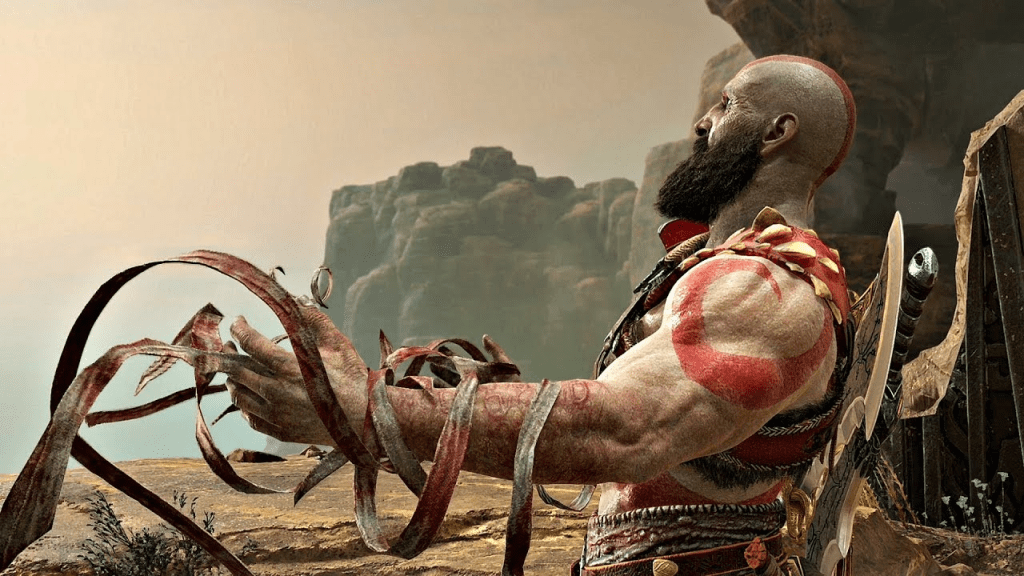
“I have nothing more to hide,” he says, arms outstretched, heart open to what lies ahead. As he catches up to Atreus, Kratos removes the pouch containing Faye’s ashes from his own waist. He hands them off to his son, his full trust for Atreus now apparent. The duo continue to climb this final mountain, entering a cave covered wall-to-wall in giant wooden plaques detailing the many prophecies predicted by the Jotnar over the ages. These carvings depict the follies of the Norse gods, of Odin and his family. They portray the pains of the Jotnar, their abuse at the hands of the Aesir. But as Kratos and Atreus reach the cave’s end, they discover a set of plaques dedicated exclusively to them, their travels presented beat-for-beat, all of their actions until now predestined. The pair discover that Faye was a famous Jotnar named Lauffey, and that she abandoned her people to live a life in Midgard. They also learn Atreus actually has another name given to him by his mother: Loki, the prolific god of mischief from Norse mythology. This narrative twist lines up with actual mythos; the mythological Loki is the son of the giants Lauffey and Fárbauti, whose role Kratos fills in God of War. Little is known of Fárbauti in actual myth, only that his name essentially means “dangerous striker.” This obscure hole in Norse mythology is brilliantly utilized by Santa Monica to simultaneously fit Kratos into their new story and honor the ancient culture they pull from.
These revelations excite Atreus, leaves him curious over the meaning of his Norse name. As Atreus rushes to the mountain’s peak, Kratos discovers one final plaque concealed behind a curtain. It depicts an adventure to come, trials the duo will face, gods they may encounter. But it also shows a crying Atreus on his knees, a figure resembling Kratos lying dead in his arms. Kratos covers the plaque and keeps quiet, joining his son at the mountain’s top. There they discover a mass grave of Jotnar corpses, each strewn haphazardly over another. Atreus realizes he may be the last Jotnar, and Kratos understands this is one of the reasons Faye ordered their ascent. While looking out over the giant graveyard, Kratos and Atreus complete their task: the pair open the pouch and, together, spread Faye’s ashes to the wind, watching as they disperse out over her fallen kinsmen. Father and son watch on in silence, the once-threadbare bond between them now strong and sure, sturdy enough for whatever a future of intrusive Aesir or vengeful Vanir may hold.
Throughout the game, Atreus begs his father to tell a meaningful story, to allow him a glimpse of the Spartan’s past. With Mimir’s heckling, Kratos attempts to do so multiple times, but his tales always fall flat. As they descend the mountain, Kratos reveals to Atreus the source of his name. He recalls a kind-hearted soldier who once served him, one who spread his compassion throughout the ranks. This Atreus was such a source of light that he could even brighten up the reserved Kratos. Even when he died, Kratos remembers, the young soldier had a smile on his face. He named his son after him in the hopes that his Atreus would shine with kindness in the same way, would bring joy to those around him. Somewhere along the way, Kratos forgot this wish. He stopped seeing the potential good in his son, replaced “Atreus” with an unsentimental “boy.” But now Kratos remembers naming him, remembers the second chance both Atreus and Faye gave him. The duo collect Mimir and finally head home.
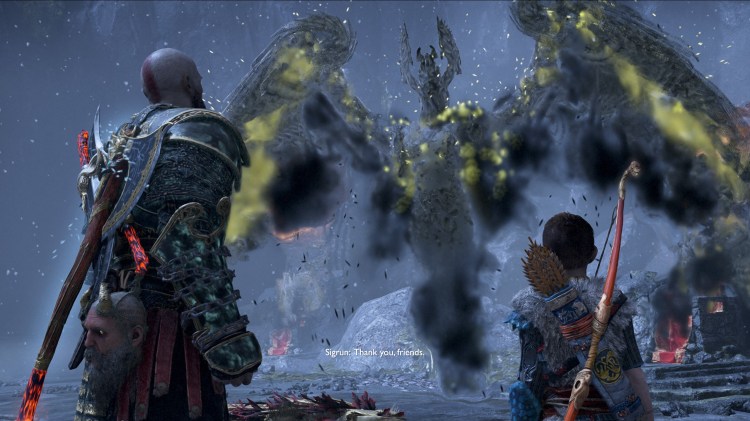
Unfortunately, several threats are brewing in Midgard. The cataclysmic Ragnarök is said to be preceded by a long season of apocalyptically cold weather, a period referred to as Fimbulwinter. Snow begins to fall heavily in even the sunnier regions of the human realm; bits of the lake Kratos and Atreus traverse start to freeze over. Brök and Sindri remark on the plummeting temperature, the end times promised by such drastic climate change. In Norse mythology, Baldur’s death at the hands of Loki triggers Ragnarök, and it seems the same order of events may play out in God of War. Mimir informs Kratos and Atreus that, in their brief absence, he encountered Freya. She had recovered her valkyrie powers, armed herself in preparation to reap vengeance on her son’s killers. Atreus can not understand her rage, but Kratos does. He realizes the choice of life he has robbed from her, the same decision stolen from him years ago by Athena.
The game ends with a dream sequence, perhaps a prophecy: after returning home to sleep, Kratos and Atreus are shaken awake three years later by violent thunder. As they emerge from their cabin into a torrential downpour of freezing rain, they spot a hooded Thor who has arrived at their doorstep with motives unknown. Thor reveals his hammer, clearly prepared for a violent confrontation. But Atreus awakens, finds that Fimbulwinter has yet to fully set in. He sees his father beside him, preparing for yet another day, the future before them wide and untold. Both Kratos and Atreus have sinned, but within the other they have found forgiveness. The past is to be learned from. Ragnarök itself may be approaching, but it is tomorrow’s problem. Though they will brace for events to come, for now there is only today, another unknown journey before them. Atreus straps on his quiver and bow, follows Kratos out into the snow.
 Red Comet Reviews