God of War
For many children of the early 2000s, owning a copy of God of War was a sign of having cool (or oblivious) parents. An entire generation of kids—jaws dropped in raw awe—committed brutal executions against mythical beasts and undead soldiers. These kids hammered circle buttons to finish the game’s sex mini-game, their burgeoning curiosity overshadowed by their fear of an intrusive parent.
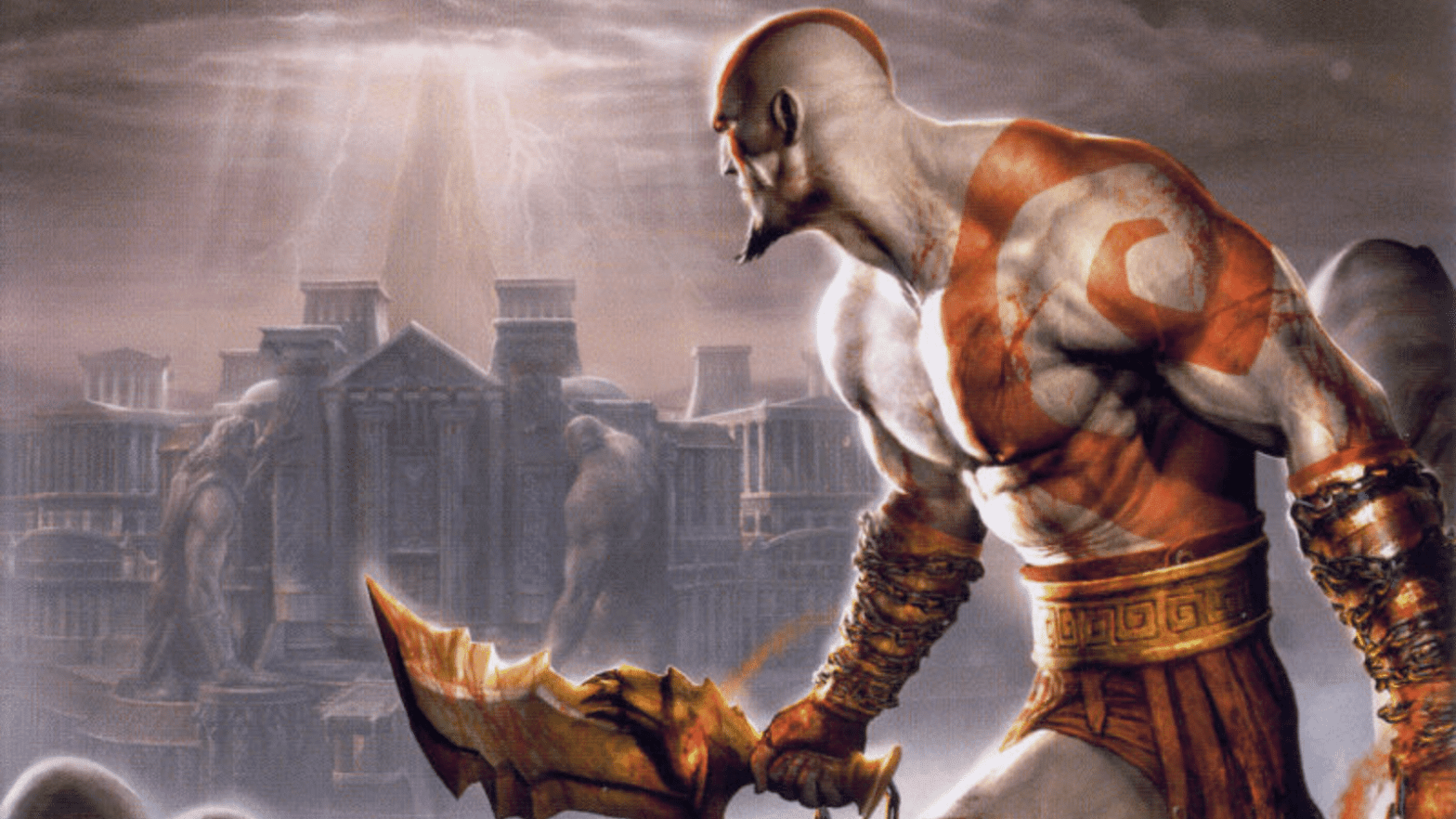
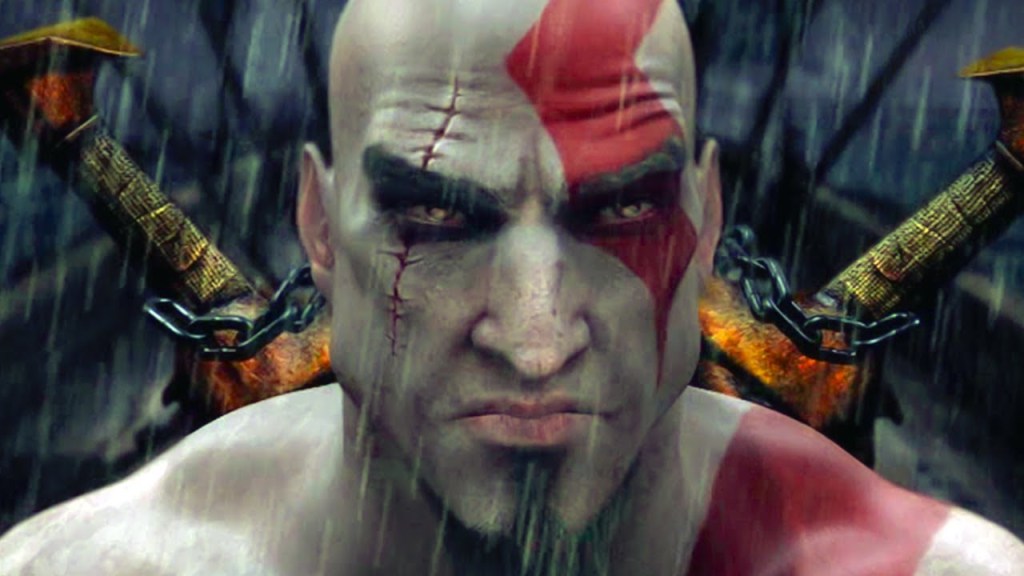
When compared to other gaming mascots of the era, Kratos, God of War‘s protagonist, harshly stands out. On the same console, most kids would more likely be playing Sly Cooper or Kingdom Hearts—stories with easily-digestible themes and cartoonish combat. Unlike other kind-hearted PlayStation mascots, like Kingdom Hearts’ Sora or Ratchet and Clank‘s eponymous duo, Kratos was not a figure parents would want their children to aspire to be. Sporting an eternal grimace and a striking red tattoo over his face and torso, the spartan warrior ripped through his enemies in a storm of 480p viscera. He rescued almost no one, sometimes even going so far as to kill the innocent himself.
While family-oriented video games of the time featured heroes fighting for some noble cause like world salvation, Kratos was simply hellbent on his vengeful quest to murder one enemy: Ares, the Greek god of war. Kratos’s backstory is gradually revealed throughout the events of the first God of War. Like most able-bodied Greek men, Kratos lived a life of military conquest. Born in the city-state of Sparta, Kratos enlisted in the legendary Spartan army. The caring man Kratos may have grown into is squashed by the horrific trials that the famously brutal Spartan training entails. In Ghost of Sparta, Kratos is depicted as a child who cares for his brother Deimos and mother Callisto dearly, though he hides this beneath is layer of stoicism. This concerned boy is unrecognizable in the man players see in God of War. Through military conquest, Kratos quickly earned enough combat valor to be promoted to the rank of general, gaining the leadership of elite soldiers and utilizing them to dutifully sack numerous cities in the name of Ares. Kratos’s success crashed to a halt after a conflict against eastern barbarians. As his fellow Spartans were slain around him, Kratos offered Ares a desperate plea: his one-track service in exchange for the god saving his life. Through divine intervention, Kratos was spared. In return, Ares gifted him with two barbaric weapons dubbed the Blades of Chaos. The blades are attached to Kratos via chains that permanently melt into his flesh, caking his forearms in thick scars. Kratos used these powerful blades to massacre entire cities in the name of the god who rescued him.
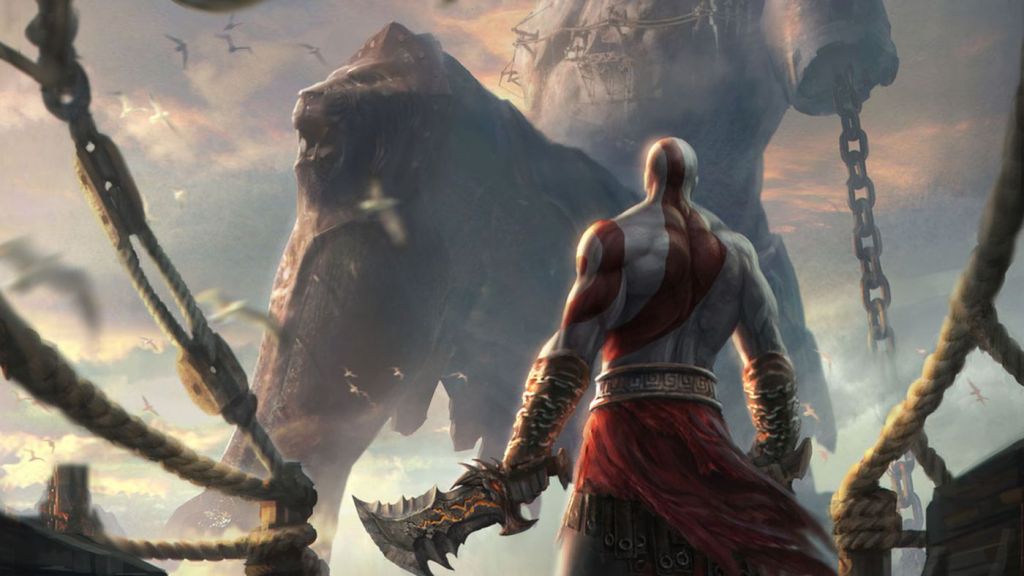
Despite the opening hour of God of War depicting Kratos as a ruthless killing machine, the Spartan warrior has always held a softer side—one now largely forgotten in many discussions that cite God of War (2018) as completely converting the antihero into a sensitive man. Many players lament the ridiculously perceived lack of badassery in Kratos’s modern depiction. The same kids who illicitly played God of War too early in life remember him as a stoic warrior who cared for nothing but drawing blood—but this couldn’t be further from the truth. In reality, each of the early God of War games highlight the complexity of the Spartan general. Kratos was once devotedly married to a woman named Lysandra, and from the couple came a daughter, Calliope. Flashbacks featuring Kratos’s family are sprinkled throughout the series, but these glimpses successfully paint the portrait of Kratos as a decent family man. His relationship with Calliope is particularly fleshed out throughout his Greek adventures. In particular, the PlayStation Portable spinoff Chains of Olympus showcases Kratos’s love for his daughter above all else. A late cutscene in the underplayed Ascension, which is otherwise light on story, demonstrates Kratos’s remorse over his Spartan service separating him from his family, his growing desire to be by his family’s side instead of waging wars overseas.
When the gameplay calls for Kratos to be an unflinching force of destruction, the player may easily forget the true tragedy that lies at the heart of Kratos and his many plights. In the end, Kratos is always but a tool of the Greek pantheon and their petty familial squabbles. The perceived inhumanity that Kratos embodies is exactly what the Greek gods seek to hone as a weapon. Kratos is the plaything of Zeus and his godly ilk, his potential happiness an obstacle that stands in the way of the gods using the Spartan for their own nefarious methods. At the behest of Ares, many of Kratos’s military conquests before God of War involved slaying slews of innocent civilians whose only “crime” is worshiping Athena, Ares’s sister. Ares openly views Kratos as his tool; he uses the Spartan like a sword, slices through Athena’s followers in order to deal small blows to her. Athena herself uses Kratos throughout the God of War series, though she does so through a veil of good intentions. Despite appearing to have his best interest at heart, Athena weaponizes Kratos’s rage and turns him against Ares, convincing him to murder the god by the end of the first game. The very first cutscene in God of War takes place after Kratos has stricken down his former idol; the player sees a hopeless Kratos on the ledge of the highest peak he can find. “The gods of Olympus have abandoned me,” he mutters, his voice hollowed out by remorse. Kratos then casts himself into doom, plummeting toward a likely suicide. The exact reason for Kratos’s immense depression is only fully revealed in the game’s finale.
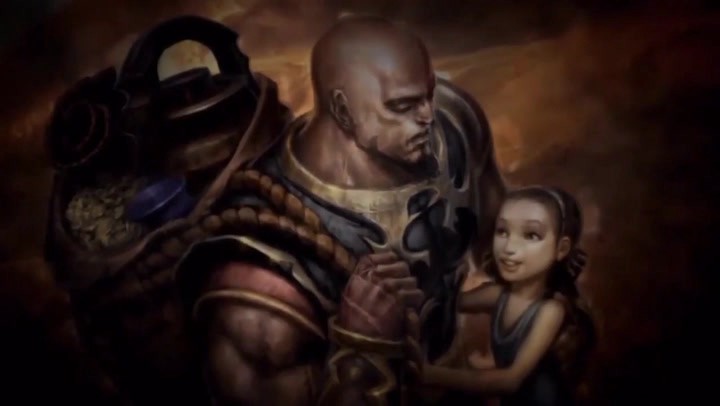
Once a loving husband and father, Kratos is transformed by Ares into a single-minded slaughterer. The antagonistic Ares works behind the scenes to free Kratos of any human connection, viewing the Spartan’s familial ties as his only weakness. To accomplish his goal, Ares transports Lysandra and Calliope to a village housing one of Athena’s temples before ordering Kratos to raze the camp to the ground. In his blind assault, Kratos inadvertently cuts down his beloved wife and precious daughter with the blades Ares gifted him. As life drains from their bodies, so too does humanity evacuate Kratos. He becomes exactly what Ares desired him to be: a merciless killer, cold-blooded and catastrophic in his violent pursuits. To make matters worse for Kratos, he is plagued nightly by dreams of his misdeeds. He sees time and again the Blades of Chaos cutting through Lysandra, Calliope collapsing beneath one lethal blow. Kratos seeks only to end his nightmares, to be with his family once again in death. He is given the moniker “Ghost of Sparta” due to his bleached white skin, the ashes of his wife and child grafted onto him and forever obscuring his dark complexion. The alias also fits his emotional vacancy, as Kratos is figuratively dead inside already.
Enter the saintly Athena, goddess of not only wisdom but also warfare. Athena is the antithesis of Ares; she is kind of the surface, acts as if she earnestly wishes to help Kratos end his suffering. Athena offers Kratos a way to clear his mind: in exchange for killing Ares, she promises to rid him of his nightmares. However, while Ares used Kratos as an arbiter of chaos, Athena seeks to use him as an enforcer of her will. By killing Ares, Kratos will bring order back to Greece and Olympus. Kratos is propelled by guilt to take Athena’s offer, hoping to free himself from his chains and live in peace without the memory of his family’s blood splattering over him, his own blades shredding their skin and sinew.
But Athena’s true machinations aren’t clear until the game’s closing moments. During his final battle with Ares, Kratos is taunted by the god of War. Ares wages psychological warfare with his former herald, allowing him the opportunity to defend his family from many clones of himself. The story is further expounded upon by the gameplay. Santa Monica Studios does an excellent job throughout the franchise of reinforcing a game’s themes in key gameplay moments. As Kratos, the player is tasked with protecting his family and preventing their health from reaching zero. If the family takes a substantial amount of damage, Kratos can heal his family by embracing them. This action utilizes the same button input mapped to the many executions Kratos has committed earlier in the game. This beautifully reflects the duality of God of War‘s tortured protagonist: Kratos is a killer, capable of horrific acts of violence. But at his core, he wants to be a good man, a reliable leader, a loving father. With the same button capable of ripping the heads from his enemies, Kratos can heal his family. After a long struggle, Ares demonstrates a tragic truth: there is no magic spell that can free Kratos of responsibility for his actions. His slate will never really be clean. Kratos watches his family die once again, and he uses the ensuing rage to do what should be impossible: kill a god.
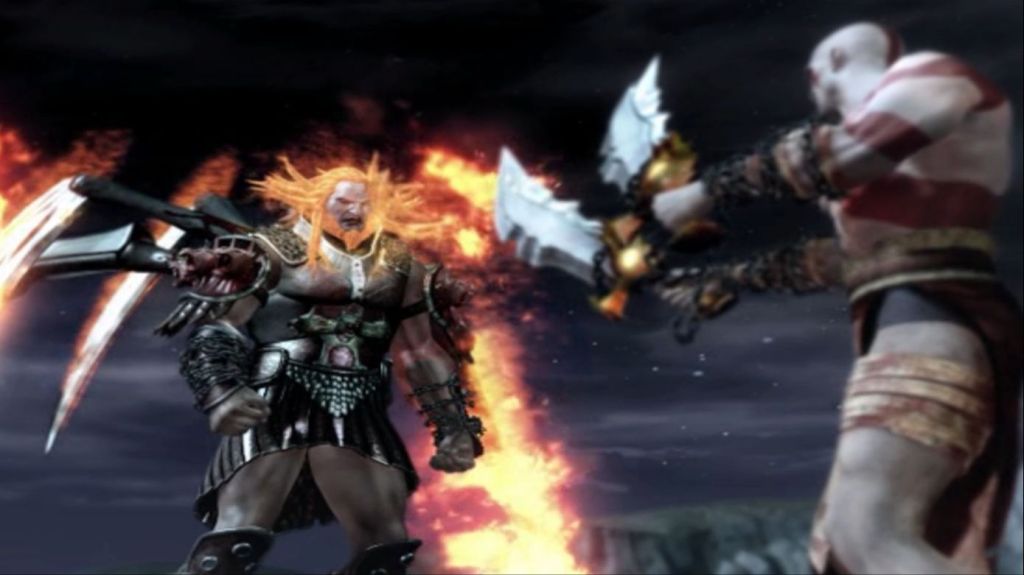
As Ares lies dead, Athena reveals to Kratos what he perhaps already knows. She can’t actually lift his burden, and he will dream of his dead family for as long as he lives. So Kratos finds himself on the precipice of death, abandoned by the god who promised to rescue him from his past. He hurls himself to certain doom, eager to be rid of his unending guilt. But Kratos isn’t killed by the fall. He dies many times throughout the franchise, but death has a way of not sticking for the Spartan. Athena rescues Kratos against his will, convinces him to cast aside his mortal concerns and ascend to take the godly throne Ares left vacant. Unable to die as he wishes, Kratos reluctantly becomes the new Greek god of war, vowing to use his immense power to raise hell for the gods who constantly toy with him.
Chains of Olympus
Though the three spin-off games do little to advance the overarching narrative, each title provides insight into Kratos’s bleeding heart. Both Chains of Olympus and Ghost of Sparta highlight Kratos’s relationship with a single key family member. The former takes place before God of War, when Kratos still dutifully served Ares. In Chains, Kratos investigates the disappearance of the sun from the sky. His inquiry draws him to the underworld, where he is haunted by the voice of Calliope. Kratos is frequently distracted from his main objective each time he hears his dead daughter hum an old song, her ghostly voice playing on his bottomless guilt and drawing him deeper into Hades.
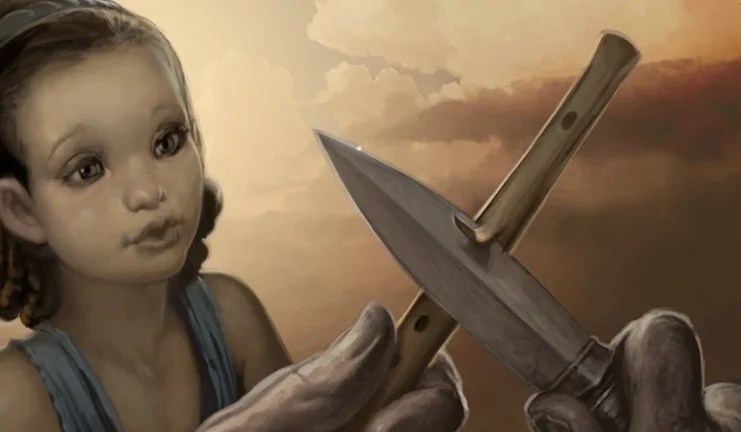
Kratos discovers that the Titan Atlas, once imprisoned in the depths of Tartarus, has somehow escaped its confines. Through a series of travels and trials, Kratos unfurls a vengeful plot set in motion by Persephone, the goddess of seasons. Sick of her miserable, unwilling marriage to Hades, Persephone seeks the destruction of Olympus. Like Athena and Ares in the main trilogy, she manipulates Atlas’s resentment for Zeus and utilizes him to accomplish her goal. When Kratos finally confronts her, Persephone presents to him Calliope’s soul, forever at peace in the Elysium Fields. The goddess grants Kratos the chance to join her, to have not only the finality of death he craves but also reunion with his most loved one. For a moment, Kratos accepts her offer, content to spend the rest of eternity with Calliope, a more peaceful fate than he deserves. However, he realizes Persephone’s true aim: by destroying the Pillar of the World, Persephone will decimate both Olympus and the underworld, including the Elysium Fields and all of the souls who reside there. While Persephone’s objective may seem extreme, her motives are relatable to the Spartan; he too has lost everything at the will of the gods, and he desires little more than to see them pay for their sins. Kratos is faced with a loaded choice: spend his final moments with Calliope and allow her soul to be wiped away with the rest of the world, or abandon his daughter in eternal peace and stop Persephone’s plot.
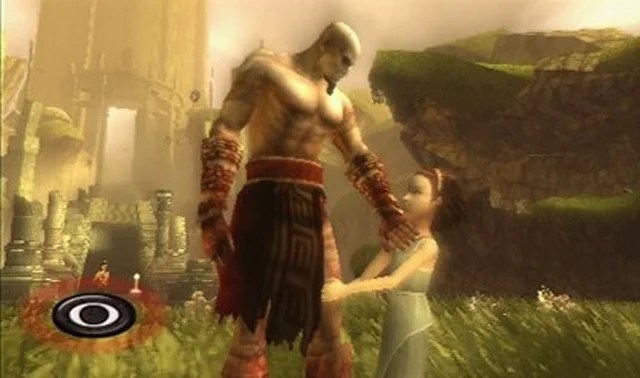
Kratos’s heartbreaking decision is presented in gameplay similarly to the climactic battle in God of War. As Calliope clings to his leg, begging him to stay, the player must mash the circle button in order to push her away. The first attempt is unsuccessful, as gameplay merges perfectly with narrative. Kratos does not want to leave his daughter, but he knows that shoving her aside is the only way to offer her everlasting tranquility rather than a few pleasant moments with her distant father. Kratos steels his heart and deserts his daughter, finding the willpower to kill Persephone and reluctantly rescue Olympus—though he will eventually fulfill the goddess’s desire on his own.
Ghost of Sparta
Ghost of Sparta is the only thorough glimpse players get into Kratos’s tenure as the god of war. The foundation of the game’s narrative is built through brief flashback sequences. Kratos is revealed to have had a brother, Deimos. Deimos serves as a foil for Kratos; though the Spartan has always had a soft side, his hard-headedness and stoicism have steered him since childhood. Where Kratos is cold, Deimos is warm. He is kind-hearted and admires his brother above all else. Kratos desires to become a great Spartan warrior, and Deimos, despite lacking his brother’s constitution, wants to make him proud by becoming a Spartan as well. Kratos tries to strengthen his brother through rough combat practice, frequently leaving his younger brother bruised and beaten. Their adolescent appearances also contrast greatly: while Kratos is physically unblemished, Deimos was born with unique birthmarks that trail across his entire body.

Ghost‘s story includes the recurring thematic relevancy of prophecies and the gods’ attempts to subvert them. After hearing a prophecy that a “marked warrior” will one day slay him, Ares—accompanied by Athena—abducts Deimos one afternoon while he and Kratos are training each other in combat. When Kratos tries to stand up to the god, Ares strikes him down, leaving the signature scar through his right eye that Kratos sports long into adulthood. While Ares wishes to casually kill Kratos for his insolence, Athena secretly knows the truth of the prophecy: Kratos will accrue red tattoos to match the birthmarks of the brother he believes dead. He will become the “marked” murderer of Ares and even eventually dethrone Zeus himself. Athena convinces Ares to spare the Spartan’s life, and Kratos fosters a lifelong guilt over the loss of his brother. In actuality, Ares delivers Deimos to Thanatos, the god of death. Thanatos tortures his new captive for many years, transforming the gentle boy into a hateful man, one who resents his older brother for not rescuing him.
As the god of war, Kratos discovers evidence that Deimos is alive, imprisoned in Thanatos’s domain. He embarks on a journey to free his brother, using his godly powers to decimate powerful foes and save many of his Spartan followers along the way. One particular group of Spartans rewards Kratos with a spear and shield, allowing the player to experience Kratos’s Spartan fighting style and adding a fresh layer of complexity to the combat gameplay. The new weapon set also holds narrative weight, beginning a trend in the series of weapons other than the Blades of Chaos carrying personal stakes for Kratos.
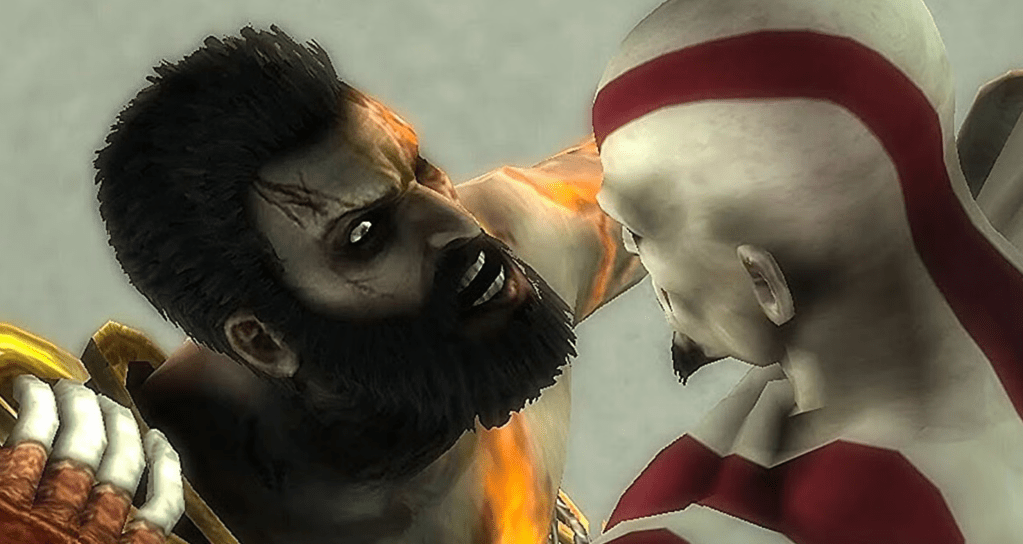
After slicing his way through numerous monsters, Kratos ultimately finds and extricates Deimos. But Deimos has had years to stew in indignation, his misplaced bitterness festering for over a decade. He attacks Kratos, unleashing the years of pent-up rage against his undeserving brother. Succumbing to guilt, Kratos allows Deimos to nearly take his life. However, Thanatos interrupts the sibling spat, snatching Deimos and whisking him away to lure Kratos into further danger.
Kratos rescues Deimos from Thanatos’s clutches, arms his brother with the same spear and shield granted to him by his Spartan subjects. This exchange essentially completes the Spartan training the brothers engaged in as children, Deimos now strong enough to hold his own against Kratos. Finally fighting side-by-side as Spartans, the brothers defend themselves against the monstrous Thanatos. But their reunion is short-lived: in a burst of strength, Thanatos crushes Deimos to death, ending his temporary life of freedom. In return, Kratos enacts swift, lethal vengeance on the god of death. Kratos cradles his younger brother in his arms, and—steered by the player—embarks on a long trek to ultimately bury him. The length of the walk allows players to feel the growing weight on Kratos’s shoulders, the guilt that expands within him. Kratos vows to use his divine power to wreak further chaotic havoc on the rest of the pantheon, setting him on a fated collision course with his father, Zeus.
God of War II
Despite his gruff exterior, Kratos is always driven through his grandiose journeys by his wounded feelings, the guilt he feels over the loss of his few loved ones. In the sequel God of War II, eight years have passed since Kratos’s divine ascension. Much of the Spartan’s sentimentality has been stripped away by his service to Olympus. Kratos acts as a wrathful god not dissimilar to his predecessor Ares: he uses his armies to ransack cities that swear fealty to his fellow gods. Sensing the future threat that the Spartan will bring to Greece, Zeus betrays and fatally impales the god of war. To add insult to injury, Zeus massacres the legions who worship Kratos. This act of cruelty inadvertently reignites the soul in the otherwise callous god of war. Kratos literally climbs his way back from death, seeks out the mystical Fates who are capable of rewinding and changing time. On his quest, Kratos slays a roster of famous Greek heroes, including Perseus and Theseus. He accrues and weaponizes a slew of mythical items like the Golden Fleece, utilizing these legendary objects to ultimately slay the Fates, travel backward in time, and confront Zeus at the moment of the older god’s betrayal.
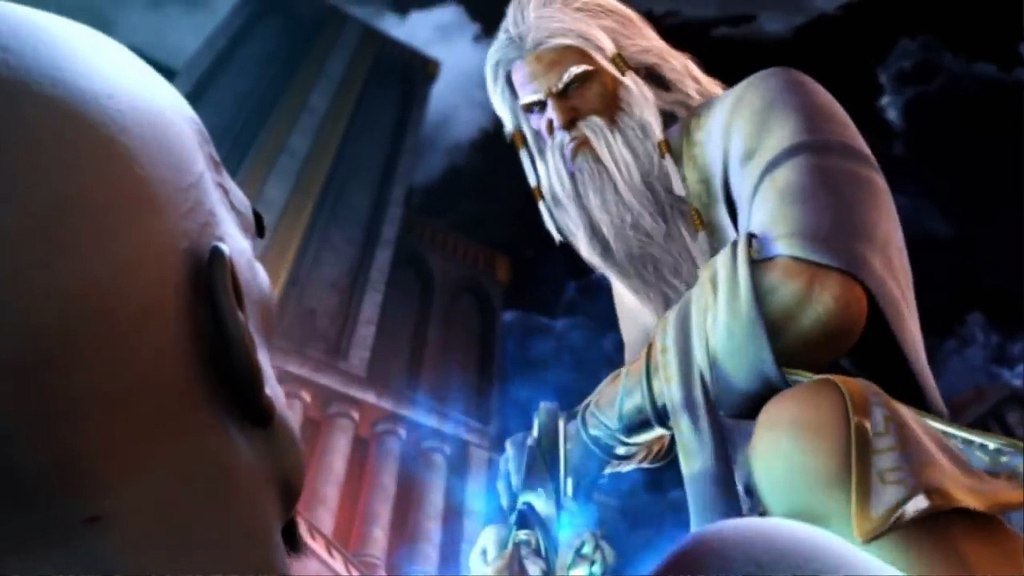
The depiction of Zeus in most Greek myths is that of a widely revered yet greatly flawed mighty god. Many myths detail Zeus’s romantic affairs, and a number of famous Greek heroes stem from these sexual encounters. Zeus has cataclysmic daddy issues: his siblings were devoured as infants by the Titan Kronos, their father. Kronos swallowed his children out of fear that they would one day grow up to slay him, as he himself did to his own father, the primordial deity Uranus. Zeus was whisked away at birth and raised in secrecy by his grandmother Gaia. Through extensive training, Zeus—much like Kratos—hardened his heart and grew into a fearsome warrior. He waged war with his father and the other Titans, freeing his siblings from Kronos’s captivity and overthrowing the Titans’ hierarchy. Though he spared his father’s life, Zeus trapped Kronos in a fate worse than death: eternal suffering in Tartarus, the deepest pit of the underworld. This tragic cycle of fathers killing sons is prevalent throughout all of Greek mythos, and it is also the very heart of the God of War franchise. God of War‘s Zeus acts as a natural extension of Greek mythology. His long history of petty assaults and shallow sexual infidelities is intact.
Many of the actions Zeus takes both before and throughout the series are in an effort to put off the same dreaded fate of his father and grandfather. One of this Zeus’s many paramours was none other than Callisto, Kratos’s mother. Unbeknownst to Kratos, Zeus’s murder of him is an attempt to subvert the cycle of violent overthrow. By snuffing out the rebellious Kratos, Zeus eliminates the biggest threat to his godly rule, to his life of opulence and trifles. But unfortunately for Zeus, his betrayal is what gives Kratos new purpose, provides fuel for a murderous rampage to avenge his dead soldiers. Before Zeus’s betrayal, Kratos wanted little more than a true death. Had Zeus struck him down and left his armies alone, Kratos may have died in peace, sought out his beloved Calliope and Lysandra in the underworld. However, Zeus’s savagery instilled in Kratos a new reason to live: to avenge all lives collaterally lost through the petty antics of the gods.
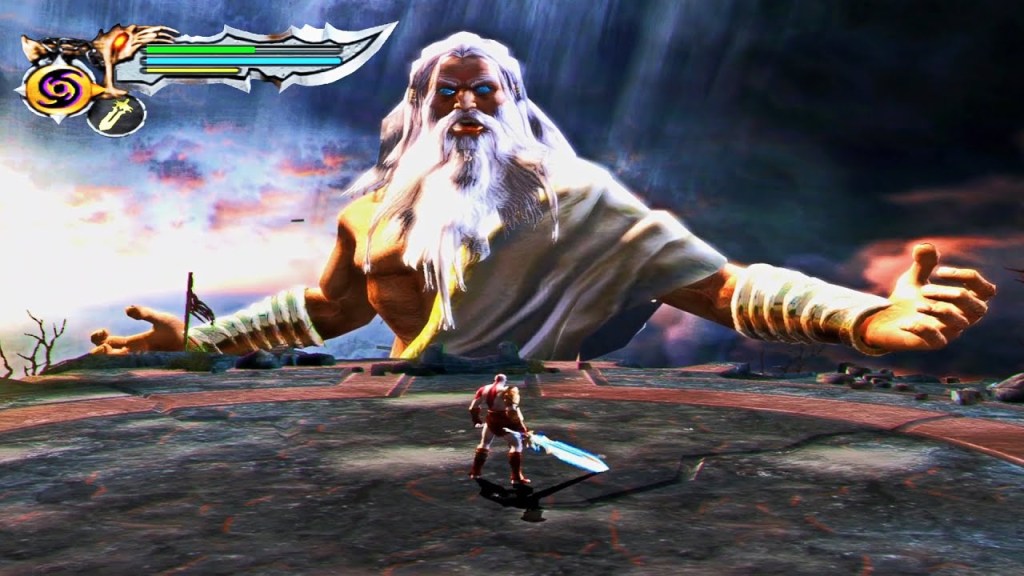
Though Kratos is able to defeat Zeus, Athena interrupts him before he is able to deal the killing blow. The death of Zeus will result in widespread chaos throughout Greece, the fragile order upheld by the gods crumbling to ruin. Here Athena reveals her true colors: defender of the status quo, a conniving god willing to use Kratos to sustain her comfortable Olympic way of life. But Kratos is finished with fate, sick of existing as merely a weapon for divine familial rivalry. He takes one final lunge for Zeus—but Athena is willing to give up her physical form to ensure her father’s reign remains everlasting. She throws herself in front of Kratos’s blade and dies in Zeus’s place. Though Kratos once mourned for Calliope, Zeus is unmoved by his daughter’s mortal sacrifice. He flees the arena and summons his siblings and sons to defend Olympus from Kratos’s unyielding wrath. Meanwhile, God of War II ends with Kratos taking a page out of Athena’s book: he decides to weaponize the Titans, the only beings capable of brawling toe-to-toe with Zeus’s family. He travels back in time to the original battle between Zeus’s siblings and their Titan predecessors, and he brings the Titans to the present in order to storm Mount Olympus and slay his father.
In fighting to prevent fate, Zeus unwittingly sets his doom in motion. This theme appears time and again throughout the series, and it is even the foundation for the events of God of War: Ragnarök. Acting out of fear, Zeus essentially fills the shoes of Kronos: terrified of a son that may one day kill him, he seeks to control and then ultimately cuts down Kratos. On the other hand, Kratos plays out the same cyclical role of the younger Zeus: trained by a deity—in this case, his unknowing half-brother—to be the ultimate warrior, he pursues vengeful justice against his tyrannical father. The conclusive clash between father and son is predestined, and, much like Kronos, any attempt to prevent this fated battle actually makes it more inevitable.
God of War III
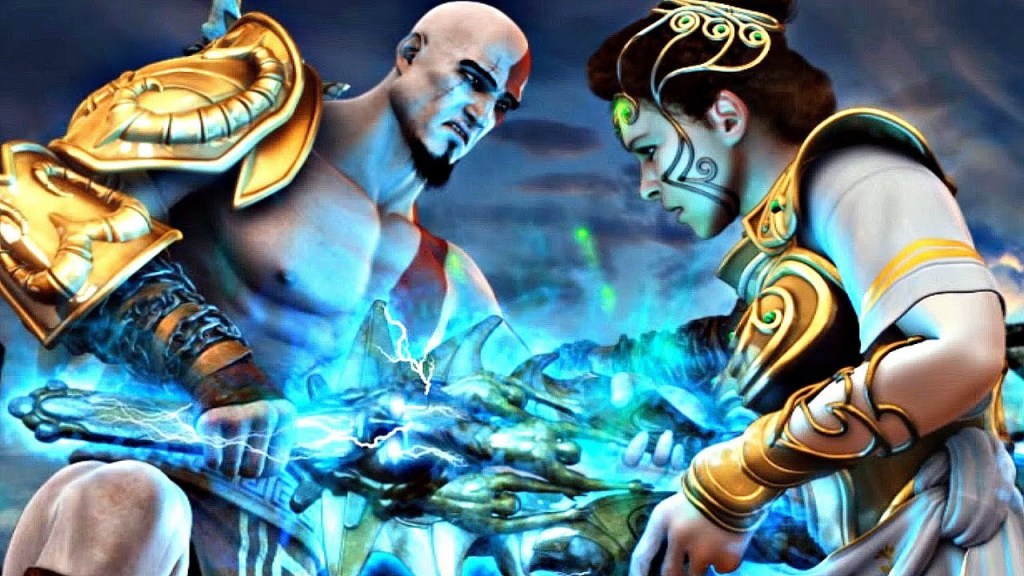
God of War III serves as the conclusion to Kratos’s journey, both physically and emotionally. Kratos is unable to die satisfied until his vengeance is realized. He sees the gods for the pestilence they are, the remorseless way they use their subjects as toys. Kratos uses the gods as an external source of blame for his family’s deaths, replacing his spite toward Ares with a hatred for the pantheon as a whole. In his mind, destroying Olympus will truly avenge Calliope and Lysandra. The god of war is incapable of looking inward, of seeing that his destructive wrath played a role in his losing everything.
Kratos fights his way up Mount Olympus, cutting down any god who obstructs his path. He pounds Posieidon’s skull in, drowns Hades in the River Styx, and slices Hermes’s legs off. When the Titans betray Kratos, he turns his blades against them as well, slaying Gaia and Kronos. The demigod hero Heracles also attempts to stop Kratos. Another son of Zeus, Heracles hopes killing Kratos will curry favor with their father. He resents Kratos for the attention Zeus heaps upon him as a result of the Spartan’s trouble-making. Kratos brutalizes his half-brother without sentimentality, their shared blood meaning nothing to him. Along the way, Kratos is assisted by an ethereal Athena, who once again convinces him she is on his side. She suggests Zeus’s reign should indeed come to an end, and that Kratos is the only one who can stop him. While Kratos chops through the pantheon, his rampage has widespread ramifications throughout the human population of Greece. Great storms and plagues swarm the city-states, causing wide-spread chaos and death throughout civilization. As Kratos ascends Olympus, he sees massive tornadoes and floods wreak havoc upon the land, illness and insects picking apart its people. Much like the death of his wife and daughter, Kratos ignores his own guilt over this loss of life; he chalks the destruction of society up to the gods, pushes forward to dish out his wrath on Zeus.

Throughout his journey to slay his father, Kratos hears of Pandora, an immortal child created by the smith Hephaestus. The Spartan learns that Zeus, in another attempt to cheat inevitable death, has locked the child away; she is the key to unlocking the Flame of Olympus, which would allow someone to open the mythical Pandora’s Box and grant them the power to kill Zeus. Kratos seeks out Pandora in order to attain this mystical strength, but, when he finds her at the heart of a labyrinth, he is immediately reminded of the little girl he lost. In Pandora, Kratos sees Calliope. He projects his daughter onto the synthetic child, convinces himself that rescuing Pandora will somehow bring retribution for his past, cleanse the blood from his scarred palms. But as Kratos brings the girl to the Flame, he uncovers a horrific truth: to access the power locked within the box, Pandora must give her life.
Although Pandora is willing to die for Kratos to stop Zeus, the Spartan refuses to let her sacrifice herself. Zeus arrives and mocks Kratos, chastises the petulant rage that drove him to wipe out an entire pantheon of gods. Zeus warns his son against allowing Pandora’s death, ordering Kratos to not fail Pandora as he did his own dead daughter. As always, Zeus’s words have the opposite of his intended effect; Kratos instead realizes that saving Pandora won’t bring Calliope back to him, that his trail of destruction since swearing fealty to Ares is irreversible. Kratos casts Pandora into the Flame and fends off Zeus in a fit of rage. Upon finally opening the box, he discovers that it is empty. Pandora died for nothing. Further taunted by Zeus, Kratos attacks his father and—after a long, savage skirmish—he finds the strength to seemingly kill him.
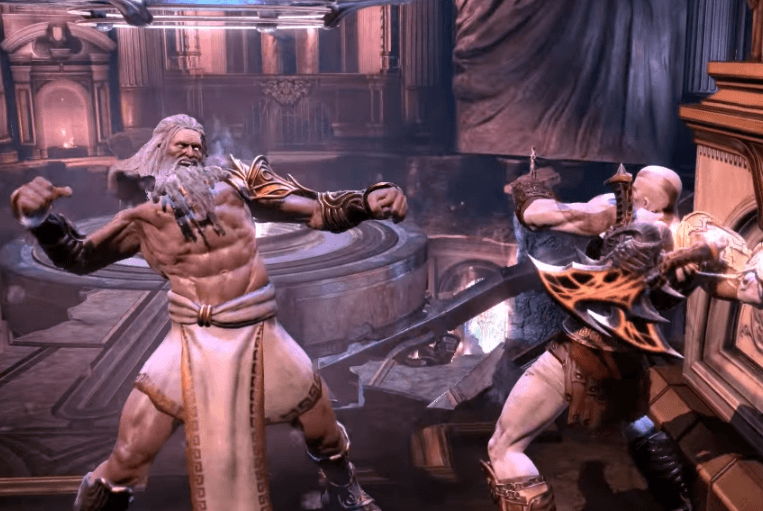
However, much like Athena, Zeus manages to cling to life in an ethereal form, free of his corporeal body. Though Kratos has eliminated every external source of his anguish, he has left his great guilt fester inside him, consuming all of the good within him. Zeus easily weaponizes this against the Spartan, trapping Kratos within the abyss of his torment, an inescapable eternal darkness. As Kratos begins to fade, a single light draws his attention from within the dark depths of his mind. Pandora’s voice pulls him forward, guides him through a menagerie of memory, forces him to face the slew of sins he’s committed. At the end of it all awaits the two Kratos is most afraid of facing: Lysandra and Calliope. Once again reunited with his loved ones, Kratos finally finds forgiveness within—forgiveness for his Spartan conquests, forgiveness for his crimes for Ares, forgiveness for the deaths of his family, forgiveness for his self-hatred and desire to die.
Kratos frees himself from his chains of shame; he forces Zeus’s spirit back into his crippled body and finally kills his father, completing the cycle of slaying yet again. For a moment, all is quiet. Kratos takes in the destruction of Greece, the disaster his wrath has brought on the innocent. He finally understands his consequences of destroying the divine status quo, the consequences of his vengeance. Athena’s voice shakes him from his realization; she congratulates him for his service, for performing admirably as her soldier. Kratos has once again been used as a god’s sword, wielded by Athena to overthrow their father and create a new order with which she can rebuild Greek civilization.
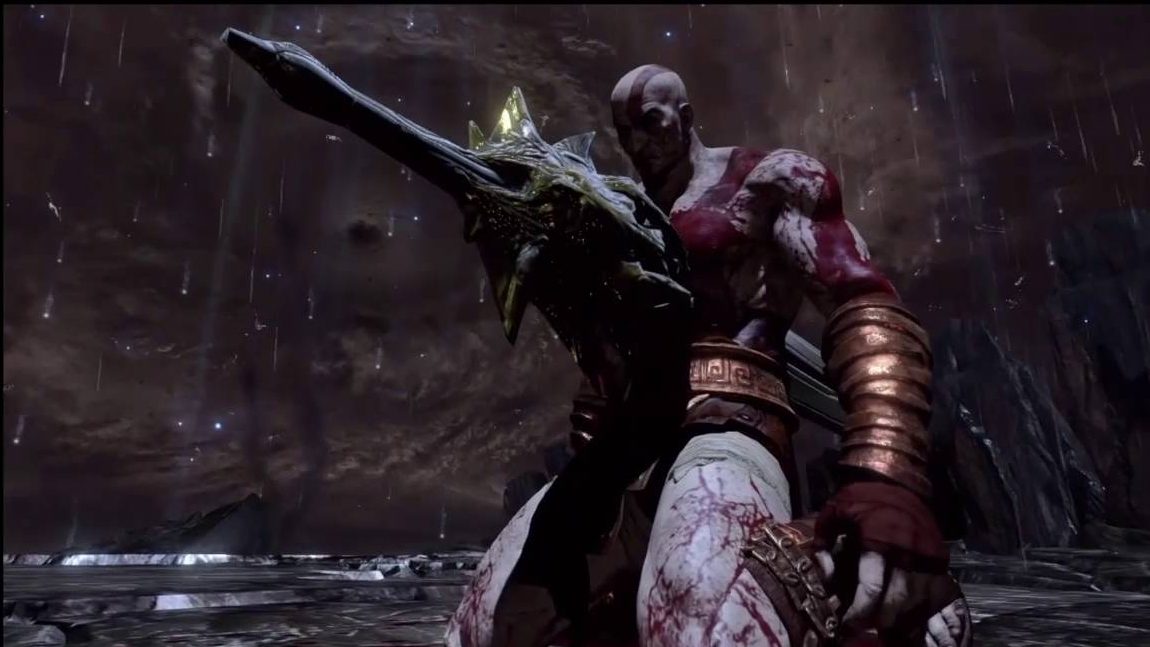
Athena reveals to Kratos that Pandora’s Box was not actually empty; what Kratos released opening the box was the concept of hope itself, optimistic ideals, the power for one to choose goodness. This hope is now locked away within Kratos, and Athena will continue to subjugate him and control the flow of positivity in order to truly rule her Grecian subjects as society rebuilds. But despite yet another betrayal, Kratos appears at peace. His goals have been achieved: Zeus is dead, and Olympus has fallen. As Athena details her plan to rule over a new age, Kratos realizes the same strength he used to kill Zeus can be turned against another god, one he’s wished to kill for years. In the process, he can wrest control of the future away from his calculating sister. Wielding the magical Blade of Olympus, Kratos impales himself. As Athena curses him and rips the sword from his torso, the power of hope trapped within Kratos is released to the teeming masses, possibly instills in the suffering Greeks the idea that they can rebuild and start anew, that everything will eventually be okay. Athena leaves Kratos to bleed to death, and the Ghost of Sparta embraces his long awaited death. As the closing credits roll, the game’s final shot rests on a trail of Kratos’s blood leading into the rising sea.
 Red Comet Reviews