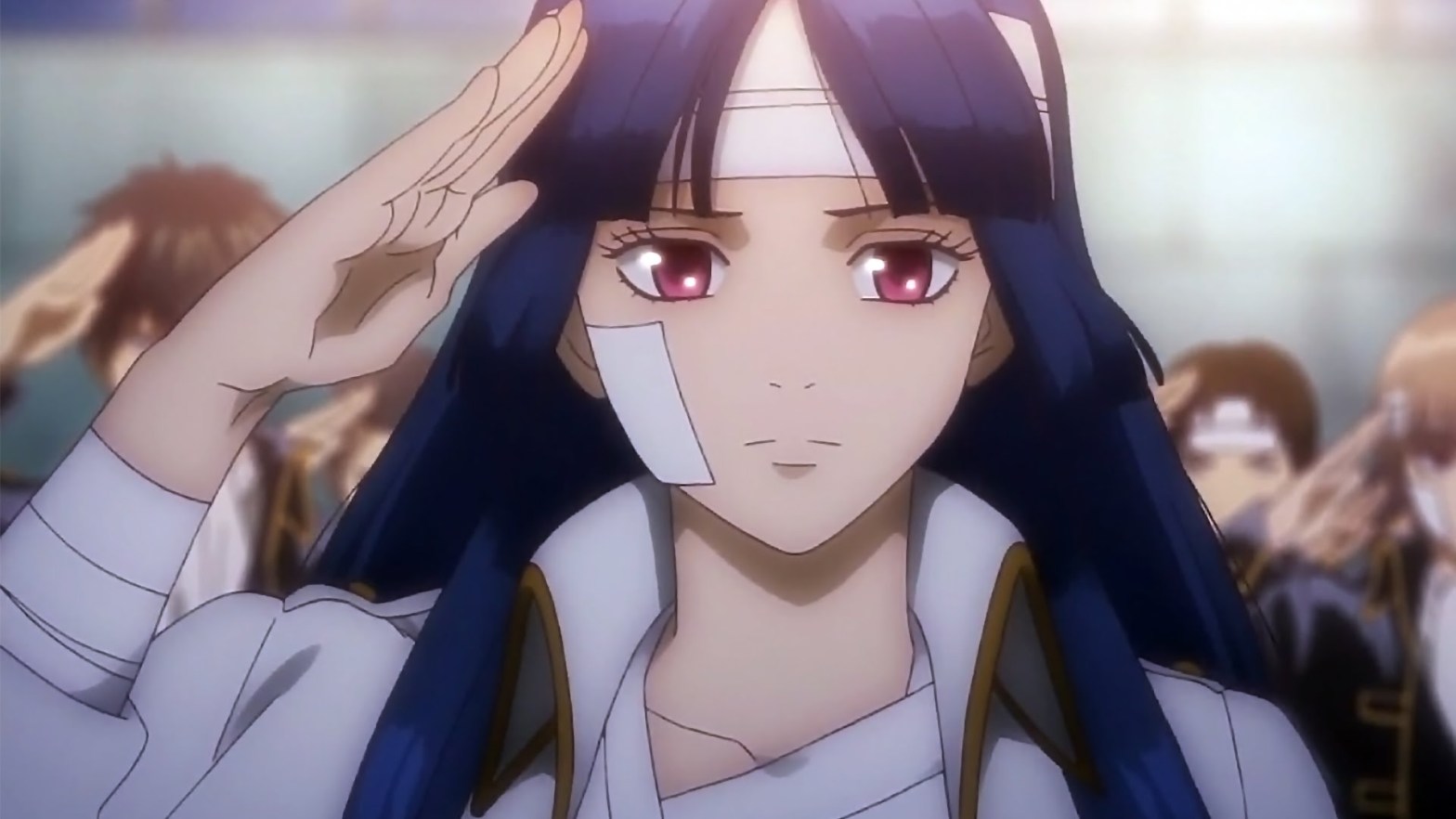
As a long-time consumer of shounen stories, I’m accustomed to strong starts, endlessly meandering middle sections, and a sloppy culminating war arc that serves as a lackluster finale after a series has stretched on for far too long. Naruto famously unravels in its second half, and its last arc is a colossal conflict that brings back a myriad of dead characters—an unlimited supply of padding for an innumerable amount of fight scenes. Other big series like Bleach meet similar fates: winding final storylines that feature senseless battles as the author wraps up the personal arcs of each character in their massive overstuffed roster.
Gintama could have easily dropped into the same familiar pitfalls, bolstering protagonists who evolve through a series of escalating nonsensical power-ups and battles that reach a galactic scale. However, author Hideaki Sorachi deftly avoids the trappings of his contemporaries; his storytelling success stems from over a decade of tactical genre weaving and slow character development through an eclectic mix of short-term gag humor and long-term tales of strife laden with heavy dramatic stakes. Through an extended initial blitz of episodic comedy, Sorachi easily captures the audience’s affection for each of his varied characters, whether a storyline revolves around the antics of goofy former samurai Gintoki or one of his many loveable acquaintances. By the time Gintama reaches the Benizakura arc—its first long dramatic story—the audience has had 57 episodes to grow attached to the central cast. Gintama‘s serious arcs do not abandon the show’s trademark tongue-in-cheek comedy completely; the occasional joke provides levity that makes the dramatic tonal shift of these disparate serious narratives easier to swallow. Farewell Shinsengumi, the final arc in Gintama‘s fourth anime season, serves as a shining example of Sorachi’s storytelling expertise.
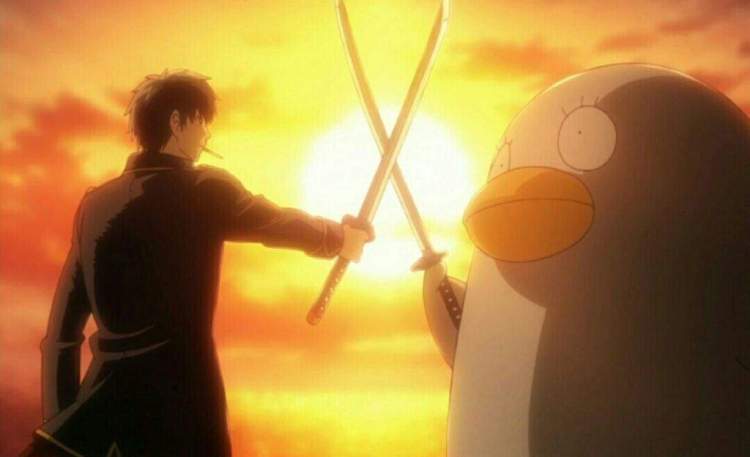
The spines of Gintama‘s dramatic storylines are supported by the same rich characters audiences previously came to love through their absurd antics in the show’s early episodes. In the video game series Yakuza, central character Kiryu Kazuma flounders in a new giant criminal conspiracy with each subsequent title. If one were to play only a Yakuza‘s main plot, their perception of Kiryu would be that he is a serious man—so dry that he threatens to come across as boring in some titles. Kiryu’s personality is not on full display unless the player engages with Yakuza‘s many side-missions. In these small stories, the crime thriller atmosphere of the game is replaced with a comedic, gag-filled tone that permeates each individual quest. Kiryu is no longer the hardened criminal with a tendency to do the right thing; he instead helps strangers and acquaintances alike in zany tasks that offer welcome departures from his everyday life struggling against the evil machinations of other men. Apart from Kiryu, each of Yakuza‘s player characters have a similar dichotomy. They are all in the throes of interpersonal strife: the recurring Goro Majima grapples with the ghosts of his past decisions, while one-off characters—like Yakuza 4‘s Masiyoshi Tanamura—work through an emotional journey that acts as a thematic parallel to Kiryu’s.
Gintama‘s character-driven tonal balance operates in a similar vein. The main difference between Yakuza and Gintama is that the default tone is reversed; Gintama is a comedy by nature. The foundation of each of its many characters is built through its rapid succession of running jokes and physical humor. This style of humor thrives on fleshing out each character’s respective desires, traits, and ticks. One joke may revolve around policeman Toshirou Hijikata’s obsession with mayonnaise, while another points out how plain of a character the aspiring swordsman Shinpachi Shimura is. Still, neither character is ever completely relegated to a simple recurring gag. Hijikata, Shinpachi, and the rest of the cast are depicted with complete sincerity when Gintama takes a turn for the tragic. Sorachi utilizes many techniques to cast his entire expansive roster of characters in a lovable light, and this long-term strategy pays off when the joking stops and blood is shed.

The early serious arcs of Gintama are used to flesh out the background of a particular character or introduce a new one. However, the status quo of Edo—the fictional city where a majority of Gintama‘s story takes place—is rarely altered in some noticeable way. For example, the early Shinsengumi Crisis arc introduces a new villain, Itou Kamotarou. Kamotarou conspires to take control of the Shinsengumi, an elite group of police consisting of swordsmen from rural backgrounds. His ambition relies on becoming second-in-command to Isao Kondou, the Shinsengumi chief; this brings Kamotarou into direct conflict with Hijikata, the current vice-chief and strategic commander of the police force. Their conflict for who will influence Kondou and the future direction of the Shinsengumi drives the arc forward, culminating in an explosive duel to settle their dispute forever.
Most of Gintama‘s antagonists really only exist for their featured arc and then vanish for the rest of the series. This is a recurring trope in shounen stories, as seen with many of the villainous Akatsuki members in Naruto or the super-powered enemy entities in Dragon Ball. Despite Takasugi Shinsuke, a ghost from Gintoki’s past, playing the role of recurring central antagonist, each arc has a separate villain. While Kamotarou’s journey begins and ends in a single arc, Takasugi’s lackey Bansai Kawakami is also heavily featured in a standout fight with series protagonist Gintoki. Bansai’s participation in Shinsengumi Crisis represents a major trend in Gintama; the central plot of an arc is often quickly wrapped up, but a subplot may extend far beyond the small scope of a single story. Although Kamotarou’s evil plot threatens to derail the Shinsengumi permanently, the arc reaches a safe, shounen-standard conclusion: Hijikata triumphs over the dastardly conspiracy and restores his beloved Shinsengumi to the same peaceful stasis it was in before the arc started. The protagonist of a given arc usually develops in some small, meaningful way, but they return to their default light-hearted state of being after a conflict concludes.

This storytelling pattern is prevalent throughout Gintama. The machinations of antagonists like Takasugi Shinsuke develop bit by bit in the background of the smaller serious arcs, but the inevitable clash between opposing samurai doesn’t erupt until late in the anime’s fourth season. The Shogun Assassination arc sees the conflict between Gintoki and Takasugi reach its first major climax, and the repercussions of their conflict produce a ripple effect that changes the course of the series permanently. This is the beginning of the long end for Gintama; gone are the pseudo-stakes of early dramatic arcs. Now major characters lose their lives, relationships undergo dramatic change. Edo is forever impacted by the events of Shogun Assassination, and Gintama‘s new strife-ridden stasis serves as the setting for the tragic Farewell Shinsengumi arc that follows.
Due to a change in the reigning regime, the Shinsengumi—Edo’s prolific police force—is forcefully disbanded. Shinsengumi chief Isao Kondou is detained for execution in an unfair judicial charge; his subordinates are left without a clear direction forward, only vague orders to not do anything rash in his absence. Throughout the grand majority of Gintama, Kondou is typically depicted in a comedic light. He is most commonly seen stalking his crush Tae Shimura, and the central cast berates him for his gorilla-like body hair. With Kondou’s life suddenly on the line, the tonal shift and new dire stakes lend his upcoming execution a dramatic gravity that wouldn’t exist without the many comedic arcs he previously featured in. Even his one-sided romance with Tae is treated with utter seriousness; she visibly mourns his absence despite being previously annoyed by his pestulant persistence. Kondou serves as a perfect example of what makes the characters in Gintama work: the audience develops a deep attachment through seeing their hilarious plights, and they feel the impact of a character’s painful moments to a greater degree in response.
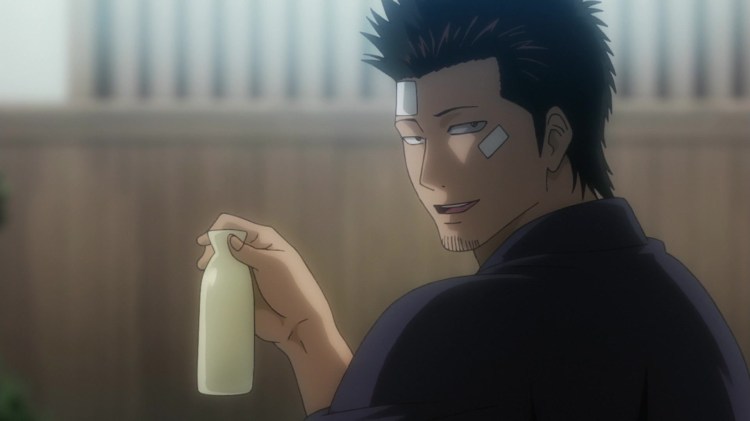
As Kondou awaits execution, his most immediate underlings grapple with the loss of their close friend. Sougo Okita, captain of the Shinsengumi’s First Division, floats through Edo like a ghost instead of moving on to a different occupation. He continues to wear his formal Shinsengumi attire and ponders his new purposeless existence without the guidance of Kondou and the fellowship of the police. However, Toshirou Hijikata’s complicated response to the Shinsengumi’s dissolution is much more interesting, and his emotional journey is the soul of the storyline.
As the rigid and demanding vice-chief, Hijikata is dubbed “The Demon” by his subordinates. He developed the Shinsengumi’s code, 46 rules for a member to follow in order to be both an upstanding policeman and honorable samurai. When an officer inevitably breaks one of these rules, Hijikata comedically orders them to commit seppuku to atone for their slip-up. Much like Kondou, Hijikata is the butt of many jokes in the early series. His self-seriousness makes him the straight man in almost every dynamic, particularly in scenes squaring off with his rival Gintoki. This stoicism presents itself in all aspects of his life: he holds a romantic candle for one woman—Okita’s sister—who died years before after Hijikata spurned her; he resents being referred to by the nickname “Toshi;” and he demands his same intense dedication to the Shinsengumi code from every man under his command. Kondou is Hijkata’s best friend, and the two share a tight, unshakable bond that strengthens the corps they lead.

It makes perfect narrative sense then that Hijikata’s entire world is ripped out from beneath him as the Shinsengumi collapses. His identity as the demonic vice-commander is completely dependent on being a leader within Edo’s elite police force. After joining the normal police, Hijikata becomes sullen and reclusive. He is drawn to the shuttered Shinsengumi headquarters almost magnetically, stuck staring at its taped-off doors. The first episode ends with the resolutely stoic “Demon” shedding tears over his lost life and the impending doom of his closest friend. Hijikata is paralyzed, torn between staging an uncharacteristically desperate rescue operation and obeying Kondou’s final order to remain steady, to let events play out naturally, to not put himself at unnecessary risk. To Hijikata, orders are everything. He enters a state of auto-pilot, an apathetic trance to live his life within.
Unbeknownst to him, Okita is approached by a group of Joi rebels, the sworn opposition to the servantile Shinsengumi. Despite their natural animosity, the rebels want to put differences aside and assist the disparate Shinsengumi members in an attempt to break Kondou loose from captivity. Okita refuses to take leadership of this mission, choosing instead to adhere to whatever move Hijikata decides is best. Hijikata is given the arc’s most dramatic narrative choice: remain complacent under Kondou’s command or rebel against his staunch moral code to save his friend’s life. He has always made the honorable choice: ignoring his romantic feelings for Okita’s sister, leaving his post when he feels he is not adequately performing his duties. His life with the Shinsengumi was depicted through colorful gags, ridiculous anti-criminal operations, and laughter. When Hijikata finally encounters his former compatriots again, there is only silence. Rain splashes over him as he takes in the sight of opposing men joined together on their knees, heads bowed, waiting for his order. It is therefore satisfying when Hijikata finally chooses to be irrational, to risk everything for an opportunity to rescue one of his dearest companions.
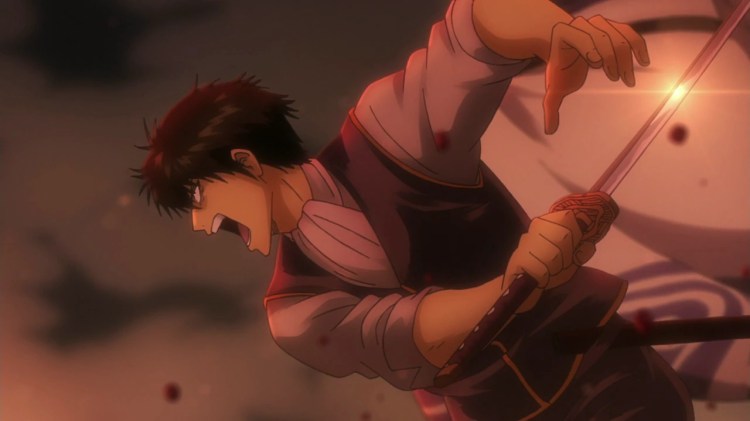
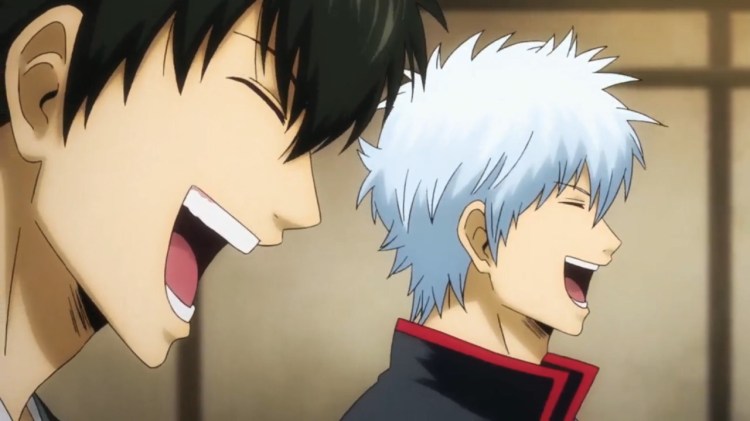
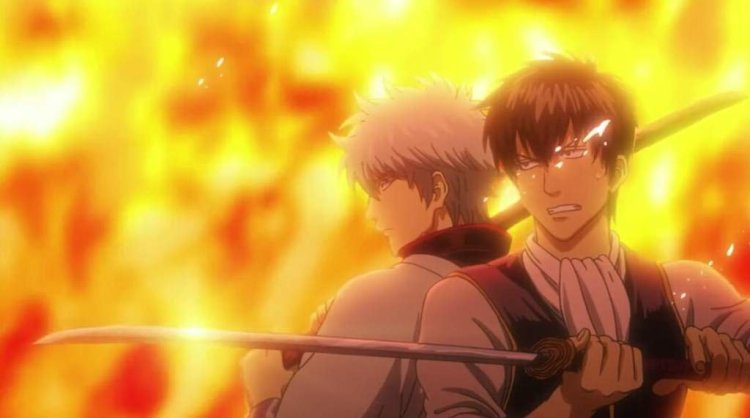
Unlike the Shinsengumi Crisis arc, Hijikata does not have a dramatic final clash to emerge victorious from, to violently reset Edo to its peaceful status quo. His personal arc within the story is instead an emotional one. When the Shinsengumi and Joi alliance enters their long final skirmish, Hijikata gives a rousing speech in which he adds one final 47th law to the Shinsengumi Code: survive at all costs and return to Edo together, even at the expense of all other rules. This decision exemplifies Hijikata’s growth over 300 episodes of anime; he has transformed from a man who follows his code of honor at all costs to one willing to bend the rules for someone important. Hijikata metaphorically sheds the uniform of the Shinsengumi and embraces the imperfect country samurai he truly is: flawed, mostly honorable, and a defender against the unjust. As the allied forces lick their wounds in the rescue mission’s aftermath, Hijikata shares a drink and a laugh with Gintoki. He peacefully accepts the loss of his former life and his stern reputation that accompanied it. Along with the surviving members of the Shinsengumi, Hijikata departs Edo, leaving behind the city he once dedicated his life to protecting.
Hijikata and the heroes of the Shinsengumi are not the arc’s only characters to be given tragic gravitas. Initially depicted as antagonists, Isaburou Sasaki and Nobume Imai serve as leaders of the Mimawarigumi, the rival police force to the Shinsengumi. Both are defined by recurring gags: Sasaki is addicted to sending emails from his cell phone, constantly badgering an annoyed Gintoki to be his virtual pen pal. Nobume is a sadist, but she loves doughnuts with a passion she doesn’t demonstrate for anything else. Sasaki and Nobume regularly serve as enemies in Shinsengumi-centric storylines, but it is not until the Farewell arc that their tragic history is revealed. The audience learns of the dry, conniving Sasaki’s former life as a doting husband; we see his existential turmoil while trying to decide a name for his daughter, combing through every possible option by writing them out on slips of paper. Despite still being calculating and cutthroat, the former Sasaki usually makes just decisions at the end of the day. He even defies orders from the shogun and spares the lives of the Shinsengumi—his eventual rivals—although his noble decision comes at great personal cost.
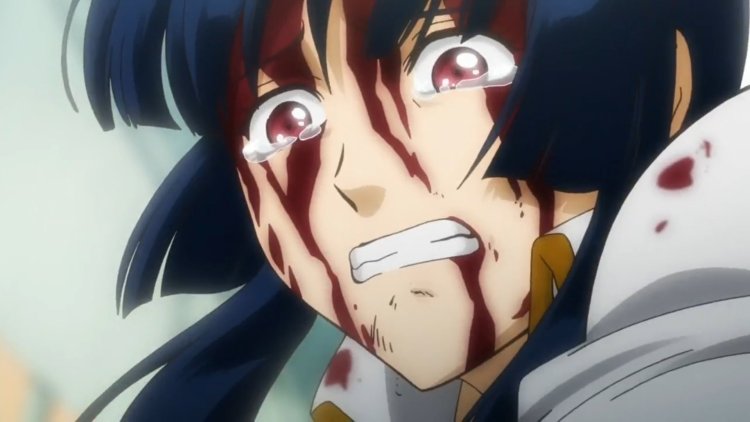
Nobume Imai was raised as an assassin, renowned as a highly-effective killing machine by the time she reaches adolescence. Sasaki discovers the girl among the corpses of his loved ones and deduces that she must be the murderer. However, instead of exacting revenge, Sasaki takes the girl in as a surrogate daughter. He raises her in the place of his own child, even granting her the same name he finally decided on. The two form a deep bond, and their shared past paints their actions throughout Gintama in a different light. By the end of the Farewell Shinsengumi arc, it is impossible to not love both characters in the same way one cares for Gintoki, Hijikata, or Kondou. Redefining audience perception of a character through carefully revealing their backstory is a common tactic in shounen storytelling, but Sorachi joins experts like Eiichiro Oda in executing this technique with finesse.
Gintama‘s Farewell Shinsengumi arc is a masterclass in character-driven storytelling. Through focusing on key members of the supporting cast like Hijikata, Kondou, Nobume, and Sasaki, Hideaki Sorachi demonstrates the power of long-term character development. Sorachi reaches a sublime tonal balance by flip-flopping from quick gags to sincere moments. Even if Gintama is primarily a comedy, it truly shines in its dramatic storylines. Its lovable, nuanced cast of characters help it achieve masterpiece status among its shounen contemporaries.
 Red Comet Reviews