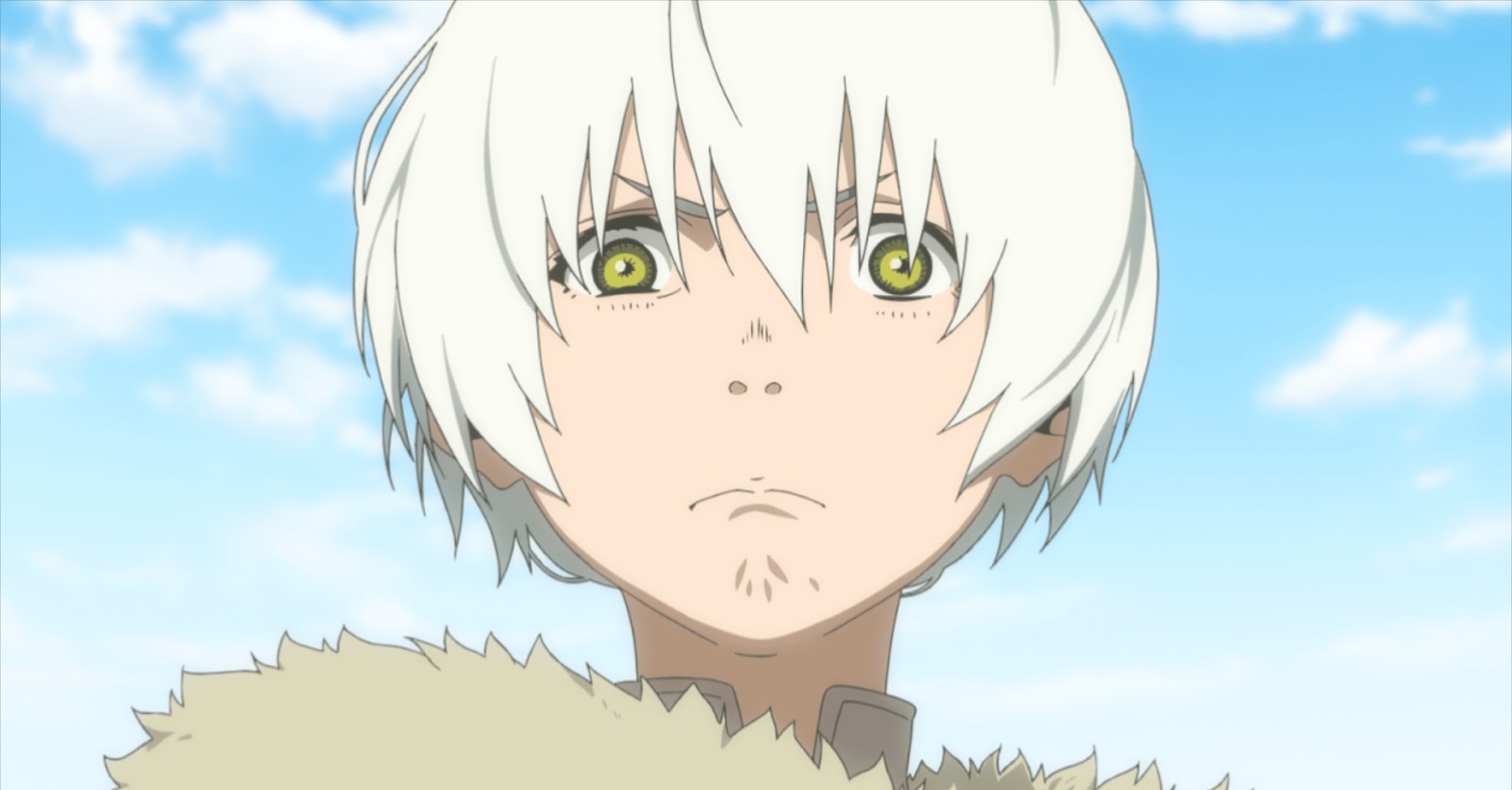
When selecting a slew of 2021 anime to catch up on, I organized my queue and saved the shows I was most interested in for last. The final anime I consumed was Fumetsu no Anata e, or To Your Eternity. While knowing little about it, I was familiar with Koe no Katachi, the more famous work of Yoshitoki Ooima, Eternity‘s creator. My close circle of anime-watching friends lamented the 2016 mega-success of Kimi no Na wa, or Your Name; they told me weekly that the popular movie paled in comparison to Katachi. I delayed watching the movie as I always do when something is relentlessly recommended, but inevitably viewed it one hot summer afternoon and was moved to tears like many others. In Katachi, Ooima demonstrates a clear mastery of short-form emotional character-driven storytelling in a realistic modern setting.
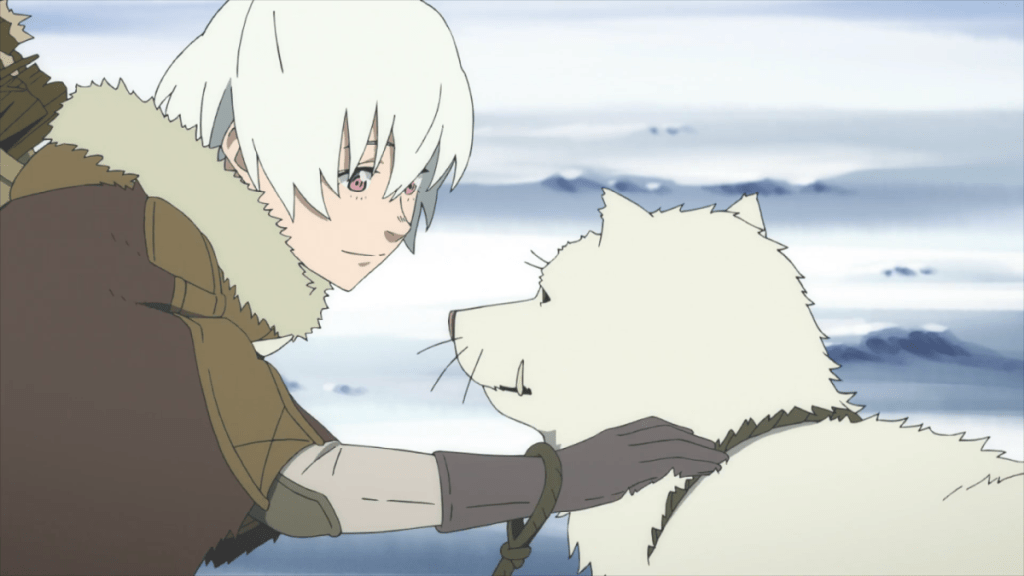
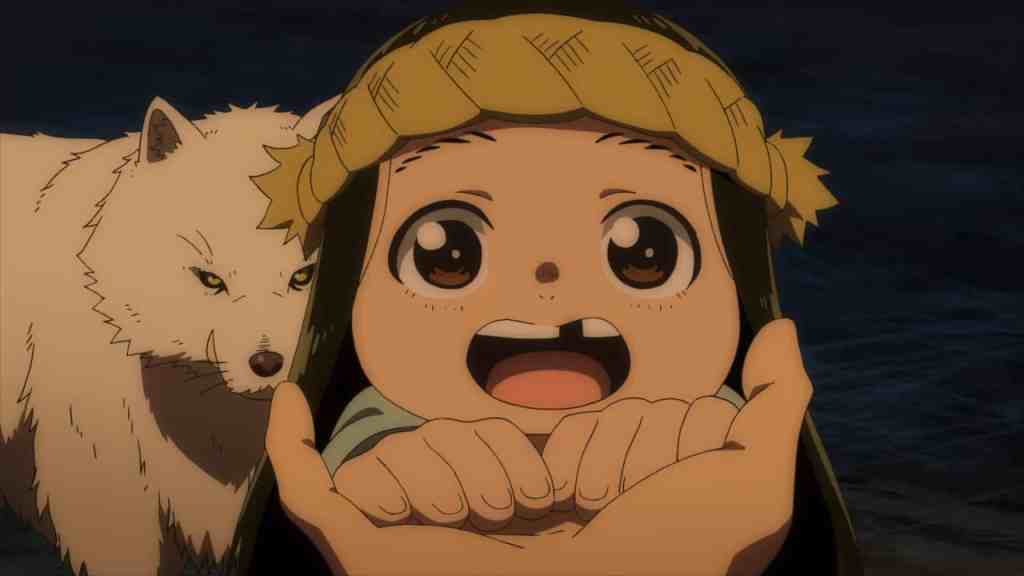
To Your Eternity retains Ooima’s heavy emphasis on deep characters and heart-breaking story arcs despite being a much longer story and implementing fantastic elements into its premise and setting. The single television season depicts the 14-year journey of a nameless being, later dubbed “Fushi,” as it learns what it means to be human through a series of relationships forged with various social outcasts. Fushi begins life as a small orb, created by a divine being to fulfill a mysterious agenda. Fushi has the supernatural ability to transform into some of the different life forms it comes across, specifically after the other being dies. In these forms, Fushi does not age and heals from any wounds. Upon arriving on earth, it quickly adopts the form of a solitary rock and then a white wolf shortly after—the body with which it begins its epic travels in earnest.
Koe no Katachi only truly focuses on one character’s perspective. The narrative follows teenager Shouya Ishida as he grapples with a crippling guilt and related depression; Shouya lives in perpetual turmoil over his childhood role in the brutal bullying of Shouko Nishimiya, a deaf elementary school classmate. Shouya’s destruction of Shouko’s hearing aid results in an overwhelming ostracizing from his peers, leading Shouya down a route of self-hatred that reaches its pinnacle as he enters adulthood. Katachi examines Shouya and how his singular relationship with Shouko, both in elementary school and as young adults, impacts and changes him for the better. In Shouko, Shouya finds grace and forgiveness; he learns to accept that he cannot change his past, but he can still become a caring person for the future.
Eternity’s protagonist Fushi begins as a blank slate, reflecting the philosophical theory of tabula rasa—the idea that human minds are clear before experiences with the human world are imprinted upon them. When Fushi gains sentience, he has no tragic backstory. Still, each arc in Eternity follows a similar narrative structure as seen in Katachi, but the plot format takes on a cyclical nature. Fushi meets a new human and learns some important lessons from them. Sometimes this knowledge is practical, like discovering speech from the child March and the elderly Pyoran. At other points, Fushi learns something emotionally profound: familial love and acceptance from the disfigured Gugu, or how to properly mourn through its continuous encounters with deeply personal loss. Each person Fushi meets imparts wisdom, whether simple or nuanced, unto it, and Fushi pieces together a personality from the bits he borrows from others.
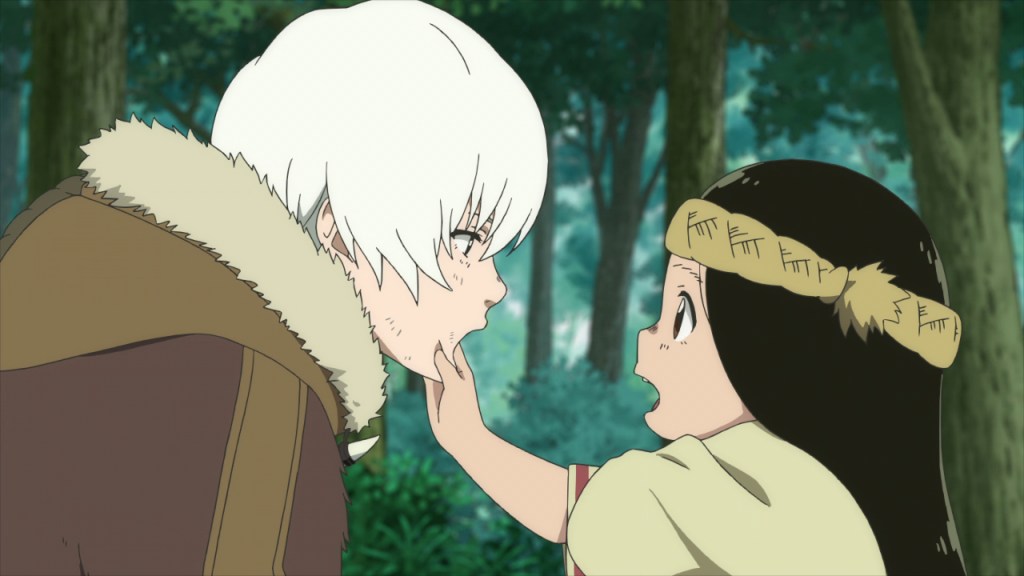
Fushi’s process of personal development reflects the way all human beings grow in the real world. We discover aspects of our own nature, gain knowledge about societal expectations, and develop moral codes through a life of friendships and strife. Fushi has multiple found-families and a number of antagonistic forces, each chipping away at its marble exterior to create the sculpture of a human seen by the season’s finale.
The slow evolution of Fushi consistently rewards viewers. After the first few episodes, it struggles to squeeze out words of gratitude. By the end of the season, Fushi speaks confidently in full sentences, occasionally stopping to ask the definition of a more complex word. When Fushi experiences its first personal loss, it responds with only a blank stare. After the death of a loved one in the final episode, Fushi immediately succumbs to grief and drops to its knees in violent sobs. Despite its growth and philosophical ascension, Fushi regularly slips and falls backward. In moments of anger and anguish, it adopts the form of a monstrous bear and wreaks destructive havoc on its surroundings. In one key story beat, Fushi chooses to grow four years older without changing from its primary form of a pale-haired teenage boy. Fushi enters late adolescence, gains a few inches in height, grows the wisps of a beard. It later unintentionally sacrifices this physical maturity when transforming to fight off an enemy, and finds its body deaged when returning to its boy shape. The years of growth lost represent a real person’s immature slips even into adulthood; gaining maturity is a constant cycle of advancing, failing, and advancing again. Fushi, like real human beings, becomes something of a palimpsest: even with its previous experiences written over, it never loses what is written beneath. It honors those it has lost and fights tooth and nail to retain its memories. Fushi’s trajectory from a purposeless existence to a person with their own values and goals is incredibly fulfilling, and it’s easy for audiences to anticipate the immortal being’s further growth in future animated seasons.
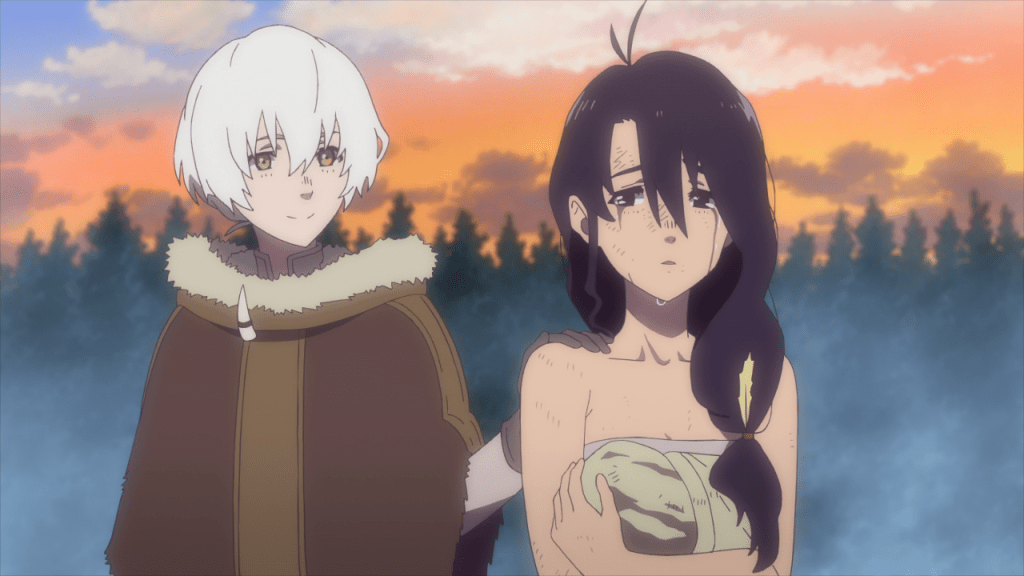
Fushi’s complex development would fail completely if the characters it encountered in its journey were not themselves each interesting and equally fleshed out. Much like Koe no Katachi‘s intricately-realized Shouko Nishimiya, Fushi’s companions each have clear desires, anxieties, and flaws. Ooima paints realistic portraits of human beings who all feel alive and different from one another. Fushi is moved and shaped by each desire of those he cherishes: March’s desire to blaze through childhood and become an adult, Parona striving to protect March’s innocence, Fushi’s first human companion longing to end his solitude and reconnect with his lost loved ones. The first true story arc features Fushi, under the guidance of motherly March and courageous Parona, developing from an infantile mindset to enter a sort of rough mental adolescence. The relationship Fushi forges with March is the blueprint for the narrative cycle that harkens back to Ooima’s work on Koe no Katachi, a model that is utilized time and again to varying degrees of success throughout Eternity‘s duration. Within this plethora of people Fushi meets from different walks of life, the most impactful story in the season is arguably that of the young Gugu.
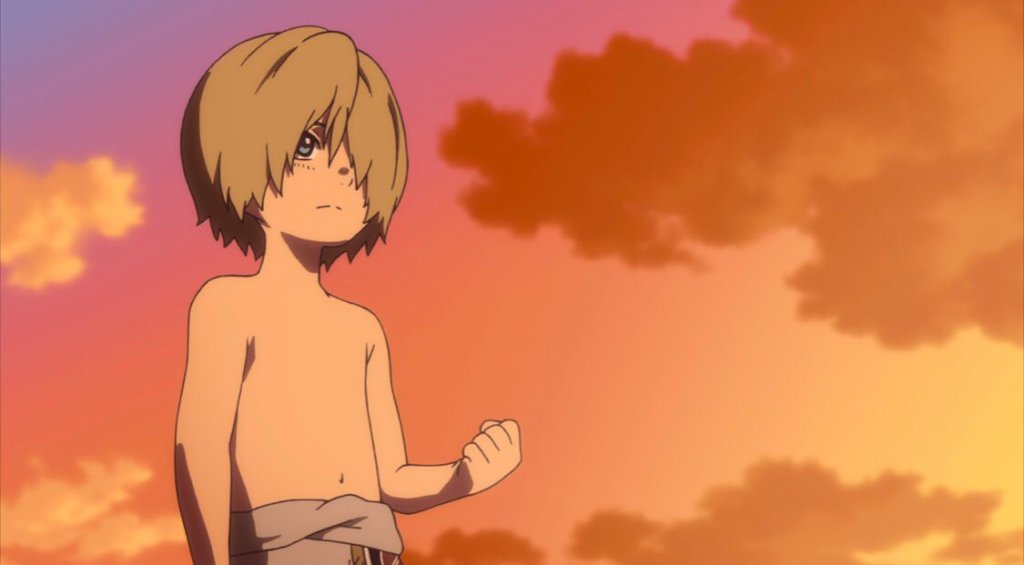
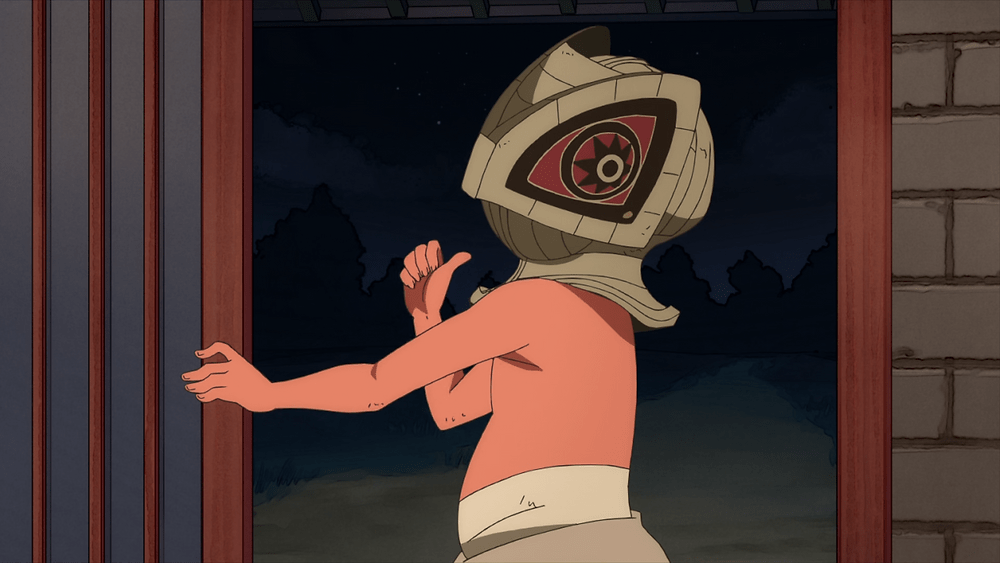
Gugu is introduced as a strange boy with a chameleon-like helmet obscuring his face. In his backstory, he is shown to be a poor boy with a pure heart; he works tirelessly in servitude to rich families, saving every dollar to one day live a life of comfort with Shin, the older brother he idolizes. Shin regularly takes advantage of his idealistic brother’s good will, using the money Gugu raises for selfish purposes. Still, Gugu’s selflessness perseveres. He sells vegetables with a grin to make ends meet, and he earns the favor of Rean—a wealthy girl Gugu quickly develops a crush on—after sharing his meager dinner with her dog. After being abandoned and left penniless by Shin, Gugu wanders the world without purpose, works because he knows nothing else. When a freak circumstance sends giant logs careening toward an unsuspecting Rean, who is distracted by purple bellflowers, Gugu acts without thinking: he tackles her out of harm’s way and is crushed instead.
Gugu survives thanks to the machinations of the bizarre Booze Man, an eccentric elderly liquor distiller. His body, however, is irrevocably damaged. Gugu’s face is disfigured beyond recognition, and his belly is perpetually bloated as a result of Booze Man’s experimentation. The chameleon mask audiences first see Gugu hides horrific scarring. He begins a new life working for his savior, hiding his new anxieties from the outside world. Gugu never removes his helmet, regularly pokes his big belly in defeat. The once bright boy grows bitter, understands the world will never accept what he has become.
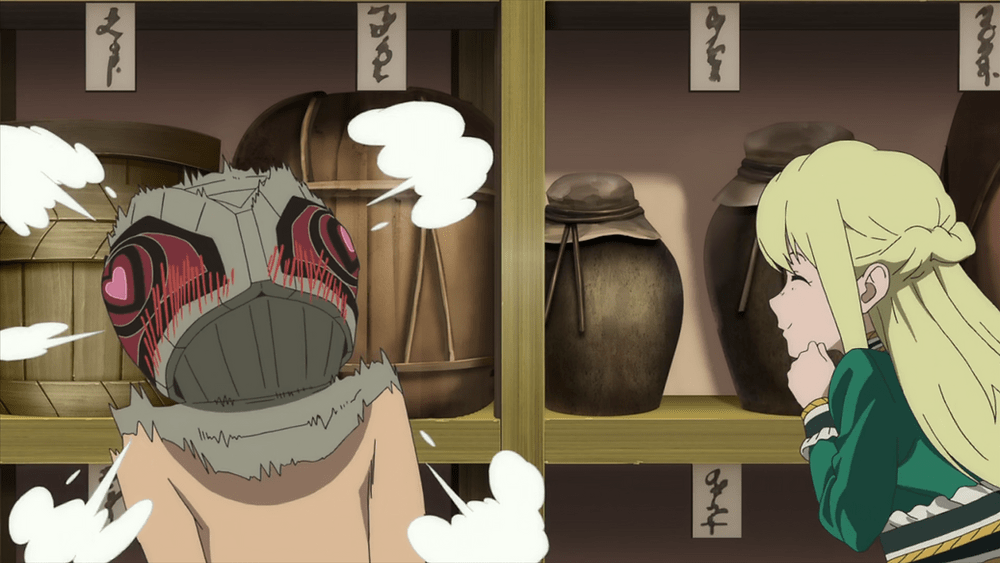
Enter Fushi, a being who has no sense of what is handsome or hideous. Gugu is baffled by Fushi’s innocence, its blind acceptance of Gugu’s mask, body, and face. While townspeople glare at Gugu or call him a monster, Fushi is happy to be in the boy’s presence. Gugu gleefully adopts Fushi as a younger brother, showers him with the attention and advice he never received from Shin. Fushi finds belonging in Gugu, Booze Man, and his companion Pyoran. Gugu inadvertently teaches Fushi about romantic love when Rean enters the distillery one afternoon; the boy’s braggadocio crumbles into bumbling pleasantries. As Rean begins spending more and more time with them, Gugu finds a melancholic contentment being with the girl he loves, even if he knows she’ll never be with him and his new marred form. Rean’s innocent affection and Fushi’s fraternal admiration empower Gugu, instill in him a confidence he’s never before had. Gugu finds strength in his new relationships and the blind acceptance only achievable when faced with overpowering love.
Even as Gugu grows muscular and tall, his anxieties remain ever present and human. His collection of physical flaws reflect the common blemishes real people relentlessly fret over. Some of the most common vain concerns are those of weight gain, facial imperfections. When an older Rean expresses romantic interest, Gugu finds her affection unfathomable. Gugu’s impoverishment remains an obstacle between them, his monstrous appearance leaving him forever a societal outcast—but Rean loves him regardless of this. Fushi witnesses Gugu’s plight and Rean’s unrealized devotion. After their romance reaches its bittersweet conclusion, Fushi is left forever branded by their relationship; the immortal being will live forever under the influence of its older brother.
The sheer strength of Gugu’s arc is perhaps why the last act of the season’s story falls flat. A chain of events lead a grieving Fushi to Janada, an island of criminals who decide their leader through trials of colosseum combat. While this section showcases the sharpest animation of the series, the new characters Fushi encounters fail to hold candles to Gugu, Rean, Booze Man, and Pyoran. The complex, heartfelt romance from the previous arc is instead replaced by another found-family dynamic. Tonari, the most important new character Fushi meets on the island, doesn’t leave much of an impression or stand out in the way March and Parona from the first real arc do. The redeeming factor in the story’s final stretch is the spine of the series itself: the growth Fushi continues to demonstrate.
For the first time, Fushi comes face to face with sadistic evil. A former enemy returns to deliver devastating news to it, and her actions challenge Fushi’s developing moral compass. The dynamic provides an exciting philosophical conflict: the ideals instilled upon Fushi by good people like Gugu and March versus the violent instinctual desire to dish out revenge. All of the enemies Fushi has faced throughout the story converge on Janada, and the horrific outcome of these evil forces coming together leaves Fushi with an even heavier emotional burden by the arc’s end.
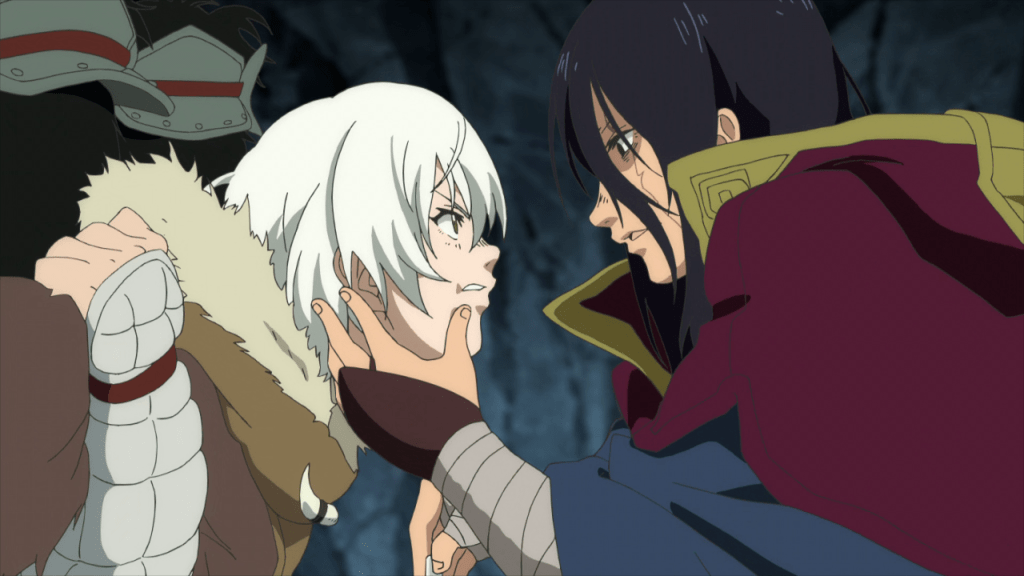
The final episode features only Fushi and one of its oldest friends on a short, somber journey. The last miniature story demonstrates how far Fushi has come over the course of 20 episodes. It carries on thoughtful conversation, it laughs, it grieves. The series leaves Fushi in a curious position to kick off the upcoming sequel season—though the anime studio Brain’s Base passing the torch to unproven studio Drive could be cause for concern.
Brain’s Base does an admirable job with Eternity‘s art and animation throughout. The combat sequences are well-animated. Fushi’s recurring battles against the otherworldly elemental monster Nokkers are all commendable, but the short one-on-one late-game duel with antagonist Hayase is a shining example of the studio’s efforts. The many facial expressions on each of Fushi’s forms remain dynamic, easily eliciting laughs or tugged heartstrings. The artstyle of the adaptation at times has an almost watercolor appearance, particularly in its depiction of human hair and eyes. Other elements exhibit Brain’s Base’s prowess: the flames Gugu breathes, splashes of blood bursting from wounds. Each time the immortal Fushi is ripped apart and stitches itself back together, Brain’s Base tactfully displays anatomical gore and its subsequent healing. Not every scene is laden with artistry; some shots feature stiff movements or characters simply standing around without interesting framing. On the whole though, Brain’s Base delivers on the animation front at most opportunities. Studio Drive may showcase some similar talent in its adaptation of the next few Eternity arcs, and the recently released trailer at least shows promise.
The musical score is emotionally effective throughout: lighthearted pieces drive the daily antics of Fushi and its friends, and tragic piano tunes punctuate each character’s death. The opening sequence’s catchy theme song “Pink Blood” is performed by Hikaru Utada, famous for a prolific pop career that includes famous tracks for the Kingdom Hearts and Neon Genesis Evangelion franchises. The song itself is strong, but the evolution of its accompanying video sequence as the series progresses also stands out. Shots of Fushi’s experiences are gradually cut into the sequence as the season unfolds, sometimes clearly and other times as a faded overlay. There are also a few images in the sequence that are blatant misdirection, similar to Jujutsu Kaisen‘s first opening sequence in 2020. Characters appear in Eternity‘s opening with ages and appearances never to be seen due to tragic occurrences in the story; seeing these glimpses of what could have been becomes a profound experience. The ending sequence is fine; a simple instrumental with important images that harken back to various moments in the series. It doesn’t stand out, but it doesn’t detract either.
A few other weak points stick out in a series of narrative highs. The villains, particularly the mysterious recurring Nokkers, are not entirely interesting; the monsters Fushi frequently faces are visually interesting, but seeing the same scenario play out over and over becomes less exciting with each subsequent encounter. The human antagonist Hayase is slightly better, although some strange motivational choices in the late story may leave audiences baffled at times. Each episode also begins with a lengthy recap, some lasting multiple minutes. Hopefully the upcoming season slices these reminders down to a less distracting length.
Fushi’s journeys throughout To Your Eternity treat audiences to an expert study of crafting character from scratch. By presenting a clean slate protagonist, Yoshitoki Ooima creates a walking metaphor for real human growth. Fushi fills its slate with the values and experiences passed down from the many potent characters it comes across in its travels, and the strongest of these people serve up some of the most memorable anime arcs in recent memory. Brain’s Base successfully delivers an adaptation of Ooima’s manga that is often powerful, even with a few notable faults. Here’s to seeing how Fushi further develops and what studio Drive accomplishes in the second season.
 Red Comet Reviews