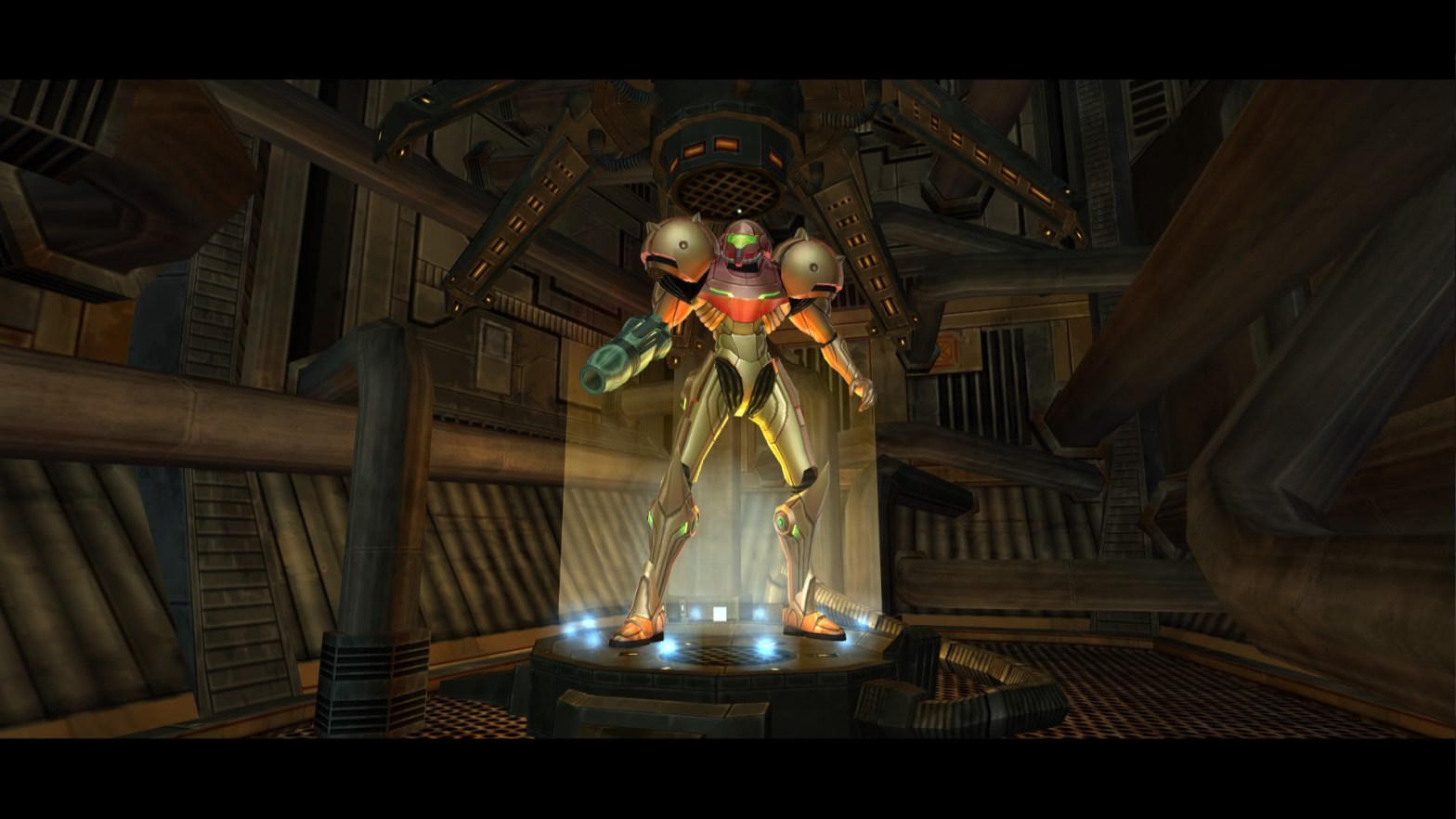
My first attempt to conquer the Nintendo Gamecube’s Metroid Prime was around Christmas in 2002. The isolated horror atmosphere presented to the player in the game’s opening moments stole my seven-year-old attention span. Bounty hunter Samus Aran arrives on the Orpheon, a massive abandoned spaceship, to answer a distress signal sent out by the Space Pirates, her mortal enemies. Samus likely arrives with the express intent to slaughter any survivors, and that she does. Unbeknownst to the child staring wide-eyed at the crab-like alien carcasses littered through the Orpheon’s corridors, the Space Pirates are awful. They’re responsible for most crimes committed across the Metroid franchise’s fictional galaxy. At the player’s behest, Samus executes the few lingering Space Pirates after their weak attempts to shoot her down. The setting gives the impression that the Orpheon was once home to hundreds of these aliens, a home base for their horrific deeds. Now its defense is left in the hands of the mortally wounded few.
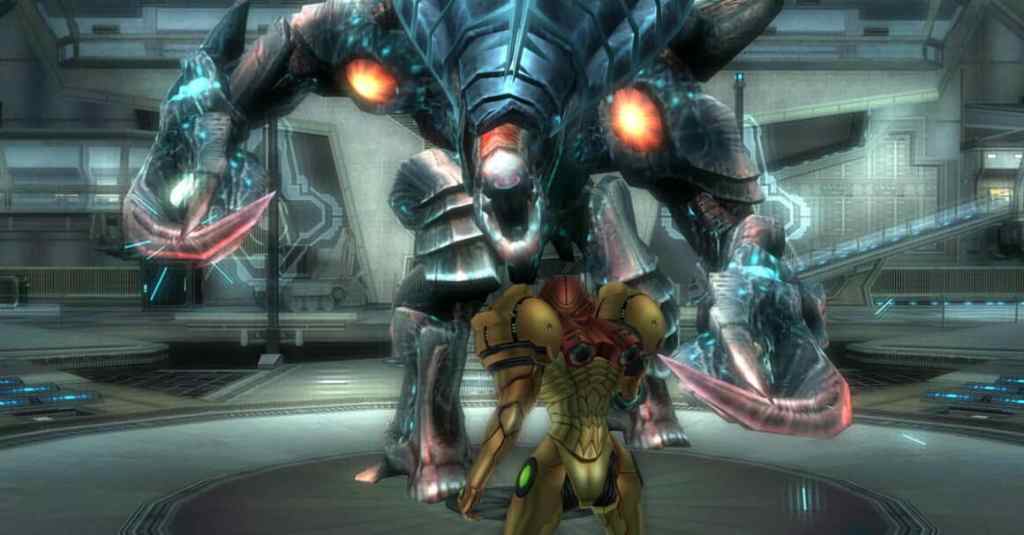
In the heart of the Orpheon waits a bioengineered monstrosity, the abomination responsible for the carnage Samus waltzed over on her way to the game’s first boss fight. This encounter sets the player up for the series of boss fights to come, most of which are the results of the Space Pirates playing god. I repeatedly replayed through this linear tutorial level as a child because I was lost when Prime actually opened itself up for the bulk of its contents. After surviving her disastrous excursion on the Orpheon, Samus Aran chases her archrival Ridley, the leader of the Space Pirates and killer of Samus’s parents, to the planet Talon IV. Its surface initially seems as barren as the Orpheon, but Samus is soon assaulted by a number of alien creatures naturally defensive against her invasion.
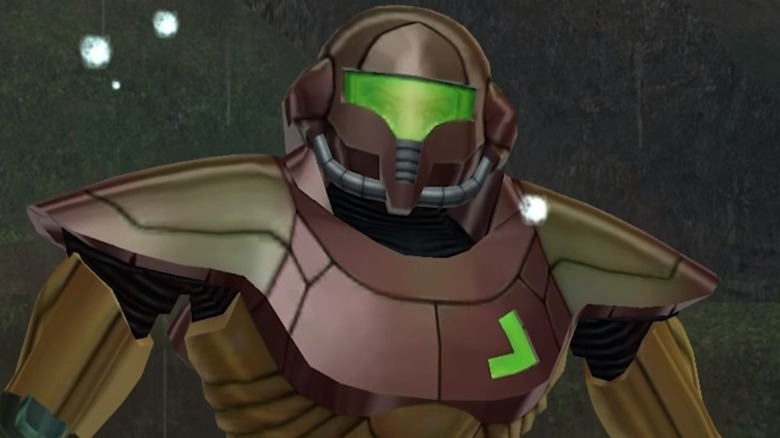
The process of exploration and discovery that make any good Metroid game tick are impossible for a child to appreciate. As an adult, it’s easy to finally move past the still excellent Orpheon sequence and fall in love with the geodynamic Tallon IV. Samus loses most of her special abilities after killing the Orpheon’s final boss, so the fundamental gameplay loop of Prime involves her killing bosses to recover these powers. Samus quickly discovers evidence of an ancient Chozo civilization once inhabiting the planet, and, after restoring herself to full power, must locate their lost ancient artifacts to unlock a secret hidden within the planet’s core. The Chozo are a legendary race of bird-like aliens revered for their wisdom on a galactic scale. They also raised Samus as one of their own after the aforementioned Ridley slaughtered the people of her planet. The erasure of Talon IV’s Chozo population is personal for Samus.
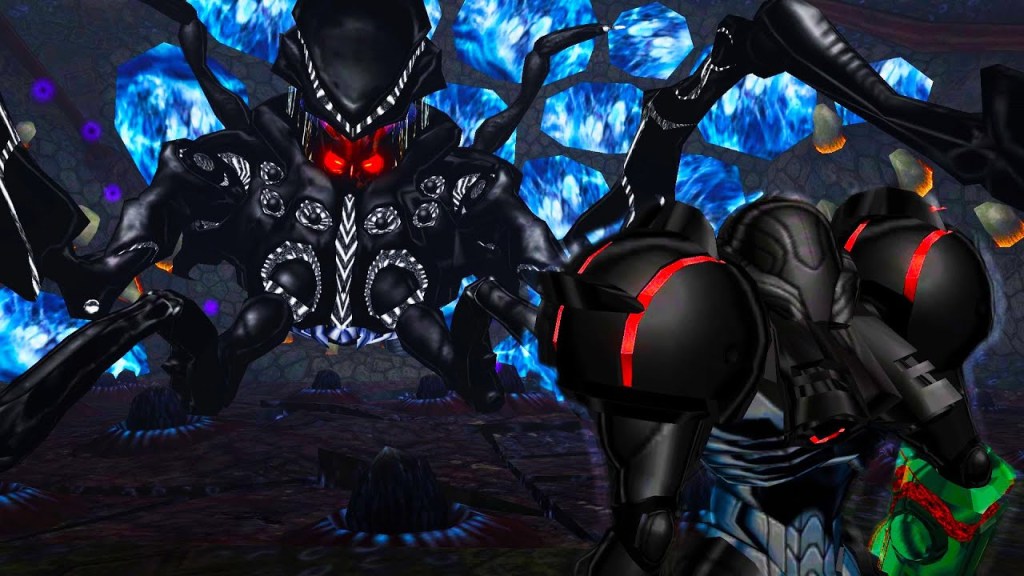
That’s all there is to the game’s overarching narrative, but it only scratches the surface of its story. Numerous details await the player in the form of lore entries hidden around Talon IV, each giving context to some aspect of Samus’s journey: the enemies, environment, power-ups, and deadly boss encounters. Director Mark Pacini and his team made the brilliant decision to set the game’s events on a planet whose central conflict has long since been resolved, leaving Samus to absorb the aftermath. Something sinister reigns over the denizens of the planet, and, after hours of piecing together the disastrous history of Talon IV, the final boss encounter carries a heavy narrative weight. Samus isn’t only fighting for survival; she could leave the planet with ease after reassembling her suite of superpowers. However, the information Samus and the player gain over the course of their shared journey propels her to see her quest through to the end. Samus takes on her last opponent out of mercy for the planet it has corrupted and vengeance for the Chozo civilization it brought to ruin.
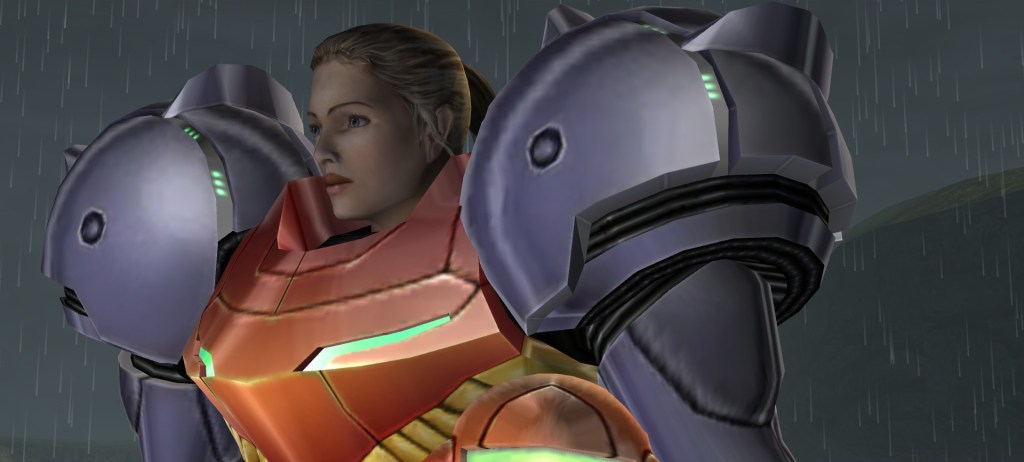
This slow shift in motivation signifies the nobility of Samus’s character, alluding to the just streak that drives her through most of the Metroid games. Despite the canonicity of the Prime series being up for debate, the first game takes place early in Samus’s bounty-hunting career. The only video game to take place before Prime chronologically is the very first Metroid for the Nintendo Entertainment System, or its Gameboy Advance remake Zero Mission. That game sees Samus return to the planet she was raised on, facing off with many of her series-long rivals for the first time.The Samus seen in Prime is young, silent, highly-competent. While there is almost no spoken dialogue and very few cutscenes to characterize her, Samus still stands out as cool and committed. The Metroid series has always done a great job at crafting such an iconic central character, and entries are usually considered misfires when they feature her spouting many voice lines or replace her with a different protagonist entirely.
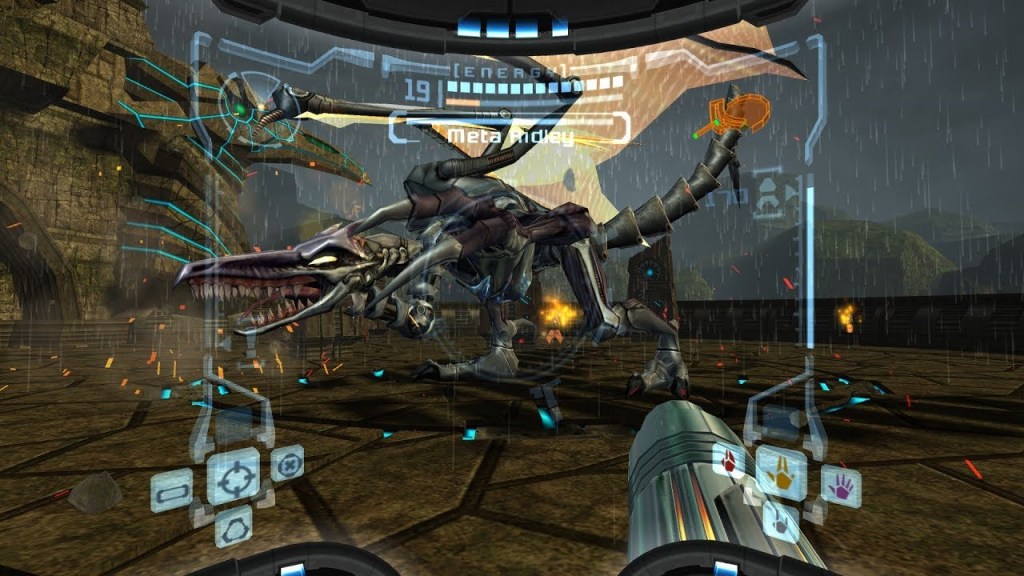
The only other notable character for most of the game is Ridley. He’s seen sparingly through the story, glimpsed in shots of the skyline and in the opening cutscene. Prime‘s Ridley has much of his body replaced with cybernetic replacements, lingering ramifications of his battle with Samus in the original Metroid. The immense hatred between these characters is readable even if Prime is a player’s first Metroid game; Samus jumps into action as soon as Ridley rears his ugly head, and any battle between them across the franchise is presented without fanfare. There are so many boss fights with Ridley across the series that it’s almost become an obligation, but any opportunity to slap Ridley with a barrage of missiles is a welcome one.
Ridley’s enhanced metal body speaks for the limitless capability of the Space Pirate’s bioengineering schemes. Bringing their hateful captain back to life is only one of their many twisted achievements on display in Prime. Most of the bosses throughout Samus’s journey on Talon IV are the direct results of Space Pirate machinations; these creatures are disfigured, mutated, and powerful. Each encounter with one is a reminder of the evil that created them. This environmental storytelling helps players see the depths of Space Pirate depravity.
These narrative allusions also take shape in the form of ancient Chozo ghosts who test Samus throughout her journey. These specters are the only remnants of the former civilization, and collecting their runes and power-ups feels like Samus taking up their wills as her own, giving her all the more motive to extinguish the final blight from the planet. Hiding the stakes within environmental details gives the player the illusion of discovering these past calamities on their own, effectively transporting them into Samus’s mind along with her armor; they experience the same realizations as the bounty hunter, giving them a personal agency within the narrative.
The gameplay puts players behind Samus’s visor, adopting a first-person style for the first time in the franchise. This shift in perspective away from the side-scrolling third-person approach to the previous games is perfect for Metroid, and it unsurprisingly is revisited for a few games afterward. Forcing the player into the bounty hunter’s power armor also makes them utilize the game’s visor system; as they explore Talon IV, the player must switch between a quartet of viewing filters that reveal secret platforms and hidden unlockables. The most useful of these is one that scans the environment and enemies around Samus, giving the player the countless bits of implied story necessary to grasp the scope of Talon IV’s downfall.
A similar system is employed to switch between the different weapons Samus gains access to. Her default arm cannon feels great to aim and shoot, a must for a game that features as much combat as Prime does. Later players can use tools like the Ice Beam to navigate the environment and stun enemies before delivering killing blows. Samus must utilize all of these tools in the late-stage boss encounters, and a mastery of her combat mechanics is necessary for the final fight. The game generally does an admirable job proving the necessity of each new ability, requiring the player to regularly rotate through their different beams to unlock doors into new. Samus also faces a horde of enemy types who can only be damaged by one weapon or another, providing a welcome difficulty and dynamic evolution in the game’s combat.
As with all Metroid titles, exploration is the name of the game’s main mode of interactivity. Of course a seven-year-old accustomed to movie tie-in games would be lost on the surface of Talon IV; the moment Samus lands, linearity is lost. Retro Studios leaves the player to locate their own path forward, presenting them a number of avenues not yet accessible. As Samus reacquires her abilities, new paths become available. This encourages continual revisiting of previous areas, scouring walls for secret doors or hidden passages to optional power-ups. Prime‘s later stages may be easy or punishing, depending on how many extra health bars and missiles you’ve collected along the way. The sheer number of secrets in each of the planet’s rooms make them feel complex and carefully crafted. This coupled with a number of biomes: arctic tundras, volcanic wastes, Amazonian wetlands. The variety in Talon IV’s environments keep the game visually fresh, making Samus’s journey a beautiful one if nothing else.
And that variety is vital considering how many times you will step foot in each of the many areas. Backtracking is a double-edged sword; the wealth of secrets a player may initially miss can make revisiting areas feel rewarding, but Prime‘s map is so huge that navigating from one end of the planet to the other feels like it takes forever. Compared to how quickly Samus can blast across Zebes in Zero Mission, Talon IV can at times feel exhausting to traverse. This isn’t helped by the game’s clunky 3D map, a feature much improved on in later Prime titles. Once verticality is introduced to some of Talon IV’s environments, exploration in these areas can be frustrating. The player needs to memorize their route through places like the Space Pirates’ bioengineering facility in order to remember doors in ceilings or floors.
Prime also holds the player’s hand more than the classic 2D games, pinging the player and forcing them to open their map if the game feels they’ve taken too long to reach the next objective. While not as annoying as it becomes in later games, it’s still frustrating to be on the cusp of unlocking a new optional ability and suddenly forced to a grinding halt as the game tells you: “Go to this location now.” On the other hand, this feature at least helps players like me at age seven get to where they need to go rather than be absorbed in the varied landscapes of Talon IV.
These backtracking issues are further exacerbated by Prime‘s last act. After collecting all of her abilities and conquering a roster of bosses, Samus is tasked with locating a dozen Chozo artifacts that function as keys to the final area. This move comes across as unnecessary, padding out an already lengthy journey to add a couple hours more of digging around. Growing boredom in the backtracking process will eventually be assuaged by two magnificent boss fights to cap off the story; Samus’s final two ordeals are the most fun encounters in the game and pay off hours of collecting bonuses and engaging with Prime‘s fun combat.
Navigating Talon IV as Samus feel great on the Gamecube controller, but the Wii updates her aiming mechanics with effective motion controls. This design change promotes a greater degree of interactivity for the player, and tense battles feel more immersive while manually having to point Samus’s arm cannon. This process is smoothed by Prime‘s excellent lock-on feature, helping the player keep sight of their target at all times. Even as a certified hater of most motion controls, Prime‘s still felt good to use. The modern updates brought about by the Wii release only enhance the game, including easier difficulty settings than those of the original to reach a greater variety of players. Still, playing the game on the “Veteran” difficulty (equivalent to the original game’s default) is the ideal experience.
Metroid Prime‘s different production elements all stand out even by today’s standards. The graphics and resolution have obviously aged, but the unique enemy animations and excellent environmental design make the game still unlike any other. From horrific displays of violence to tranquil wooded clearings, this 2002 game can still be stunning. The sound design may be the real star of the show. From the noises of Samus’s different weapons to her heavy footsteps and enemy shouts, great care was put into each audible effect present. Topping this is an excellent soundtrack from series composer Kenji Yamamoto. Many beautiful and haunting arrangements score Samus’s exploration, and most of these are throwbacks to significant tunes from games past. One particular song plays in the Underwater Frigate Reactor Core—a melancholic piece punctuated by piano that matches the watery depths Samus is traveling through.
Metroid Prime holds up. Rumors of a port for the Nintendo Switch mean a new generation of players may experience this excellent game for the first time. Hopefully a future release may include some streamlined backtracking similar to the changes seen in the HD rerelease of The Legend of Zelda: The Wind Waker for Wii U, where Link’s late-stage journey across the sea to recover smaller bits of Triforce pieces was shortened and simplified. Either way, Prime is a game worth experiencing. Diving in blind will result in an unforgettable investigative journey.
 Red Comet Reviews