
The best part of Riot’s ridiculously popular League of Legends has always been the anecdotal lore about its wide cast of playable characters. These interesting archetypal stories are hardly on the forefront in the multiplayer game; players can piece relationships and past events together from quips of dialogue as they earn kills, or they can read through pages and pages of information on Riot’s website and fan wikis. Many would argue the worst part of the elaborate franchise is actually playing the game itself—it carries with it a checkered reputation of player-based toxic behavior and often frustrating match lengths. That said, it is one of the most popular games of all time for a reason. There’s a depth and complexity to its gameplay that takes years to master, but emerging victorious in even a quick unranked match is one of the most rewarding sensations in gaming. Despite a personal cyclical history of playing the game, becoming addicted, and eventually fizzling out, I have always loved League of Legends and all of its faults.
Due to the base game’s immense learning curve, Riot made the wise decision to extend their impressive world-building and relatable characters to as many other media formats as possible. New players may be immediately turned off by the intricate mechanics present in each individual character, the tense encounters with rogue teammates and mean opponents, and the ever-present feeling that they’re terrible at the game. Riot has already branched out into different genres of video game, including the virtual card game Legends of Runeterra and the recent RPG Ruined King. However, the most successful of these recent endeavors is Arcane, the Netflix-hosted animated series.
The series features a tighter narrative scope than the global conflict present in the premise of League of Legends. It presents the story of Jinx, one of Riot’s flagship characters, and greatly expounds upon her long-assumed relationship with Vi, an earlier member of League‘s roster. While most cinematic video game adaptations rely exclusively on fan service, Arcane sets out almost as if the original game doesn’t exist. It features a compact focus on only one region from the game’s lore, and it deftly guides the audience through the world’s creative magic system.
The tight writing brings a deep humanity to the story’s central characters. Jinx, known initially as Powder, and her sister Vi are the heart of the series, and their relationship slams hard on both a personal and geopolitical level. Strong writing weaves the emotional narrative together with the plot’s action, and Arcane features that complex degree of care and detail throughout. The show’s first act excellently helps viewers connect to the sisters as children. A whole third of the series is dedicated to establishing the twin cities of Piltover and Zaun: one is industrial and revolutionary, the other dingy and left to rot. The inhabitants of Zaun resent those of Piltover for treating them like punching bags, and the lavish lifestyle of the rich is made possible by the tyrannical oppression experienced by the poor. Arcane is definitely about classism, and that divide drives the plot forward while forcing the core cast against each other. The stark dichotomy between the cities is further represented in three pairs of main characters.
The youth of Vi and Powder is intimately explored, effectively showcasing the tender bond between these sisters. Orphaned before the events of the series, Vi is forced into a role of responsibility. She becomes tough for the sake of her sister, engages in petty crime and street brawls to keep the smaller girl safe. Vi is relatable and charismatic from the show’s opening moments, a storytelling victory resulting from the strength of her writing, detailed facial animation, and voice provided by the talented Hailee Steinfeld. The weight she carries on her shoulders leaves her flawed and heroic in equal parts. Vi makes for an excellent protagonist to bring audiences into the world of Runeterra, and her desire to do best by Powder while also remaining morally just compels the viewer to care. Vi’s greatest flaw may be too much responsibility—the giant chip on her shoulder and her self-seriousness cause her to unintentionally neglect Powder emotionally. This leads to a tragedy at the end of the first act, an event that redefines the sisters’ relationship and fuels the narrative’s emotional weight moving forward.
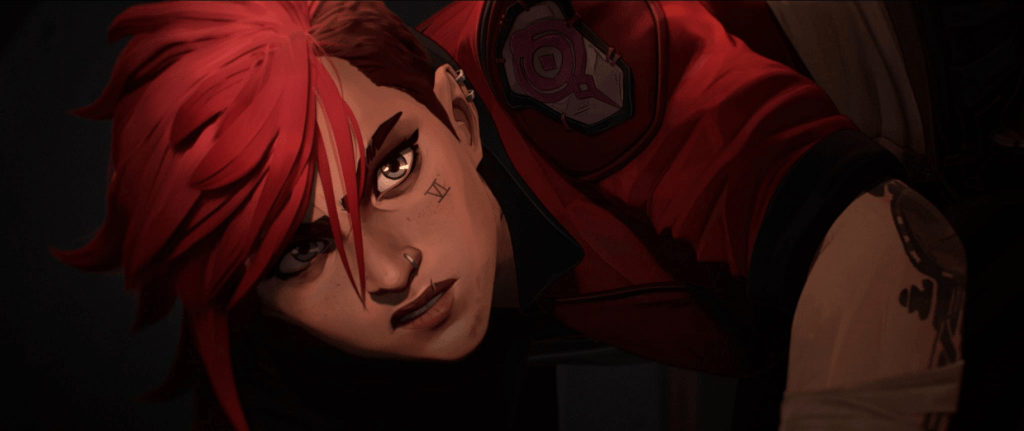
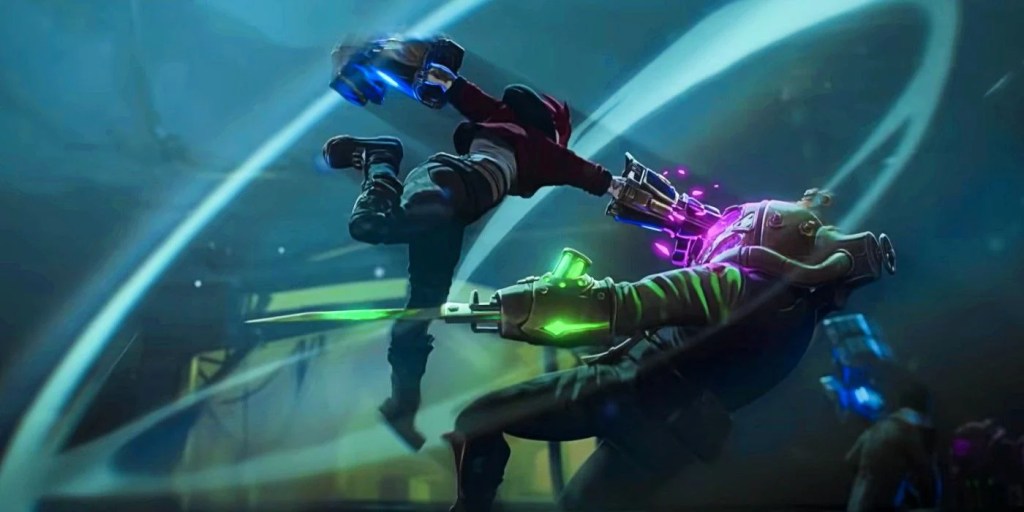
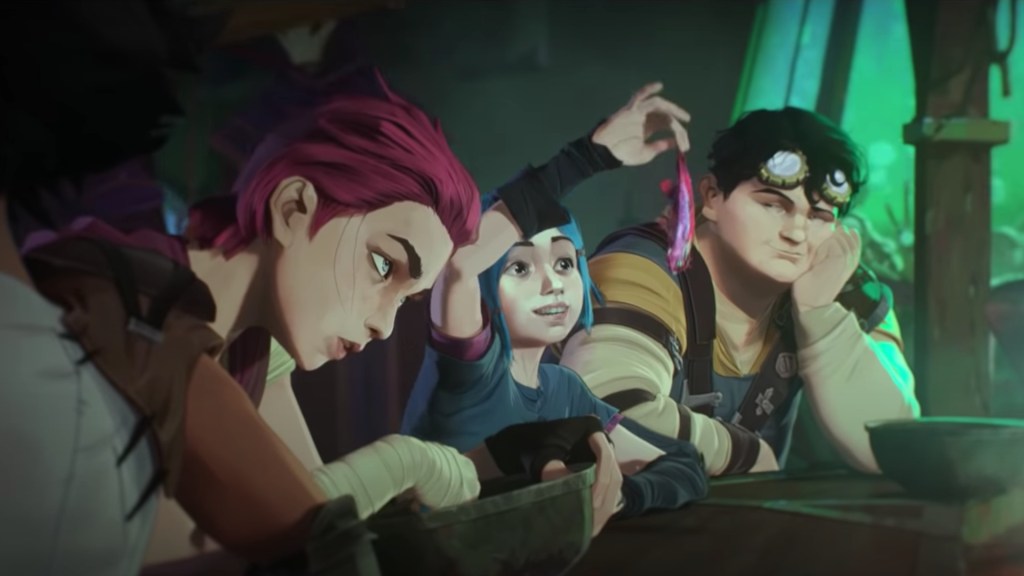
Powder is the opposite of Vi. This is demonstrated through excellent visual contrast as well as in their personalities. Powder’s hair is bright blue compared to Vi’s pink. She’s lithe and weak, but Vi is stocky, powerful. Vi solves her problems with her fists while Powder (and later Jinx) create weapons and technological feats of destruction. Powder lacks Vi’s parental burden, and she instead wishes to be valued and loved by her sister and the other orphans they run with. Her dark transformation into Jinx later in the series is understandable and a natural progression of the first act’s stakes; it’s hard to watch Jinx suffer, and her continuous conflict with Vi is heartbreaking. Vi fights only to save the ghost of her sister, an afterimage of Powder from years before. Jinx desires nothing more than to be loved and accepted by Vi as the troubled criminal she’s become. The interpersonal clash between these two characters is one of the many things that makes Arcane excellent.
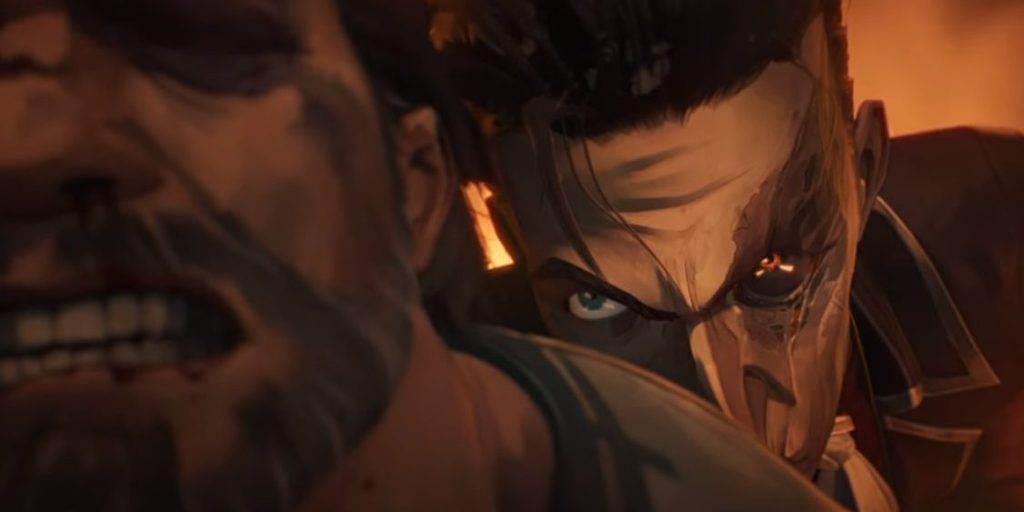
The tragic sibling rivalry between Jinx and Vi is paralleled in their respective father figures Silco and Vander. The girls are molded in the images of these men. Like Vander, Vi is a boxer who ultimately wields massive power gauntlets and laments the loss of her sister to darkness. Similar to Silco, Jinx feels forsaken by her sister and righteous in her own evil deeds. Silco particularly makes for a compelling overarching villain, one whose goals are admirable even if his methods for achieving them are not. The audience is left unsure whether he truly cares for Jinx as a daughter or viewed her only as an efficient tool, a sadistic means to an end. The uncertainty in his motivation proves the power of his role in Arcane.
The other central duo is Jayce and Viktor, a pair of Piltover scientists who strive to create magic through technology. Although their relationship doesn’t quite explode into full-blown antagonism, it’s clear that their opposing fates bring friction between them. Despite being warned against the danger of their experiments, Jayce and Viktor push forward and bring their city great technological progress. There is always an imbalance in their dynamic, though. Viktor carries with him the burden of originating from Zaun, and the emotional baggage of his past oppression haunts him. While Jayce also experiences hardship, he does so from a place of privilege. Viktor naturally takes the role as Jayce’s second, a clear reflection of the greater power difference shown in the relationship between Piltover and Zaun. This longstanding city rivalry also foretells the pair’s eventual fate.
For their notable scientific achievement, Jayce is rewarded with status and power while Viktor watches from the sidelines. His failing body prevents him from absorbing the limelight, and Jayce unintentionally capitalizes on this and prospers. Viktor becomes more and more desperate to regain control of himself as the series spirals onward, and his actions lead to shocking results and a body forever tarnished. It remains to be seen how their relationship will boil over in future seasons, but it will definitely be an exciting outcome if their appearances in League are anything to go off of.
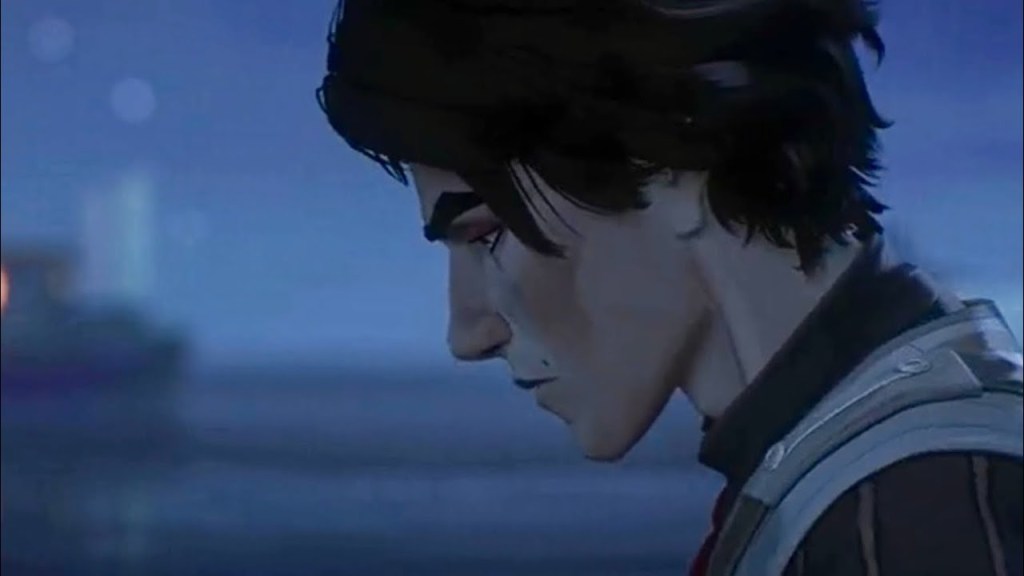
The other members of the main cast have clear goals that they’re willing to give up everything to achieve, and seeing these clashes of will erupt in visually gorgeous fight sequences is always a treat. Many of those yet unmentioned are as memorable as the protagonists. Ekko is energetic and good-hearted, and he’s featured in one of the series’ best battle sequences. Caitlyn’s drive to be just and fair is clearly demonstrated early on. She expresses a genuine compassion for Vi and gives her a much-needed chance to relax; their blooming relationship is one of the highlights of the series. Arcane doesn’t only feature characters from the game; some of its most interesting aspects are original to the production. A viewer unfamiliar with League may be unsure who existed before now and who didn’t. Future seasons promise the addition of more game characters, and preexisting lore dictates that dynamic characters such as the robotic Blitzcrank will one day appear.
The production quality of the show is astounding and stands as one of its highest selling points. Many viewers still reel at the notion of computer-generated animation, but standout projects like Sony’s Into the Spider-Verse have demonstrated the vast potential of the medium. Arcane carries on in this tradition, boasting a beautiful, unique art style that harkens to the great original character designs littered throughout League. The 3D animation is bolstered by traditional 2D effects, creating a beautiful artistic blend that is truly unique for the medium. There is almost always something breathtaking happening on screen, especially in the action-packed final episodes.
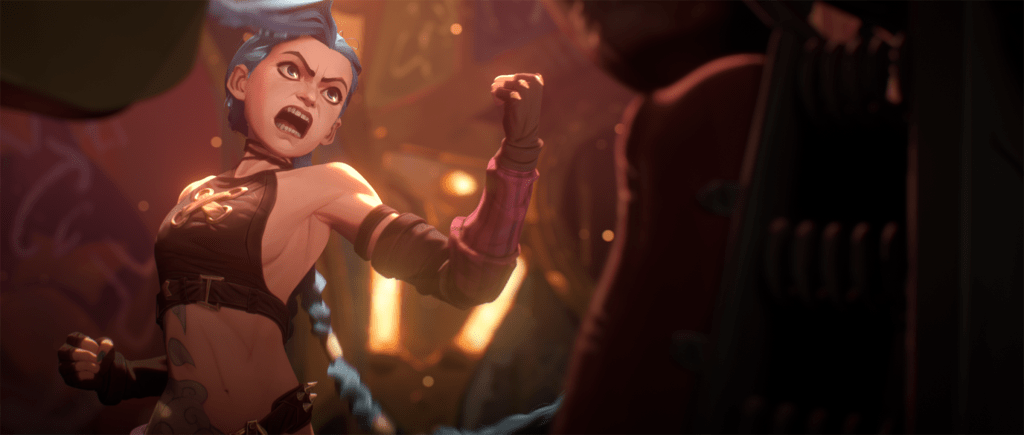
Part of the show’s artistic merit stems from its updated character designs of League‘s preexisting characters. The steampunk-esque atmosphere present in both cities effects informs their adapted looks. Vi transitions from the game’s corset-like attire to a more befitting punk-rock aesthetic: red blazer, dark hoodie, striped pants. Jinx’s classic design is modernized, with her bikini replaced by a halter top. This is sure to birth many conservative think pieces, but it’s a fine change and a nice modern update to a character who debuted in 2013 and hasn’t changed much since. The outfits of the Piltover characters contrast to the edgier designs of Zaun’s residents. The privileged are dressed in formal coats, ties, and clean clothes, meshing well with the brighter shades present in their city. The outfits worn by Piltover’s citizens are also mostly similar, clashing with the unique looks sported by the poor in Zaun’s slums. This is one of the many touches Arcane provides to make both sets of characters feel completely different to the other.
Incorporating some of the most popular bands of the modern era is a surefire way to kick up interest in a fledgling video game adaptation. Arcane‘s soundtrack features artists from Denzel Curry to PVRUS, lending the show a soundscape that mostly matches the imagery on screen. Some of the licensed music can be jarring to hear within the events of the show, including an in-universe Imagine Dragons cameo. Bands that have such a distinct sound tend to stand out when popping up, so that particular brand of pop rock can be distracting. Some original songs, like the one recorded by Sting for the show’s final moments, do better in depicting the intended mood of a given scene. That said, the original instrumental score is always great and appropriately executed, underscoring the most emotional moments and maximizing their gut-punch impacts.
Riot’s first foray into television is a spectacle worth beholding, a master class in dynamic, character-led storytelling. It’s no wonder Arcane is only the beginning of long-form animated projects set in the League universe. Here’s to 2023’s sequel season.
 Red Comet Reviews